


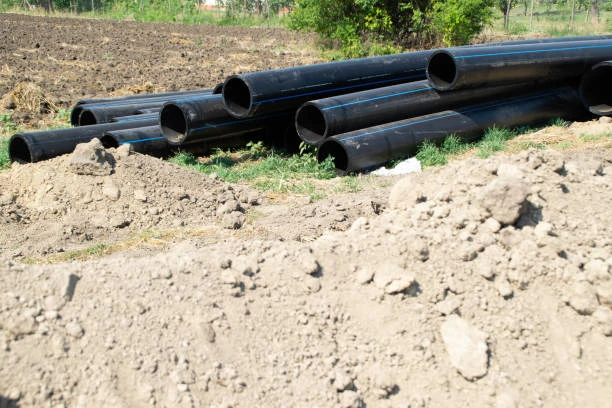
Modern agriculture faces many challenges. Water scarcity and climate change pressure farmers to improve irrigation. Irrigation goutte à goutte en PEHD offers an efficient water delivery system. It adapts well to many crop types and environments. This article explores the crop adaptability of HDPE dripping irrigation. It explains how this technology improves farming productivity worldwide.
What Is HDPE Dripping Irrigation?
HDPE stands for High-Density Polyethylene. It is a flexible and durable plastic used in drip irrigation pipes. Water flows slowly through the pipes and exits through small emitters near plant roots. This slow delivery reduces water waste and evaporation. It helps plants get water precisely when needed. Moreover, HDPE pipes resist damage from sunlight and chemicals.
Why Crop Adaptability Matters
Different crops have unique water needs. Some crops need constant moisture; others prefer dry periods between watering. Temperature, soil type, and root depth affect water demand too. Because of these factors, farmers require an irrigation system that adjusts easily. HDPE drip systems allow customized water delivery to meet each crop’s needs. This flexibility leads to better growth and yields.
Vegetable Crops and HDPE Dripping Irrigation
Vegetables often require precise and consistent watering. For example, lettuce, spinach, and carrots thrive with steady soil moisture. HDPE drip irrigation delivers water directly to the roots, minimizing waste. This method prevents diseases caused by wet leaves. Moreover, it reduces weed growth by limiting surface water.
Tomatoes and peppers benefit from this system too. Farmers can set emitters closer or farther based on root zones. As a result, plants develop stronger roots and produce higher yields. HDPE systems also save labor by reducing watering frequency.
Fruit Crops and HDPE Dripping Irrigation
Fruit trees and vines need deep root watering to support fruit growth. HDPE drip irrigation offers slow, steady water delivery that penetrates deeper soil layers. For instance, grapes, citrus, and apple orchards benefit from consistent irrigation schedules. This improves fruit quality, size, and sweetness.
Moreover, uniform water supply reduces fruit cracking and other disorders. Farmers also notice fewer fungal diseases because leaves stay dry. Additionally, irrigation systems reduce water runoff and soil erosion in orchards.
Grain and Cereal Crops
Grains like corn, wheat, and barley have different water needs at growth stages. HDPE drip irrigation adjusts easily for these variations. Early root development requires frequent watering, while mature plants need less. Drip systems provide this flexibility efficiently.
Pulses like lentils and chickpeas also respond well to drip irrigation. These crops prefer moderate soil moisture without waterlogging. HDPE systems deliver the right amount of water, boosting yields and quality. Moreover, reduced surface moisture lowers fungal risks.
Adaptability to Root Depth Variations
Root systems vary widely among crops. Some have shallow roots, like strawberries and lettuce. Others, like olives and date palms, develop deep roots. HDPE drip irrigation accommodates these differences well. Emitters can be positioned at varying depths or distances from plants. This delivers water exactly where roots absorb it most efficiently.
Such precise watering avoids water loss to evaporation or deep percolation. Consequently, farmers improve water use efficiency and crop health.
Supporting Crop Rotation and Intercropping
Crop rotation changes the crops grown in a field seasonally to improve soil health. Intercropping grows two or more crops together for mutual benefits. HDPE drip systems adapt well to both practices.
Farmers can move or add drip lines as crops change. This adaptability supports sustainable farming without extra irrigation costs. For example, maize and beans can share drip lines with adjusted emitter spacing. This ensures both crops receive proper hydration.
Greenhouse Crop Adaptability
Greenhouse farmers require tight control of irrigation. HDPE drip irrigation fits this need perfectly. It delivers water directly to roots without increasing humidity. This reduces disease pressure on sensitive crops like tomatoes and cucumbers.
Additionally, growers can adjust emitter flow rates and timing easily. This flexibility promotes year-round production with consistent quality. The system works well for herbs, flowers, and specialty vegetables grown indoors.
Organic Farming Compatibility
Organic farms rely on natural soil fertility and avoid synthetic chemicals. HDPE drip irrigation supports organic practices by reducing runoff and nutrient loss. It also allows precise delivery of organic liquid fertilizers through fertigation.
By limiting water on leaves and soil surfaces, drip irrigation controls weed growth effectively. This helps organic farmers maintain healthy crops with fewer interventions.
Performance in Different Soil Types
Soils affect irrigation efficiency significantly. Sandy soils drain quickly, while clay soils retain water longer. HDPE drip irrigation offers steady water application regardless of soil type.
For sandy soils, slow drip rates prevent water loss through deep drainage. For clay soils, frequent short watering avoids surface runoff and pooling. This soil adaptability improves crop survival and growth.
Moreover, in saline or alkaline soils, drip irrigation reduces salt buildup around roots. This benefits crops sensitive to salt stress.
Supporting Drought-Resistant and Water-Efficient Crops
Drought-resistant crops like millet, sorghum, and quinoa need early irrigation support. HDPE drip irrigation delivers water during critical germination and seedling stages. This encourages faster establishment and stronger growth.
For water-efficient crops, drip irrigation minimizes water use while maximizing output. As a result, farmers conserve water and maintain yields. This balance helps meet increasing food demands amid water shortages.
Enhancing High-Value Crop Production
High-value crops such as strawberries, lettuce, and herbs require precise irrigation. Water fluctuations can reduce quality and market value. HDPE drip systems maintain uniform moisture levels, ensuring consistent quality.
This precision reduces waste and improves shelf life. Consequently, farmers achieve better returns and satisfy demanding markets.
Terrain and Climate Adaptability
HDPE pipes bend easily, fitting uneven or sloped terrain. Farmers use gravity-fed drip lines on hillsides and terraces. This overcomes irrigation challenges posed by terrain.
Additionally, climate variability demands flexible irrigation schedules. HDPE drip systems adjust flow rates and timing during droughts or rainy periods. This helps crops survive changing weather and ensures steady production.
Urban and Small-Scale Farming
Urban farming faces space and water constraints. HDPE drip irrigation suits rooftop gardens, balconies, and small plots. The system saves water and targets plant roots directly.
Small-scale farmers benefit from affordable, easy-to-install HDPE systems. They get precise irrigation without expensive equipment. This improves urban food security and crop diversity.
Crop Expansion and Experimentation
Farmers often try new crops to meet market trends. HDPE drip irrigation supports this experimentation easily. They add or move emitters without major system changes.
This reduces risks when introducing unfamiliar crops. It also promotes innovation in agriculture.
Low Maintenance and Longevity
HDPE pipes resist UV rays and chemicals, extending lifespan. Farmers spend less time fixing leaks or blockages. Quick repair or replacement of emitters minimizes downtime.
Reliable irrigation supports continuous crop growth and harvest. This improves farm efficiency and income stability.
Economic Benefits Across Crop Types
HDPE drip irrigation reduces water and labor costs. It suits low-value crops by cutting expenses. For high-value crops, it boosts quality and yield. Therefore, the system improves profitability for diverse farms.
Proven Crop Yield Improvements
Studies worldwide show positive results with HDPE dripping irrigation. Tomato yields increase by 30%. Grape quality improves significantly. Cotton uses 40% less water with stable yields.
These findings encourage more farmers to adopt drip systems. The technology proves beneficial across climates and crops.
Fertigation and Nutrient Efficiency
HDPE systems support fertigation by delivering nutrients through irrigation lines. This improves nutrient uptake and reduces fertilizer waste. Crops grow healthier with balanced water and nutrition. This method saves money and protects the environment.
Smart Irrigation Integration
Modern HDPE systems integrate sensors and automation. Farmers monitor soil moisture remotely and adjust watering in real time. This precise control maximizes water use efficiency.
Smart irrigation benefits crops with sensitive water needs. It also reduces labor and operational costs.
Résumé
HDPE dripping irrigation adapts well to many crops. Its flexibility suits varied water needs, root depths, soils, and climates. The system supports vegetables, fruits, grains, specialty crops, and more.
Farmers gain precise control over water delivery. This improves crop health, yield, and quality. Moreover, HDPE pipes resist damage and last many years.
Because of these advantages, HDPE dripping irrigation plays a vital role in modern agriculture. It promotes sustainable water use and food production worldwide.
Norme internationale IFAN
Les tubes en polyéthylène d'IFAN sont conformes à un large éventail de normes internationales garantissant qualité, sécurité et compatibilité sur les marchés mondiaux. Parmi celles-ci figurent notamment les normes ASTM D3035, ASTM D3350, la série ISO 4427, la série EN 12201, DIN 8074/8075, la série GB/T 13663, AS/NZS 4130, JIS K6760, BS 6572 et CSA B137.1. Cette conformité complète témoigne de l'engagement d'IFAN à fournir des solutions de tuyauterie fiables répondant aux diverses exigences techniques des secteurs de l'approvisionnement en eau, de la distribution de gaz et des applications industrielles dans le monde entier.
Contact
IFAN est un fabricant professionnel fort de 30 ans d'expérience, spécialisé dans la production de tuyaux, raccords et vannes en plastique de haute qualité. Nos produits comprennent des vannes en laiton, des vannes en PPR, ainsi que divers tuyaux et raccords pour répondre aux différents besoins de nos clients. Que vous ayez besoin de tuyaux de plomberie et d'évacuation ou de vannes, IFAN propose une gamme diversifiée de produits de haute qualité et économiques pour vos projets. Vous trouverez nos coordonnées ci-dessous.
Nous répondrons à votre e-mail ou fax dans les 24 heures.
Vous pouvez nous appeler à tout moment si vous avez des questions sur notre production.
Pour plus d'informations, veuillez visiter notre site Web https://www.ifanplus.com/
Veuillez envoyer un mail à : [email protected]
WhatsApp : + 86 19857948982























