


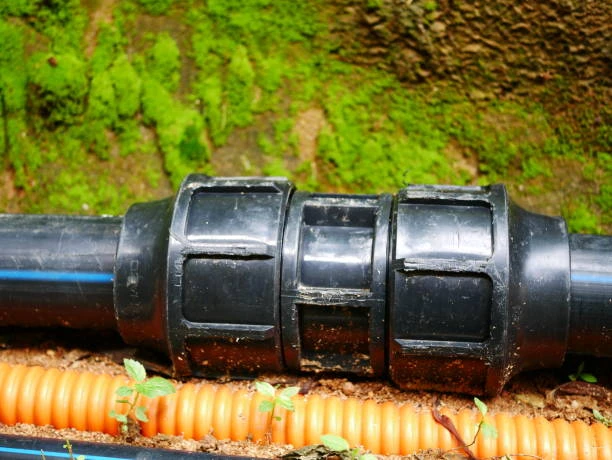
In modern infrastructure and fluid conveyance systems, the selection of appropriate piping materials is essential. One of the most widely used materials in various industries today is polyethylene, commonly known as PE. Specifically, PE pipe fittings have become indispensable in systems that demand strength, flexibility, and long-term performance. Among their many valuable characteristics, one that stands out significantly is their tensile strength. This article explores the tensile strength of raccords de tuyauterie en PE in depth, explaining its importance, how it is measured, and why it matters in real-world applications.
Introduction aux raccords de tuyauterie en PE
To understand the value of tensile strength, it is first necessary to understand what PE pipe fittings are. These fittings are components made from polyethylene resin, typically either PE80 or PE100, and are used to connect, redirect, or terminate PE pipes. Common types include elbows, tees, couplings, reducers, and end caps. These fittings serve critical functions in piping networks for water supply, gas distribution, sewage transport, industrial processing, and irrigation systems.
While properties like chemical resistance, temperature tolerance, and flexibility are often discussed, tensile strength remains a crucial yet sometimes overlooked factor. Nonetheless, this attribute directly impacts the performance, reliability, and safety of the entire piping system.
What Is Tensile Strength?
Tensile strength refers to the maximum amount of tensile (pulling or stretching) force a material can withstand before failing. It is measured as the force required to break a material sample divided by its cross-sectional area, typically expressed in megapascals (MPa). For pipe fittings, high tensile strength means the fitting can endure axial loads and pulling forces without cracking, deforming, or breaking apart.
In dynamic and high-pressure systems, tensile forces can arise due to fluid movement, thermal expansion, ground shifting, and installation stress. Therefore, a strong fitting ensures that the entire pipeline remains intact and leak-free over time.
Molecular Structure and Its Role in Strength
The molecular structure of polyethylene plays a significant role in its tensile properties. PE is a thermoplastic polymer composed of long chains of carbon and hydrogen. In PE100 and PE80 grades, the polymer chains are arranged in a dense, linear fashion with few side branches. This high molecular weight and tight chain packing result in enhanced mechanical strength, including improved tensile capacity.
Moreover, manufacturing techniques like extrusion and injection molding ensure that the polymer molecules are uniformly oriented, minimizing weak spots and maximizing strength. Cross-linking, used in certain PE variants like PEX, can further improve tensile resistance by bonding chains together, but even standard PE fittings already possess impressive strength characteristics.
Tensile Strength in PE Pipe Fittings vs. Pipes
It is important to distinguish between the tensile strength of PE pipes and that of PE fittings. Although both are made from similar materials, fittings often undergo different stresses during installation and use. Unlike pipes, which experience internal pressure, fittings can be subjected to external mechanical forces during fusion, assembly, or environmental movement.
For this reason, high tensile strength in fittings is essential. It ensures that joints hold together, even under longitudinal stress, and prevents pull-out failures. Modern PE fittings, when properly fused or joined, are often stronger than the pipe itself, meaning the failure is more likely to occur in the pipe than in the fitting.
Fusion Joints and Axial Strength
A major advantage of PE pipe fittings is the ability to join them using heat fusion or electrofusion techniques. These methods create a homogenous, monolithic connection between pipe and fitting. When done correctly, the joint’s tensile strength equals or exceeds that of the base materials.
This seamless fusion is particularly advantageous in applications where axial forces may pull on the joint. Instead of relying on mechanical grips or gaskets, the joint behaves as one continuous piece. As a result, the tensile integrity of the system is significantly enhanced, especially in long-distance piping runs, directional drilling applications, or areas prone to soil movement.
Tests et normes
To ensure the tensile performance of PE pipe fittings, standardized testing procedures are followed worldwide. Organizations such as ISO, ASTM, and EN have established methods for determining tensile strength and other mechanical properties.
One commonly used test is the tensile test, where a sample fitting is pulled until it breaks. Measurements such as ultimate tensile strength, elongation at break, and yield strength are recorded. For PE100 materials, the typical tensile strength ranges from 20 to 30 MPa, depending on the specific formulation and manufacturing quality.
Another related test is the pull-out resistance test for joints. This evaluates how much axial force is required to separate a pipe from a fitting. Successful fittings exceed minimum thresholds, ensuring they will not fail in field conditions.
Performances en conditions réelles
Beyond laboratory testing, the true value of tensile strength is observed in real-world scenarios. For example, in trenchless installations using horizontal directional drilling (HDD), pipes and fittings are pulled through boreholes over long distances. The fittings must withstand significant pulling force during this process.
Similarly, in above-ground applications where temperature fluctuations cause expansion and contraction, tensile forces develop along the pipe axis. Fittings with high tensile strength can resist these forces without failure, preserving the integrity of the system over time.
In seismic regions or areas with unstable soil, PE pipe systems often outperform traditional rigid materials due to their flexibility and tensile resilience. The ability of the fittings to stretch slightly without breaking allows the system to absorb shocks and ground movement.
Advantages over Other Materials
Compared to metal or rigid plastic fittings, PE fittings offer a superior combination of strength and flexibility. While metals like cast iron or steel may have higher raw tensile strength, they are also more brittle and prone to corrosion. On the other hand, rigid plastics like PVC or ABS can crack under stress, especially in cold conditions.
PE fittings strike an ideal balance. They possess enough tensile strength to handle pulling forces while maintaining ductility. This means they can stretch slightly under load and return to their original shape without breaking. In many ways, this combination results in longer-lasting, safer systems that require less maintenance.
Considérations de conception
When designing a piping system that utilizes PE pipe fittings, tensile strength should be a key consideration, especially for installations with high axial loads or thermal expansion. Engineers must account for the expected pulling forces, system pressure, temperature changes, and environmental factors.
Using fittings with certified tensile strength values ensures a safer design. In critical installations, reinforcing techniques such as stiffeners or anchor blocks may also be used. Additionally, ensuring proper fusion techniques during installation maximizes the tensile performance of each joint.
Durabilité à long terme
Over time, materials can degrade due to mechanical stress, chemical exposure, and environmental conditions. Fortunately, PE fittings show excellent resistance to fatigue and slow crack growth, which are common failure modes related to tensile loading.
Studies and field data indicate that PE pipe fittings can maintain their tensile performance for decades. In water distribution systems, 50-year service life is often expected, and in many cases, actual performance exceeds this estimate.
Furthermore, the low maintenance requirements of PE systems reduce the risk of accidental over-tightening, mechanical damage, or improper repairs that could compromise tensile strength. Once installed correctly, the system remains reliable with minimal intervention.
Applications Where Tensile Strength Matters
The tensile strength of PE pipe fittings becomes particularly crucial in certain applications:
- In mining and slurry transport systems, where high internal pressure and mechanical vibration are common
- In marine outfall systems, where pipes are dragged and submerged over long distances
- In geothermal systems, where axial movement occurs due to temperature cycles
- In buried gas pipelines, where ground settlement and vibration can cause longitudinal stress
In all these scenarios, high tensile strength provides peace of mind and ensures operational continuity.
Environmental Benefits of Durable Fittings
Strong and durable fittings not only improve system performance but also contribute to environmental sustainability. Systems with high tensile strength experience fewer failures, reducing water loss, gas leakage, or chemical spills. This, in turn, reduces the environmental impact and conserves valuable resources.
Moreover, since PE fittings have a long service life, the need for replacements is reduced, lowering material consumption and waste generation. The energy savings associated with fewer repairs and maintenance operations further contribute to sustainability.
Limitations and Safety Margins
Despite their excellent performance, it is important to recognize that PE pipe fittings, like all materials, have limits. Overstretching due to improper installation or external overloading can lead to plastic deformation or eventual failure. Therefore, it is essential to respect design limits and apply safety factors as outlined in engineering standards.
Using fittings from reputable manufacturers and adhering to best practices during fusion and installation ensures these safety margins are not compromised. Regular inspections and stress analysis can also help detect early signs of mechanical stress in critical installations.
Conclusion
In summary, the tensile strength of PE pipe fittings is a defining characteristic that enhances their functionality across a wide range of applications. From municipal water systems to industrial fluid networks, these fittings deliver robust performance, long-term reliability, and flexibility under stress.
Their ability to resist pulling forces, maintain joint integrity, and perform in harsh environments makes them an invaluable component in modern piping solutions. As infrastructure continues to evolve and face new challenges, materials like PE that combine strength with versatility will continue to lead the way.
By understanding and leveraging the tensile properties of PE pipe fittings, engineers and contractors can design safer, more resilient, and longer-lasting systems. Whether underground, underwater, or above ground, these fittings stand as a testament to how material science and engineering can work together to solve practical challenges efficiently and sustainably.
Norme internationale IFAN
Les tubes en polyéthylène d'IFAN sont conformes à un large éventail de normes internationales garantissant qualité, sécurité et compatibilité sur les marchés mondiaux. Parmi celles-ci figurent notamment les normes ASTM D3035, ASTM D3350, la série ISO 4427, la série EN 12201, DIN 8074/8075, la série GB/T 13663, AS/NZS 4130, JIS K6760, BS 6572 et CSA B137.1. Cette conformité complète témoigne de l'engagement d'IFAN à fournir des solutions de tuyauterie fiables répondant aux diverses exigences techniques des secteurs de l'approvisionnement en eau, de la distribution de gaz et des applications industrielles dans le monde entier.
Contact
IFAN est un fabricant professionnel fort de 30 ans d'expérience, spécialisé dans la production de tuyaux, raccords et vannes en plastique de haute qualité. Nos produits comprennent des vannes en laiton, des vannes en PPR, ainsi que divers tuyaux et raccords pour répondre aux différents besoins de nos clients. Que vous ayez besoin de tuyaux de plomberie et d'évacuation ou de vannes, IFAN propose une gamme diversifiée de produits de haute qualité et économiques pour vos projets. Vous trouverez nos coordonnées ci-dessous.
Nous répondrons à votre e-mail ou fax dans les 24 heures.
Vous pouvez nous appeler à tout moment si vous avez des questions sur notre production.
Pour plus d'informations, veuillez visiter notre site Web https://www.ifanplus.com/
Veuillez envoyer un mail à : [email protected]
WhatsApp : + 86 19857948982























