


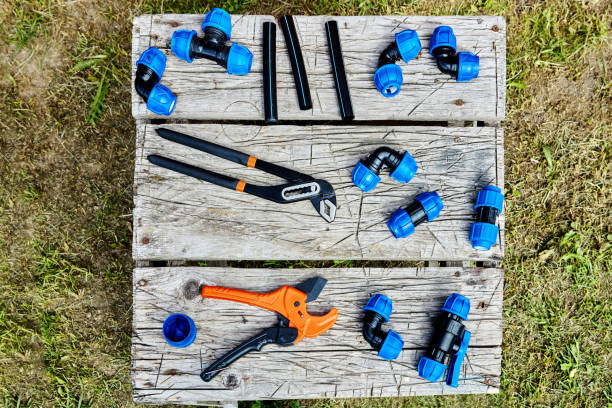
Blue HDPE fittings represent a cornerstone of modern water, gas, and industrial piping systems. Known for their durability, chemical resistance, and cost-effectiveness, these fittings have earned a reputation for exceptional reliability. Whether used in municipal water infrastructure or agricultural irrigation, blue HDPE fittings consistently deliver performance under pressure.
This comprehensive guide explores the core aspects of their reliability, including material integrity, design standards, joint technology, and real-world application data.
What Are Blue HDPE Fittings
Blue HDPE fittings are connectors made from high-density polyethylene. The blue color indicates suitability for potable water systems, offering clear identification in complex infrastructure layouts. These fittings include elbows, tees, couplings, reducers, and end caps that join HDPE pipes in a leak-free and durable way.
HDPE material offers a high strength-to-density ratio, allowing these fittings to withstand internal pressure and external stress while maintaining long-term performance.
Core Elements of Fitting Reliability
Several essential attributes contribute to the reliability of blue HDPE fittings:
- Material consistency
- Fusion bonding techniques
- Environmental resilience
- Pressure resistance
- Corrosion protection
- Low failure rates in field use
Reliability depends not only on the raw material but also on manufacturing quality, proper installation, and suitable application.
Molecular Structure Enhances Reliability
HDPE’s molecular structure gives it outstanding strength and flexibility. The polymer chains in high-density polyethylene are tightly packed and aligned, which improves its ability to resist deformation and cracking under stress.
This molecular integrity ensures that blue HDPE fittings retain shape and strength over decades of use, even in fluctuating pressure and temperature conditions.
Uniform Manufacturing Standards
To ensure reliability, blue HDPE fittings are produced under international manufacturing standards. These include:
- ISO 4427 (for water supply applications)
- ASTM D3261 (standard for thermoplastic fittings)
- EN 12201 (European specification for plastic piping systems)
Strict adherence to these standards ensures consistent wall thickness, jointing surface accuracy, and resistance to physical and chemical damage.
Long-Term Pressure Resistance
Blue HDPE fittings handle high pressure without losing form or function. Standard pressure ratings range from PN10 to PN20, suitable for most municipal and industrial water systems. They maintain structural integrity under continuous internal pressure over extended periods.
Their performance has been validated through pressure cycling tests, which simulate decades of operational stress in laboratory conditions.
Excellent Fusion Joint Strength
Fusion jointing, such as butt fusion or electrofusion, forms seamless bonds between pipes and fittings. The joint becomes a continuous piece of HDPE, eliminating mechanical weaknesses or leak paths.
Unlike mechanical couplings, fusion joints resist movement, pressure surges, and chemical attack. When installed correctly, fusion joints become as strong and reliable as the pipe itself.
Leak-Free Operation for Decades
Leak prevention is one of the main indicators of a fitting’s reliability. Blue HDPE fittings, when fused or joined correctly, offer a leak-free service life that exceeds . The material resists fatigue, vibration, and root intrusion—common causes of leakage in other piping systems.
Their reliability eliminates the need for frequent inspections or repairs, especially in buried systems where leak detection is challenging.
Résistance à la corrosion et à l'entartrage
Blue HDPE fittings do not rust, corrode, or scale. In comparison, metal fittings suffer from corrosion and often require protective coatings. HDPE’s resistance to chemicals and minerals ensures that fittings maintain full flow capacity throughout their service life.
This corrosion immunity greatly enhances long-term reliability, particularly in aggressive environments such as saline soils or chemically treated water systems.
Performance in Harsh Environments
Blue HDPE fittings perform reliably in extreme environments, including:
- Arid regions with high UV exposure (when UV-stabilized)
- Freezing temperatures, thanks to flexibility and crack resistance
- Zones à forte humidité where corrosion is a risk
- Seismic areas, where ground movement demands flexible infrastructure
The adaptability of HDPE fittings makes them more reliable than rigid alternatives in unstable or variable environments.
Low Maintenance Needs
Once installed, blue HDPE fittings require little or no maintenance. Their resistance to abrasion, fatigue, and chemical reactions reduces the need for regular service. Fewer system failures mean fewer operational disruptions and lower maintenance costs.
For utilities and industrial operators, this low maintenance profile represents a major advantage in system planning and reliability forecasting.
Résistance à la croissance biologique
The internal surface of HDPE fittings is smooth and hydrophobic. These surfaces resist bacterial growth, algae, and biofilm formation. This biological resistance supports reliable water quality and consistent flow in potable water and irrigation systems.
Because they discourage microbial contamination, blue HDPE fittings are preferred in hygiene-sensitive environments.
Case Studies Demonstrating Field Reliability
Blue HDPE fittings have been installed in public and private infrastructure worldwide for more than four decades. Field data shows that properly installed fittings continue to perform reliably after 40 to .
Exemples :
- Municipal water lines in Europe and North America
- Rural irrigation systems in arid climates
- Mining tailings systems, where chemical resistance is vital
- Subsea outfall pipes, which require corrosion-free performance
These long-term deployments confirm the reliability of HDPE fittings under diverse and demanding conditions.
Minimal Failure Rate
Compared to other piping systems, HDPE fittings exhibit some of the lowest failure rates in the industry. Studies by utilities and engineering firms show failure rates below 0.1 per 100 kilometers per year—significantly better than cast iron, PVC, or copper alternatives.
Failures typically result from installation errors rather than material fatigue, emphasizing the importance of correct handling.
Testing and Certification Processes
Before market release, blue HDPE fittings undergo extensive quality control and laboratory testing. These include:
- Pressure testing under simulated load cycles
- Thermal aging analysis to predict long-term performance
- Chemical immersion to test for material compatibility
- Joint integrity evaluations after fusion
Certified fittings offer proven reliability backed by physical data and manufacturing traceability.
Compatibility with Smart Monitoring
Modern HDPE systems often include embedded sensors or allow easy integration with leak detection and flow monitoring equipment. Blue HDPE fittings work seamlessly in these systems, enabling utilities to monitor flow conditions and act quickly if any issue arises.
Their compatibility with smart infrastructure adds another layer of operational reliability.
Installer Skill Improves Reliability
Reliability depends not just on the material but also on proper installation. Trained installers understand fusion procedures, handling guidelines, and quality checks. Certified contractors minimize the risk of joint failure or stress-induced leaks.
Training programs offered by manufacturers improve field success rates and reinforce the reliability of HDPE systems.
Flexibilité d'installation
Blue HDPE fittings are lightweight, making them easy to transport and position. Their flexibility enables installers to adjust pipe paths without causing mechanical stress. Fittings can also accommodate trenchless installations, such as directional drilling or pipe bursting.
This adaptability simplifies project execution and reduces the risk of stress fractures or joint misalignment, supporting long-term reliability.
Resistance to Ground Movement
In seismically active regions, blue HDPE fittings offer superior performance compared to brittle materials. Their ability to flex and absorb ground movement without breaking ensures uninterrupted operation after earthquakes or heavy construction activity nearby.
This resistance to environmental shifts makes HDPE the preferred option in geologically unstable areas.
Consistent Performance Across Pressure and Temperature Variations
HDPE fittings maintain performance across a wide pressure and temperature range. Unlike PVC or metal, HDPE does not crack under cold temperatures or expand excessively under heat. Its steady behavior under thermal cycling ensures reliability across seasons and climates.
Fittings remain structurally stable even in systems with variable water pressure or intermittent operation.
Sustainability Adds to Long-Term Value
Blue HDPE fittings support sustainable infrastructure due to their long lifespan and recyclability. Their durability reduces material waste, and at the end of their use, the material can be melted and reused without performance loss.
This circular use model not only benefits the environment but also ensures that the fittings remain a reliable, forward-looking choice for infrastructure projects.
Common Applications That Rely on HDPE Fittings
Blue HDPE fittings serve reliably in multiple applications:
- Urban water distribution
- Suburban and rural pipelines
- Systèmes d'irrigation agricole
- Fire water mains
- Industrial cooling and chemical transport
- Stormwater and drainage systems
Their use across these sectors demonstrates industry-wide trust in the reliability of HDPE connections.
Conclusion
The reliability of blue HDPE fittings stems from their robust material properties, advanced jointing methods, and proven field performance. These fittings maintain structural integrity under pressure, resist chemical and environmental damage, and provide decades of leak-free service.
With minimal maintenance needs and compatibility with smart infrastructure, HDPE fittings represent one of the most reliable options in modern piping systems. Engineers, designers, and utility managers consistently choose them for projects where long-term performance, durability, and cost-efficiency matter most.
As infrastructure continues to evolve, the role of blue HDPE fittings in delivering reliable, sustainable solutions will only grow stronger.
Norme internationale IFAN
Les raccords et tubes à compression en PEHD d'IFAN sont conformes à un large éventail de normes internationales, garantissant des performances élevées et une compatibilité mondiale. Parmi celles-ci figurent les normes ASTM D3035 et ASTM D3350 des États-Unis, les normes ISO 4427 et EN 12201 d'Europe, les normes DIN 8074/8075 d'Allemagne, GB/T 13663 de Chine, AS/NZS 4130 d'Australie et de Nouvelle-Zélande, JIS K6760 du Japon, BS 6572 du Royaume-Uni et CSA B137.1 du Canada. Le respect de ces normes garantit d'excellentes propriétés mécaniques, une résistance chimique et une durabilité à long terme pour diverses applications industrielles et d'approvisionnement en eau.
Contact
IFAN est un fabricant professionnel fort de 30 ans d'expérience, spécialisé dans la production de tuyaux, raccords et vannes en plastique de haute qualité. Nos produits comprennent des vannes en laiton, des vannes en PPR, ainsi que divers tuyaux et raccords pour répondre aux différents besoins de nos clients. Que vous ayez besoin de tuyaux de plomberie et d'évacuation ou de vannes, IFAN propose une gamme diversifiée de produits de haute qualité et économiques pour vos projets. Vous trouverez nos coordonnées ci-dessous.
Nous répondrons à votre e-mail ou fax dans les 24 heures.
Vous pouvez nous appeler à tout moment si vous avez des questions sur notre production.
Pour plus d'informations, veuillez visiter notre site Web https://www.ifanplus.com/
Veuillez envoyer un mail à : [email protected]
WhatsApp : + 86 19857948982























