


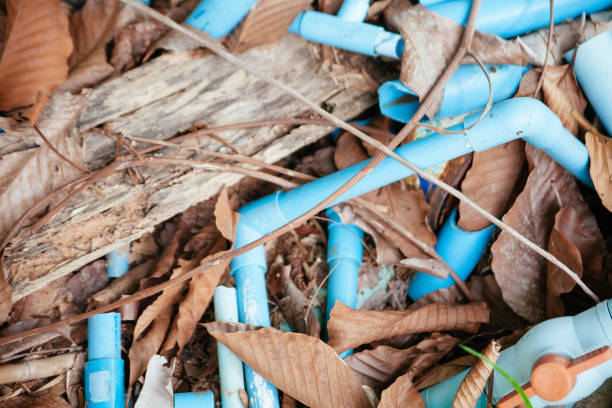
Chlorinated Polyvinyl Chloride (CPVC) water pipes continue to gain popularity across residential, commercial, and industrial plumbing systems. Their strength, chemical resistance, and durability make them an ideal choice for various piping applications. Among their many features, toughness plays a critical role in their performance. Toughness refers to a material’s ability to absorb energy and deform without breaking. In this article, we will explore how maintain to CPVC Water Pipe ughness under different conditions, how their structure contributes to this trait, and why this quality matters for real-world use.
Understanding CPVC Water Pipe and Its Toughness
Manufacturers create CPVC by chlorinating standard PVC resin. This process increases the chlorine content, resulting in a polymer with higher heat resistance and improved mechanical properties. The chlorination process changes the molecular structure of PVC, which enhances the pipe’s strength and flexibility. CPVC pipes combine rigidity with resilience. This balance of properties allows them to handle pressure, temperature changes, and mechanical stress without failure.
Mechanical Properties and Material Strength
CPVC pipes offer excellent tensile strength. The material resists cracking even when subjected to external forces. Unlike brittle plastics that fail under impact, CPVC remains strong and absorbs shock. When someone drops a CPVC pipe or hits it during installation, it rarely cracks. This behavior reflects the pipe’s impact resistance and ability to handle mechanical stress.
Engineers test CPVC pipes using industry-standard protocols. These tests include tensile strength, elongation at break, and modulus of elasticity. CPVC scores well in all these categories. It stretches slightly before failure, a sign of material toughness. The high modulus of elasticity ensures the pipe maintains its shape under pressure but does not shatter when stressed.
CPVC Water Pipe Resistance to Thermal Stress
Toughness also relates to thermal conditions. Pipes often undergo thermal cycling, especially in hot and cold water systems. CPVC handles these changes without cracking. When hot water passes through CPVC Water Pipe, the material expands slightly. As the water cools, it contracts. Repeated cycles of heating and cooling can cause fatigue in some materials, but CPVC resists this problem.
Installers often choose CPVC for hot water systems because it maintains integrity at high temperatures. The material withstands temperatures up to 93°C (200°F). Standard PVC can’t handle these conditions, but CPVC does so without losing strength. This temperature resistance contributes to overall toughness and long-term performance.
Impact Resistance in Low Temperatures
Some materials become brittle in cold environments, but CPVC resists impact even in low temperatures. Tests show that CPVC maintains strength and flexibility down to freezing conditions. This ability makes it suitable for use in unheated areas such as basements, garages, and outdoor installations. In cold climates, plumbers rely on CPVC because it does not crack easily during winter.
When contractors install pipes during winter construction projects, they need reliable materials. CPVC offers that reliability. The pipes handle drops, cuts, and tool impact without damage, even when temperatures fall below freezing. This behavior sets them apart from many other plastic pipes.
Chemical Resistance and Environmental Stress
CPVC resists degradation caused by exposure to a wide range of chemicals. This property adds to its toughness because chemical damage can weaken other piping materials. CPVC resists acids, alkalis, salts, and many organic compounds. This chemical resistance ensures that pipes remain strong in corrosive environments, such as laboratories, chemical plants, or industrial kitchens.
Environmental stress cracking occurs when materials face constant chemical exposure and mechanical stress. CPVC Water Pipes resists this form of failure. The strong molecular bonds in CPVC prevent crack initiation and growth, even under prolonged chemical exposure. This characteristic makes CPVC a top choice for chemical handling systems.
CPVC Water Pipe Durability Under Pressure
CPVC pipes handle high internal pressures without leaking or bursting. In pressurized systems, water moves through pipes under force. The pipe material must endure this pressure for decades. CPVC meets this challenge with ease. In pressure tests, CPVC Water Pipes perform reliably at pressures up to 400 psi, depending on pipe diameter and wall thickness.
When engineers design water supply systems, they calculate pressure losses and choose materials that handle these forces. CPVC provides peace of mind due to its consistent performance under stress. It doesn’t deform or rupture, even when the system experiences surges or spikes in water pressure.
Flexibilité et robustesse
Toughness does not always mean rigidity. In fact, flexibility often contributes to toughness. CPVC exhibits a degree of flexibility that allows it to bend slightly under load. This quality reduces the risk of sudden failure. During earthquakes or ground shifts, CPVC pipes flex slightly and avoid breaking. Rigid materials often crack under these conditions, but CPVC handles them with resilience.
Installers also appreciate this flexibility during pipe routing. CPVC bends slightly without breaking, which simplifies alignment and connection. This behavior reduces installation time and improves system longevity. Fewer rigid joints and connections mean fewer points of failure.
Performance in Fire-Prone Areas
CPVC offers excellent fire resistance compared to many plastic piping materials. It does not support combustion and will self-extinguish when the heat source is removed. This behavior adds to overall toughness because fire-prone environments demand strong materials. Sprinkler systems often use CPVC pipes for this reason.
Fire exposure weakens some piping materials, but CPVC retains its shape longer. This delay gives emergency systems more time to operate. In many jurisdictions, building codes approve CPVC Water Pipes for use in fire sprinkler systems because of its strong fire performance ratings. The pipe’s toughness plays a crucial role in life-safety systems.
Long-Term Service Life
CPVC pipes remain tough over time. Age does not reduce their strength as quickly as it does with some other plastics. Many systems operate for decades without performance loss. Researchers have conducted accelerated aging tests on CPVC Water Pipes to simulate years of use. The results show little change in impact resistance, pressure tolerance, or thermal performance.
Homeowners and facility managers prefer materials that last. CPVC satisfies this demand by maintaining its properties throughout the system’s life. This long-term reliability reduces maintenance costs and downtime. In commercial settings, operators want systems that perform without frequent repair. CPVC delivers that performance.
Installation Techniques That Preserve Toughness
Proper installation helps maintain the toughness of CPVC pipes. Installers use special solvent cement to join the pipes. This method fuses the material at a molecular level, creating a strong bond. The joints become as tough as the pipe itself. Unlike mechanical fittings, solvent-welded joints do not loosen over time.
During cutting and handling, CPVC resists damage. Workers can cut it with simple tools and install it without special equipment. It does not splinter or crack during installation. Installers also avoid over-tightening, which could stress the pipe. CPVC tolerates some pressure but benefits from balanced and careful installation.
Real-World Applications That Rely on Toughness
Many industries rely on CPVC’s toughness. In residential plumbing, homeowners enjoy dependable hot and cold water systems. In hotels and apartment buildings, CPVC supports high-demand systems without failure. Hospitals and labs use CPVC because it handles high temperatures and chemicals without degradation.
Manufacturing plants and food processing facilities choose CPVC for its strength and chemical resistance. These settings require durable materials that handle daily abuse. CPVC provides toughness without sacrificing safety or cleanliness. Its smooth interior surface resists scale buildup, which preserves flow rate and pressure.
Environmental Conditions and Field Performance
CPVC performs well in various environments. Whether exposed to sunlight, moisture, or vibration, it keeps its shape and integrity. In some cases, UV exposure can degrade plastic materials. CPVC resists this effect better than many others. When necessary, users can paint exposed pipes to block UV rays.
In high-humidity areas, CPVC resists mold and mildew growth. The smooth surface does not support microbial activity. This hygiene factor adds value in places like hospitals, commercial kitchens, and schools. When exposed to vibration from pumps or machinery, CPVC absorbs the motion without cracking. Its toughness shields the system from mechanical failure.
Toughness Compared to Other Materials
When compared to copper, CPVC Water Pipes offer different advantages. Copper can corrode or burst under certain water conditions. CPVC resists corrosion and handles pressure equally well. It weighs less than copper, which eases installation and transport. Unlike copper, CPVC resists scaling and maintains clean water flow.
Compared to PEX, CPVC offers higher temperature resistance. PEX pipes often expand and contract more than CPVC, which increases wear over time. CPVC maintains dimensional stability better. It also resists chemical exposure more effectively than PEX. These advantages make CPVC a great choice for demanding plumbing systems.
CPVC Water Pipes Sustainable Use and Endurance
Toughness also relates to sustainability. When materials last longer, they reduce waste. CPVC’s long service life means fewer replacements, less material waste, and lower energy use over time. Manufacturers often produce CPVC pipes using efficient processes with minimal emissions. The pipes require less maintenance and repair, which saves resources.
Recyclers can also process CPVC at the end of its life. While not as commonly recycled as metals, CPVC can enter certain recycling streams for plastics. As awareness grows, more facilities may begin to handle CPVC recycling. The long life and toughness of CPVC reduce its environmental footprint overall.
Conclusion
CPVC water pipes deliver impressive toughness through a combination of thermal resistance, chemical strength, impact durability, and pressure tolerance. The material withstands the rigors of real-world plumbing systems across residential, commercial, and industrial settings. Installers, engineers, and building owners rely on CPVC because it performs consistently over time. Its strength ensures system safety, reliability, and longevity. By maintaining its integrity under stress, CPVC proves its toughness every day, in every pipe, and in every application.
Norme internationale IFAN
Les produits en PEHD d'IFAN sont conformes à diverses normes internationales, garantissant qualité, durabilité et fiabilité. Parmi ces normes figurent les normes ASTM D3035 et ASTM D3350, qui définissent les spécifications des tubes et matériaux en polyéthylène (PE). Les normes ISO 4427 et EN 12201 établissent des références mondiales pour les tubes en PE utilisés dans les réseaux d'approvisionnement en eau. De plus, les normes DIN 8074/8075 et GB/T 13663 établissent les exigences de performance et de dimension des tubes en PEHD sur les marchés européen et chinois. D'autres normes reconnues, telles que AS/NZS 4130 (Australie/Nouvelle-Zélande), JIS K6760 (Japon), BS 6572 (Royaume-Uni) et CSA B137.1 (Canada), témoignent de l'engagement d'IFAN à respecter les réglementations industrielles mondiales.
Contact
IFAN est un fabricant professionnel fort de 30 ans d'expérience, spécialisé dans la production de tuyaux, raccords et vannes en plastique de haute qualité. Nos produits comprennent des vannes en laiton, des vannes en PPR, ainsi que divers tuyaux et raccords pour répondre aux différents besoins de nos clients. Que vous ayez besoin de tuyaux de plomberie et d'évacuation ou de vannes, IFAN propose une gamme diversifiée de produits de haute qualité et économiques pour vos projets. Vous trouverez nos coordonnées ci-dessous.
Nous répondrons à votre e-mail ou fax dans les 24 heures.
Vous pouvez nous appeler à tout moment si vous avez des questions sur notre production.
Pour plus d'informations, veuillez visiter notre site Web https://www.ifanplus.com/
Veuillez envoyer un mail à : [email protected]
WhatsApp : + 86 19857948982























