


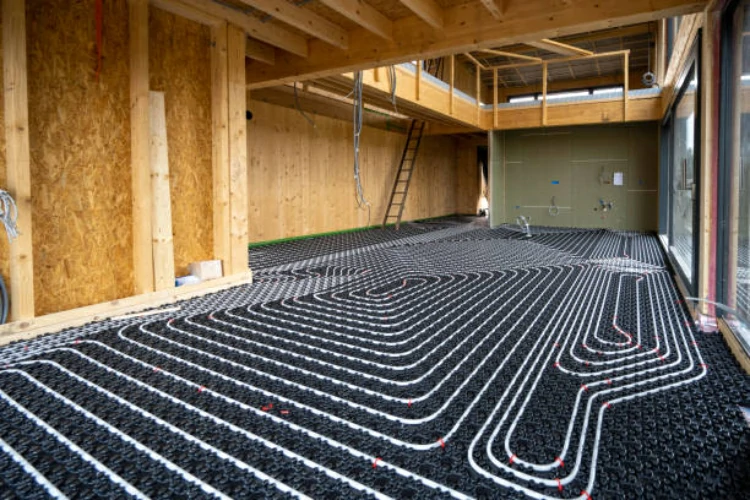
xPEX (cross-linked polyethylene) pipelines have gained popularity in various plumbing and heating applications due to their exceptional durability and flexibility. A critical factor contributing to their widespread use is their heat resistance. In this article, we will delve into the heat resistance of PEX pipelines, exploring their performance under high temperatures, the impact on long-term durability, and their comparative advantage over other piping materials.
Understanding PEX Heat Resistance
Tolérance à la température
PEX pipelines are renowned for their ability to withstand high temperatures. Typically, PEX can handle temperatures up to 200°F (93°C) for short periods and maintain continuous operation at temperatures around 180°F (82°C). This makes them suitable for hot water distribution and radiant heating systems, where consistent exposure to elevated temperatures is common.
Processus de réticulation
The cross-linking process, which involves creating chemical bonds between polymer chains, enhances the thermal stability of PEX. There are three types of cross-linking methods: PEX-A, PEX-B, and PEX-C. Each method influences the heat resistance slightly differently:
PEX-A:
Uses the Engel method, providing the highest degree of cross-linking (up to 85%). This results in excellent flexibility and heat resistance.
PEX-B:
Uses the Silane method, achieving moderate cross-linking (65-70%), offering a good balance between cost and performance.
PEX-C:
Uses the Electron Beam method, resulting in the lowest degree of cross-linking (70-75%) among the three but still maintaining adequate heat resistance.
Impact on Long-Term Durability
Dilatation et contraction thermiques
PEX pipelines exhibit low thermal expansion and contraction rates compared to traditional materials like copper or PVC. This property reduces the risk of stress on the piping system, which can lead to leaks or failures over time. PEX’s flexibility allows it to expand and contract without compromising its integrity, making it ideal for environments with fluctuating temperatures.
Resistance to Scale and Corrosion
Unlike metal pipes, PEX does not corrode or scale over time, even when exposed to hot water. This resistance extends the lifespan of the piping system, ensuring reliable performance for decades. The absence of scale buildup also maintains the efficiency of hot water delivery, as the internal diameter of the pipes remains unobstructed.
Résistance à la fatigue
PEX’s ability to withstand repeated thermal cycling without degrading is a testament to its superior fatigue resistance. This characteristic is particularly crucial in heating systems where pipes undergo continuous temperature changes. PEX maintains its strength and flexibility, ensuring consistent performance under varying thermal conditions.
Comparative Advantage Over Other Piping Materials
PEX vs. Cuivre
Copper pipes have been a traditional choice for plumbing systems, but PEX offers several advantages in terms of heat resistance:
Flexibilité:
PEX’s flexibility reduces the need for fittings and joints, which are potential failure points in copper systems.
Rentabilité:
PEX is generally more affordable than copper, both in material costs and installation expenses.
Résistance à la corrosion:
Unlike copper, PEX does not corrode or pit over time, especially in aggressive water conditions.
PEX contre PVC
PVC pipes are commonly used for cold water distribution and drainage, but they fall short in high-temperature applications. PEX outperforms PVC in several aspects:
Tolérance à la chaleur:
PEX can handle much higher temperatures than PVC, which typically cannot withstand temperatures above 140°F (60°C).
Durabilité:
PEX is more resilient to temperature fluctuations, making it a better choice for systems exposed to both hot and cold water.
Flexibilité et facilité d'installation:
PEX’s flexibility simplifies installation and reduces the need for numerous fittings, which can be a significant advantage over rigid PVC pipes.
PEX contre CPVC
CPVC (chlorinated polyvinyl chloride) is another alternative used in hot water systems. However, PEX still holds several benefits:
Flexibilité:
PEX’s flexibility allows for easier installation in tight spaces and reduces the risk of cracking under stress.
Résistance chimique:
PEX is less susceptible to chemical degradation compared to CPVC, especially in environments with varying water quality.
Performance à long terme:
PEX’s superior fatigue resistance and lower thermal expansion rate provide a more reliable long-term performance.
Conclusion
PEX pipelines offer outstanding heat resistance, making them a preferred choice for various plumbing and heating applications. Their ability to withstand high temperatures, combined with long-term durability and comparative advantages over other materials, underscores their suitability for modern piping systems. By choosing PEX, users can ensure a reliable, cost-effective, and long-lasting solution for their hot water distribution and heating needs.
Contact
IFAN Fort de 30 ans d'expérience, nous sommes un fabricant professionnel de tuyaux, raccords et vannes en plastique de haute qualité. Nos produits comprennent des vannes en laiton, des vannes en PPR, ainsi que divers tuyaux et raccords pour répondre aux différents besoins de nos clients. Que vous ayez besoin de tuyaux de plomberie et d'évacuation ou de vannes, IFAN Nous proposons une gamme diversifiée de produits de haute qualité et économiques pour soutenir vos projets. Vous trouverez ci-dessous nos coordonnées.
Nous répondrons à votre e-mail ou fax dans les 24 heures.
Vous pouvez nous appeler à tout moment si vous avez des questions sur notre production.
Pour plus d'informations, veuillez visiter notre site Web https://www.ifanplus.com/
Veuillez envoyer un mail à : [email protected]























