


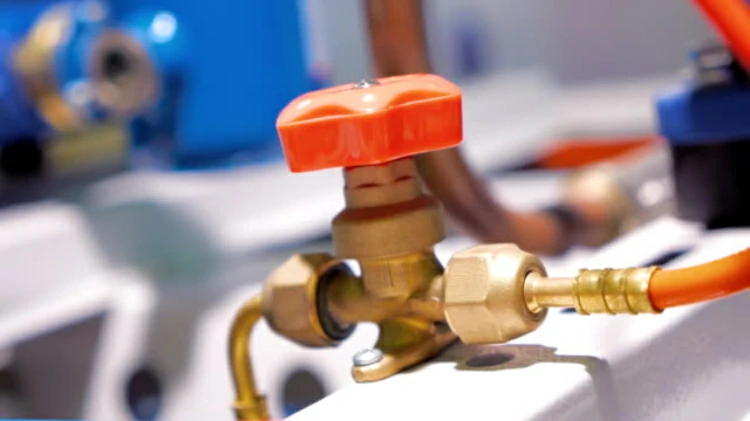
Brass stop valves, also known as brass shut-off valves or brass isolation valves, are essential components in plumbing systems, providing control over the flow of water or other fluids. Let’s explore the fundamental structure and operational principles of brass stop valve.
1. Components of Brass Stop Valves
Brass stop valves consist of several key components, each playing a crucial role in regulating the flow of fluids:
Valve Body:
The main body of the brass stop valve typically consists of brass, a durable and corrosion-resistant material. It houses the internal components and provides structural support to the valve assembly.
Stem:
The stem extends from the valve handle to the valve’s internal mechanism. When the handle is turned, the stem moves up or down, opening or closing the valve.
Disc:
The disc, also known as the valve plug or gate, attaches to the end of the stem. It seals against the valve seat to stop or allow the flow of fluid through the valve.
Siège de soupape :
The valve seat is a sealing surface located inside the valve body. When the valve is closed, the disc presses against the valve seat, forming a tight seal to prevent fluid from passing through.
Handle:
The handle is used to manually operate the valve. By turning the handle clockwise or counterclockwise, the user can open or close the valve, respectively.
2. Working Principle of Brass Stop Valves
Brass stop valves operate on a simple yet effective principle to control the flow of fluid. Here’s how they work:
Opening the Valve:
When the valve handle turns counterclockwise, it moves the stem upward, lifting the disc away from the valve seat. This action creates an opening, allowing fluid to flow through the valve.
Closing the Valve:
Conversely, when the valve handle is turned clockwise, the stem moves downward, forcing the disc against the valve seat. The tight seal formed between the disc and the valve seat stops the flow of fluid through the valve.
Regulating Flow:
The position of the valve handle determines the degree to which the valve is open or closed, allowing users to regulate the flow of fluid according to their requirements.
3. Applications of Brass Stop Valves
Brass stop valves find widespread use in various plumbing applications, including:
Plomberie résidentielle :
Brass stop valves are commonly used in homes and residential buildings to control the flow of water in faucets, toilets, showers, and other fixtures.
Plomberie commerciale :
Commercial settings like offices, schools, and hospitals utilize brass stop valves in plumbing systems to regulate water supply and distribution.
Applications industrielles :
Industrial facilities use brass stop valve in pipelines, equipment, and machinery to control the flow of liquids, gases, and other fluids.
Conclusion
Brass stop valves are indispensable components in plumbing systems, offering reliable control over the flow of fluids. With their robust construction and straightforward operation, brass stop valve provide efficient and effective solutions for a wide range of residential, commercial, and industrial applications. Understanding the basic structure and working principles of brass stop valve is essential for ensuring their proper installation, operation, and maintenance.
Contact
IFAN Fort de 30 ans d'expérience, nous sommes un fabricant professionnel de tuyaux, raccords et vannes en plastique de haute qualité. Nos produits comprennent des vannes en laiton, des vannes en PPR, ainsi que divers tuyaux et raccords pour répondre aux différents besoins de nos clients. Que vous ayez besoin de tuyaux de plomberie et d'évacuation ou de vannes, IFAN Nous proposons une gamme diversifiée de produits de haute qualité et économiques pour soutenir vos projets. Vous trouverez ci-dessous nos coordonnées.
Nous répondrons à votre e-mail ou fax dans les 24 heures.
Vous pouvez nous appeler à tout moment si vous avez des questions sur notre production.
Pour plus d'informations, veuillez visiter notre site Web https://www.ifanplus.com/
Veuillez envoyer un mail à : [email protected]























