


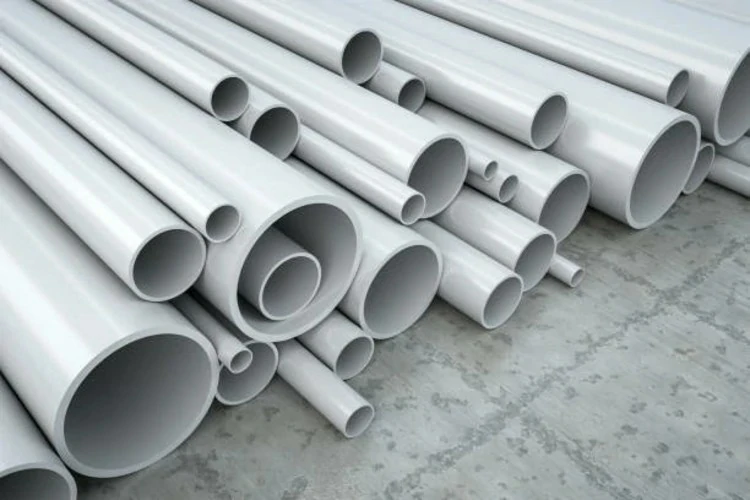
Introduction to CPVC Plumbing Production
CPVC plumbing systems have revolutionized the plumbing industry with their outstanding durability, chemical resistance, and ease of installation. Behind the scenes of every CPVC pipe and fitting lies a meticulous manufacturing process that ensures the highest quality and performance standards. In this segment, we’ll delve into the intricate production methods employed in crafting CPVC plumbing products, providing insights into the key stages and techniques involved.
1. Resin Preparation: The Foundation of CPVC Plumbing Production
Introduction to CPVC Resin
CPVC plumbing production starts with preparing CPVC resin, the foundation of CPVC pipes and fittings. CPVC resin is derived from PVC through controlled chlorination, altering PVC’s molecular structure. This process enhances the polymer’s heat resistance, chemical stability, and mechanical strength, making it ideal for plumbing.
Chlorination Process
The chlorination process involves exposing PVC resin to chlorine gas in a reactor vessel at elevated temperatures. Under carefully controlled conditions of temperature, pressure, and reaction time, chlorine atoms replace hydrogen atoms in the PVC polymer chain, resulting in the formation of CPVC resin. This chlorination reaction increases the polymer’s chlorine content and introduces chlorine atoms into the polymer backbone, imparting unique properties to the CPVC resin, such as heat resistance and chemical inertness.
Mesures de contrôle de la qualité
During the chlorination process, manufacturers enforce stringent quality control measures to ensure the uniformity and consistency of CPVC resin. They meticulously monitor parameters such as chlorine content, molecular weight distribution, and thermal stability to meet the requirements for CPVC plumbing applications. Advanced analytical techniques, including spectroscopy, chromatography, and rheology, assess resin properties to ensure compliance with industry standards.
2. Extrusion and Molding: Shaping CPVC Resin into Plumbing Products
Procédé d'extrusion
CPVC resin undergoes extrusion or molding to shape it into pipes, fittings, and other plumbing components. Extrusion, the primary method, melts CPVC resin and forces it through a die to form a continuous profile with desired dimensions. The cooled and cut profile produces CPVC pipes of various sizes and configurations.
Molding Process
For manufacturing CPVC fittings and complex plumbing components, molding techniques such as injection molding or compression molding are employed. In injection molding, molten CPVC resin is injected into a mold cavity under high pressure, where it solidifies and takes the shape of the mold. Compression molding involves placing preheated CPVC resin into a heated mold cavity and applying pressure to form the desired shape. Both methods offer precision, efficiency, and versatility in producing CPVC fittings with intricate designs and tight tolerances.
Quality Assurance
Throughout the extrusion and molding processes, manufacturers enforce stringent quality assurance measures to guarantee the dimensional accuracy, structural integrity, and surface finish of CPVC plumbing products. They conduct automated inspection systems, visual inspections, and dimensional measurements to detect defects or irregularities in finished products. Additionally, they subject samples to rigorous testing for mechanical properties, chemical resistance, and hydraulic performance to verify compliance with industry standards and specifications.
Conclusion
CPVC plumbing undergoes a meticulous manufacturing process, blending advanced technology, precise engineering, and stringent quality control. From PVC resin chlorination to CPVC pipe and fitting extrusion, each stage ensures high-quality, durable products. Understanding CPVC plumbing production ensures consistent performance and longevity in various applications.
Contact
IFAN Fort de 30 ans d'expérience, nous sommes un fabricant professionnel de tuyaux, raccords et vannes en plastique de haute qualité. Nos produits comprennent des vannes en laiton, des vannes en PPR, ainsi que divers tuyaux et raccords pour répondre aux différents besoins de nos clients. Que vous ayez besoin de tuyaux de plomberie et d'évacuation ou de vannes, IFAN Nous proposons une gamme diversifiée de produits de haute qualité et économiques pour soutenir vos projets. Vous trouverez ci-dessous nos coordonnées.
Nous répondrons à votre e-mail ou fax dans les 24 heures.
Vous pouvez nous appeler à tout moment si vous avez des questions sur notre production.
Pour plus d'informations, veuillez visiter notre site Web https://www.ifanplus.com/
Veuillez envoyer un mail à : [email protected]























