


Introduction
Introduction Les robinets à boisseau sphérique en laiton sont des composants essentiels des systèmes de plomberie, assurant un contrôle fiable du débit des fluides. Comprendre leur principe de fonctionnement et leur structure est essentiel pour une conception et une maintenance efficaces des systèmes. Cet article explore leur fonctionnalité et leur construction, mettant en lumière leur importance dans divers secteurs. Principe de fonctionnement
Working Principle of Brass Ball Valve
Brass ball valves operate on a simple yet effective principle to control the flow of liquids or gases. The main component is a hollow, perforated, and pivoting ball that regulates the flow through it. When you turn the handle, it rotates the ball to either allow or block the passage of fluid, depending on its orientation relative to the valve body. This rotational movement provides precise control over flow rates, making brass ball valves suitable for a wide range of applications.
Structure of Brass Ball Valve
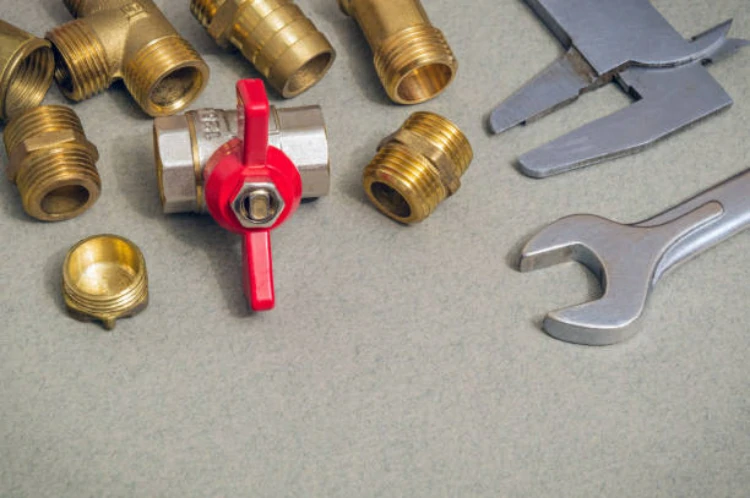
- Corps de vanne: The valve body is the main housing that encloses all internal components of the brass ball valve. It is typically made of durable brass material, providing strength and resistance to corrosion. The design of the valve body may vary depending on the specific application and pressure requirements.
- Balle: The central component of the brass ball valve consists of the spherical ball with a hole drilled through its center. Typically, manufacturers craft this ball from brass or stainless steel to ensure longevity and reliability. The ball’s smooth surface and precise machining allow for seamless rotation within the valve body, facilitating efficient fluid control.
- Sièges et joints: Brass ball valves have elastomeric seats and seals located within the valve body, ensuring a tight seal when you close the valve. These seals prevent leakage and enhance the valve’s performance, especially in high-pressure applications. Common seal materials include PTFE (polytetrafluoroethylene) and NBR (nitrile rubber), chosen for their chemical compatibility and resilience.
- Stem and Handle: The stem connects the ball to the handle and facilitates rotational movement when the handle is turned. It is crucial for transmitting torque from the handle to the ball, controlling the flow of fluid. The handle provides manual operation of the valve, allowing users to open, close, or adjust the flow rate as needed.
- End Connections: Brass ball valves feature various end connections, such as threaded, soldered, or flanged, to accommodate different piping systems and installation requirements. These end connections ensure secure attachment of the valve to the pipeline, minimizing the risk of leaks or disconnections.
Conclusion
In conclusion, brass ball valves play a vital role in controlling fluid flow in plumbing and industrial systems. Their simple yet robust design, consisting of a valve body, ball, seats, seals, stem, handle, and end connections, enables precise regulation of flow rates with minimal effort. Understanding the working principle and structure of brass ball valves is essential for optimizing system performance and ensuring reliable operation in diverse applications.
Contact
IFANPLUS est une gamme de produits spécialisés lancée par IFAN, couvrant principalement les tubes en plastique, les raccords et divers types de vannes. Nous proposons des tubes en PPR et en PVC conformes aux normes allemandes et américaines, garantissant ainsi la qualité et la fiabilité de nos produits. La gamme de vannes IFANPLUS comprend une variété de vannes, des vannes en PPR aux vannes en cuivre, répondant à vos besoins spécifiques. Quel que soit le produit dont vous avez besoin, IFANPLUS sera votre partenaire de confiance. Voici nos coordonnées.
Nous répondrons à votre e-mail ou fax dans les 24 heures.
Vous pouvez nous appeler à tout moment si vous avez des questions sur notre production.
Pour plus d'informations, veuillez visiter notre site Web https://www.ifanplus.com/
Veuillez envoyer un mail à : [email protected]























