


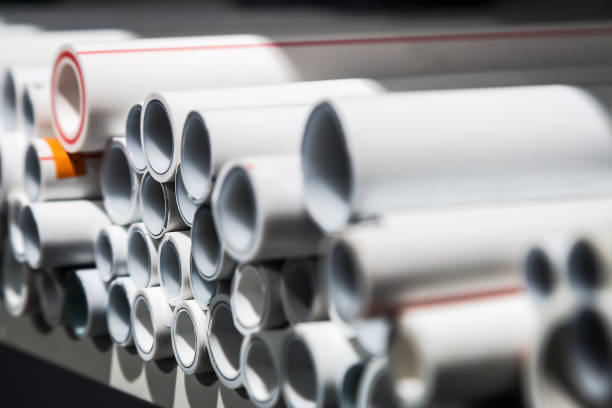
The choice of drinking water piping is crucial for water safety
In residential homes, commercial buildings, and public water supply systems, drinking water pipes play a vital role in transporting clean water. With advancements in plastic piping technology, PPR and PVC pipes have become two of the most common types of water supply piping on the market. While both are lightweight, corrosion-resistant, and easy to install, their performance characteristics and suitability for transporting drinking water differ. Therefore, understanding the features of each material is essential for selecting the right water supply system.
Material Characteristics of PPR Piping
PPR (Random Copolymer Polypropylene) piping is a type of water supply pipe widely used in hot and cold water distribution systems. Its key features include high-temperature resistance, corrosion resistance, and a long service life. PPR pipes utilize heat-fusion welding technology; once connected, they form a seamless. Integrated structure with secure joints that are highly resistant to leaks.
Additionally, PPR pipes feature smooth inner walls that minimize flow resistance and prevent the buildup of scale and impurities. Ensuring consistent water transport performance over the long term. Consequently, PPR piping has become a popular choice for modern residential water supply installations.
Key Advantages of PVC Piping
PVC (Polyvinyl Chloride) piping is manufactured primarily from polyvinyl chloride resin. Known for its cost-effectiveness, high mechanical strength, and ease of installation, it is widely used in drainage systems, agricultural irrigation, and industrial transport applications.
Due to their high rigidity, PVC pipes perform well in cold water transport applications. They also exhibit strong resistance to acid and alkali corrosion, making them suitable for a variety of demanding environments. However, when used in drinking water systems, factors such as hygienic performance and temperature resistance must be carefully considered.
Hygienic Performance Determines Drinking Water Quality
Hygienic performance is a critical factor when transporting drinking water. High-quality PPR pipes are manufactured using food-grade polypropylene; they do not contaminate the water or impart odors, thereby effectively ensuring the safety of the drinking water supply.
While there are PVC products that meet drinking water standards, some standard PVC pipes utilize stabilizers and other additives during manufacturing. If product quality is substandard, long-term drinking water safety could be compromised. For this reason, PPR piping is often the preferred choice for residential and public water supply projects where hygiene standards are high.
Temperature Resistance Affects Application Scope
Modern building water supply systems typically handle both cold and hot water; therefore, the temperature resistance of the piping is crucial. PPR pipes can withstand high-temperature water flow over the long term, making them suitable for both cold and hot water systems.
In contrast, PVC pipes have lower heat resistance and are prone to softening and deformation as temperatures rise. Consequently, PVC pipes are better suited for transporting cold water at ambient temperatures rather than for domestic hot water lines. In terms of application scope, PPR pipes offer greater versatility.
Connection Methods Affect Reliability
The quality of pipe connections directly impacts the safe operation of the water supply system. PPR pipes utilize heat-fusion welding, which fuses the pipe and fittings into a single, permanent unit. This results in high joint strength and resistance to aging, effectively minimizing the risk of leaks.
PVC pipes primarily rely on solvent welding (gluing); while this method allows for quick and easy installation, the quality of the connection is susceptible to workmanship and environmental factors. Uneven application of adhesive or improper installation techniques can lead to loosening or leakage over time. Thus, PPR pipes hold the advantage regarding long-term, stable operation.
Conclusión
A comprehensive comparison of PPR and PVC pipes—considering hygiene, temperature resistance, connection methods, service life, and application scope—reveals that PPR pipes are better suited for potable water transport. They effectively ensure water safety, accommodate both cold and hot water supply needs, offer a long service life, and entail low maintenance costs. While PVC pipes offer a price advantage and perform well in drainage and cold-water transport, they have limitations regarding potable water—and especially hot water—transport. Therefore, for residential and building water supply systems, selecting high-quality PPR piping is generally the safer, more reliable, and more durable solution.
Contacto
IFAN es un fabricante profesional con 30 años de experiencia, dedicado a la producción de tuberías, accesorios y válvulas de plástico de alta calidad. Nuestros productos incluyen válvulas de latón, válvulas PPR, así como diversos tubos y accesorios para satisfacer las diferentes necesidades de nuestros clientes. Ya sea que necesite tuberías de plomería y drenaje o válvulas, IFAN le ofrece una amplia gama de productos de alta calidad y económicos para apoyar sus proyectos. A continuación, encontrará nuestra información de contacto.
Responderemos su correo electrónico o fax dentro de las 24 horas.
Puede llamarnos en cualquier momento si tiene alguna pregunta sobre nuestra producción.
Para obtener más información, visite nuestro sitio web. https://www.ifanplus.com/
Por favor envíelo a: [email protected]
WhatsApp: +86 19857948982
Norma internacional IFAN
Los productos IFAN cumplen con una amplia gama de normas internacionales, lo que garantiza seguridad, fiabilidad y compatibilidad global. Entre ellas, se incluyen ASTM 2846, DIN 8079/8080, ASTM F441/F441M SCH80, diversas especificaciones DIN, las normas de la serie GB/T 18993, AS/NZS 1477, CSA B137.6, NSF/ANSI 14 y TIS 17-2532/1131-2535. Al cumplir con estas reconocidas normas, IFAN garantiza una calidad y un rendimiento consistentes en diferentes regiones y aplicaciones.























