Related products
-
¡Oferta!
 Industria del plástico
Codo de conexión para tubo PPR de alta calidad al por mayor de IFAN Chuangrong
-
¡Oferta!
 Industria del plástico
Conector de conexión PPR IFAN OEM ODM a precios económicos
-
¡Oferta!

-
¡Oferta!
 Industria del plástico
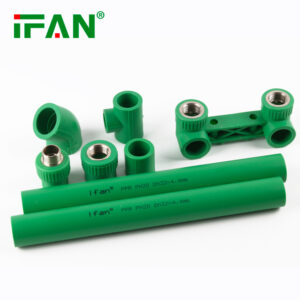
Conector hembra y macho de PPR IFAN chuangrong
PPR Female Socket Technical Specifications and Applications
Descripción general del producto
PPR female sockets represent an essential category of transition fittings that bridge the gap between polypropylene random copolymer (PPR) piping systems and conventional threaded components. These innovative hybrid fittings combine the benefits of thermal fusion welding on the PPR side with the versatility of threaded connections on the opposing end. The design typically incorporates a high-quality brass insert molded into the PPR body during manufacturing, creating a durable interface that withstands repeated assembly and disassembly.
The dual-connection capability makes these fittings particularly valuable in systems requiring periodic maintenance or component replacement. Unlike standard PPR fittings that create permanent joints, female sockets introduce serviceability to PPR systems while maintaining the material’s inherent corrosion resistance and hydraulic efficiency. This unique combination addresses one of the few limitations of pure PPR systems – the difficulty of creating demountable connections without compromising system integrity.
Características y beneficios clave
The PPR female socket offers numerous technical and practical advantages that explain its widespread adoption in modern piping installations:
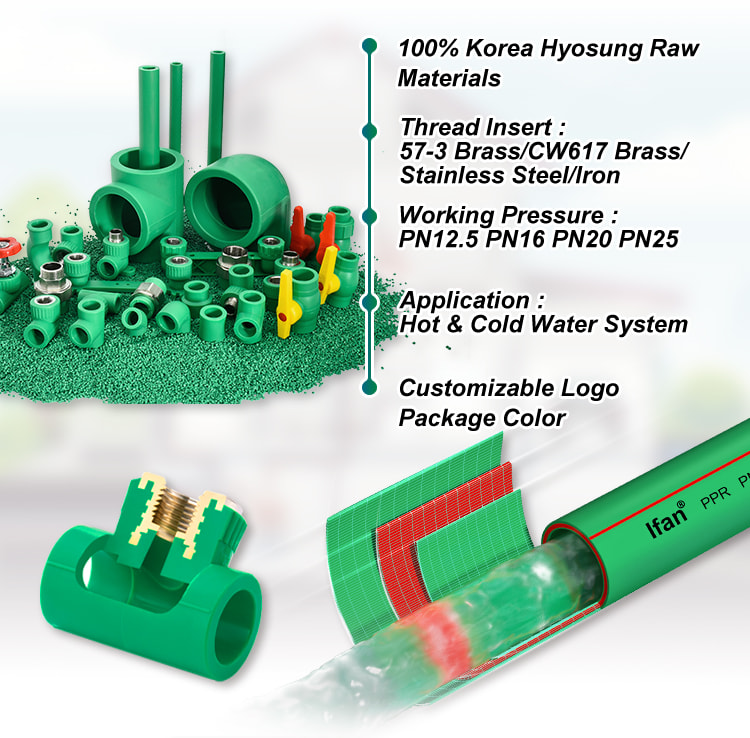
Material Superiority The PPR portion maintains all the beneficial properties of polypropylene random copolymer – exceptional chemical resistance, smooth interior surfaces, and thermal stability. The brass insert typically meets lead-free drinking water standards while providing robust threading that withstands multiple assembly cycles.
Connection Versatility These fittings solve the common challenge of interfacing plastic piping with metal components. The female thread accommodates standard male-threaded valves, gauges, or equipment connections, while the socket end integrates seamlessly with PPR piping through thermal fusion.
Pressure Integrity Properly installed female sockets maintain the full pressure rating of the PPR system (typically PN20 or 20 bar at 20°C). The brass insert is engineered to distribute mechanical stress evenly, preventing localized pressure points that could compromise the joint.
Eficiencia de instalación The combination of fusion and threaded connections simplifies system design by eliminating the need for additional adapters. This reduces potential leak points and saves valuable installation time compared to alternative connection methods.
Maintenance Accessibility Unlike pure fusion systems, these fittings allow for downstream component replacement or servicing without requiring pipe cutting. This feature proves particularly valuable in commercial and industrial applications where system downtime must be minimized.
Technical Specifications
Composición del material
-
Body: Polypropylene Random Copolymer (PPR) meeting ISO 15874 standards
-
Thread Insert: DZR brass (dezincification-resistant) or high-strength polymer
-
Sealing Surface: Precision machined for optimal compression
Dimensional Parameters
| Size (mm) | Thread Standard | Socket Depth (mm) | Overall Length (mm) |
|---|---|---|---|
| 20 | ½” BSP | 18 ±0.5 | 45 ±1 |
| 25 | ¾” BSP | 20 ±0.5 | 50 ±1 |
| 32 | 1″ BSP | 23 ±0.5 | 55 ±1 |
| 40 | 1¼” BSP | 25 ±0.5 | 60 ±1 |
| 50 | 1½” BSP | 28 ±0.5 | 65 ±1 |
| 63 | 2″ BSP | 32 ±0.5 | 75 ±1 |
Performance Characteristics
-
Pressure Rating: PN20 (20 bar at 20°C)
-
Temperature Range: -10°C to +95°C continuous service
-
Short-term Peak: 110°C for maximum 100 hours annually
-
Thread Torque Rating: 35 Nm for sizes ≤32mm, 50 Nm for larger sizes
-
Hydrostatic Test Pressure: 30 bar (1.5 × PN20)
Certificaciones y cumplimiento
-
Drinking Water: NSF/ANSI 61, WRAS, KTW
-
Material Standards: ISO 15874, DIN 8077/8078
-
Thread Standards: ISO 228 (BSP), ASME B1.20.1 (NPT)
-
Fire Performance: UL94 HB (standard), V0 available
Instrucciones de instalación
Preparation Phase
-
Verify pipe end preparation – square cut, deburred, and clean
-
Confirm thread compatibility between fitting and mating component
-
Select appropriate thread sealant (for metal threads) or sealing washer (plastic)
Fusion Welding Process
-
Heat both pipe end and socket simultaneously to 260°C (±5°C)
-
Maintain heating time according to pipe diameter (20-40 seconds)
-
Quickly join components without rotation
-
Hold firmly during initial cooling (30-60 seconds)
Threaded Connection
-
Apply thread sealant (teflon tape or liquid) to male threads
-
Hand-tighten until resistance is felt
-
Complete with wrench: ¼ turn for sizes ≤32mm, ½ turn for larger
-
Avoid overtightening which could stress the PPR body
Post-Installation Checks
-
Allow complete cooling (minimum 30 minutes) before pressure testing
-
Visually inspect for proper alignment and seating
-
Conduct initial pressure test at 1.5× working pressure
-
Verify no rotation occurs in threaded component under pressure
Contacto