


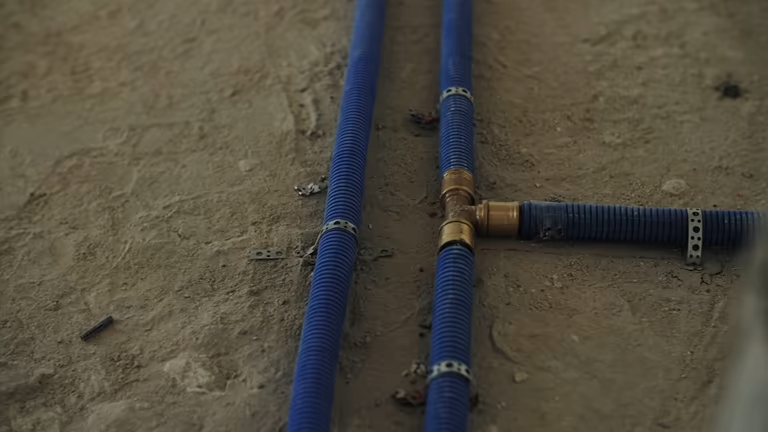
In recent years, radiant floor heating has become a favored method for creating comfortable indoor environments. Among the various components used in these systems, flexible PEX pipe has emerged as a preferred choice. Thanks to its outstanding thermal properties and installation advantages, PEX continues to replace traditional metal piping in underfloor heating applications.
This article explores the role of flexible PEX pipe in radiant floor heating systems. We will discuss its characteristics, benefits, installation methods, and long-term performance. Furthermore, we will examine how flexible PEX supports energy efficiency, comfort, and sustainability in residential and commercial settings.
Introduction to Radiant Floor Heating
Before delving into the specifics of PEX pipe, it’s essential to understand how radiant floor heating works. Unlike forced-air systems, radiant heating delivers warmth directly to the floor surface. Heat then rises naturally, creating consistent and even temperatures throughout a room.
This form of heating does not rely on ductwork or vents. Instead, it circulates warm water through pipes embedded in the floor. As a result, it eliminates drafts, reduces energy waste, and improves indoor air quality. Because of these advantages, radiant floor heating continues to gain popularity in modern construction.
The Importance of Pipe Selection
While multiple elements contribute to a radiant heating system’s performance, the pipe remains its backbone. The pipe must endure high temperatures, resist corrosion, and maintain its shape over time. Additionally, it should allow for easy installation within a variety of floor types.
Flexible PEX pipe satisfies all these criteria and more. It not only supports the overall efficiency of the system but also simplifies the construction process. Therefore, selecting the right pipe—such as PEX—plays a crucial role in determining the effectiveness of radiant floor heating.
What Makes PEX Pipe Ideal for Radiant Systems?
PEX, or cross-linked polyethylene, features molecular bonds that increase its durability and heat resistance. This unique structure provides several advantages over traditional materials like copper or steel.
First and foremost, PEX remains flexible even at low temperatures. Installers can bend and loop it into intricate patterns without special equipment. In radiant systems, this allows for tight spacing and precise coverage across the entire floor.
Second, PEX resists scaling and corrosion. Unlike metal pipes, it does not react with water or additives in the heating fluid. This resistance results in lower maintenance costs and longer system lifespans.
Third, PEX provides excellent thermal conductivity. While it does not conduct heat as quickly as metal, it retains warmth more evenly. This property supports steady, gradual heating—a major benefit in underfloor applications.
Lastly, PEX comes in long coils. These continuous lengths reduce the need for joints and fittings, minimizing the risk of leaks and failures.
System Configurations That Use PEX Pipe
Flexible PEX pipe supports various radiant floor heating designs. Among the most common are:
- Wet (slab-on-grade) systems, where the pipe sits within a concrete slab
- Thin-slab systems, where a lightweight topping layer covers the pipe
- Dry (above-subfloor) systems, where the pipe lies within panels or grooves
- Subfloor staple-up systems, where the pipe attaches below existing flooring
Each setup benefits from PEX’s adaptability. For instance, in slab-based systems, workers can form tight loops before pouring concrete. In staple-up applications, installers can route the pipe between joists without heavy equipment.
Because PEX bends easily, it fits neatly into these varied configurations, making it the most versatile pipe choice for radiant heating projects.
Installation Advantages of Flexible PEX Pipe
When it comes to installation, PEX offers several clear benefits. First, it simplifies transportation and handling. Coils are lightweight and easy to maneuver on-site. Workers can carry them into tight spaces without cranes or machinery.
Next, the pipe installs quickly. Using staples, clips, or tracks, crews can fasten PEX directly to insulation boards or mesh reinforcement. The flexible nature of the pipe allows them to create continuous loops without cutting or splicing.
Furthermore, PEX requires fewer fittings. Fewer connections mean fewer potential leak points. This not only increases reliability but also shortens installation time.
In addition, PEX works well with common floor finishes. Whether the project calls for tile, hardwood, vinyl, or laminate, PEX supports uniform heating across all surfaces. Installers can position the pipe beneath these materials without altering its performance.
Energy Efficiency and Thermal Comfort
Flexible PEX pipe contributes significantly to the energy efficiency of radiant heating systems. Since the heat rises from the floor, it creates a uniform thermal profile. Unlike forced-air systems, which often result in hot ceilings and cold floors, radiant systems offer consistent warmth where it matters most—at the feet.
PEX also reduces energy waste. Its closed-loop hydronic circuits require less energy to maintain room temperature. Moreover, the pipe’s insulation properties help preserve heat within the system, lowering the demand on boilers or water heaters.
This energy efficiency translates into lower utility bills. Homeowners and building managers alike appreciate the long-term cost savings. In fact, studies show that radiant systems with PEX can reduce heating expenses by up to 30% compared to conventional methods.
Confiabilidad a largo plazo
Another reason why builders choose PEX lies in its longevity. Once installed, the pipe requires minimal upkeep. Thanks to its chemical stability and resistance to freezing, it endures harsh conditions without degradation.
In properly designed systems, flexible PEX pipe can last over . This long service life means that property owners benefit from dependable performance with very little maintenance.
Additionally, PEX absorbs mechanical stress well. When floors expand or contract due to temperature shifts, the pipe flexes without cracking or breaking. This resilience proves essential in climates with dramatic seasonal changes.
Cost-Effectiveness in Construction
Cost always plays a major role in construction decisions. Fortunately, flexible PEX pipe delivers value not only in performance but also in affordability.
First, the material itself costs less than copper or stainless steel. Second, installation labor remains lower because of easier handling and fewer fittings. Third, the pipe reduces the need for expensive tools or welding procedures.
Altogether, these factors make PEX-based radiant systems more economical—especially in large projects. Whether outfitting a single-family home or an entire apartment complex, contractors can achieve consistent results at a lower cost.
Integration with Smart Systems
As technology evolves, more homes adopt smart controls for lighting, security, and climate management. Radiant floor systems with PEX integrate seamlessly with these platforms.
Installers can connect thermostats, sensors, and control panels to regulate the temperature of individual zones. Because PEX reacts quickly to temperature adjustments, users enjoy greater control and comfort.
Moreover, integration with home automation allows for energy tracking and remote access. For instance, homeowners can reduce heating when away and resume full operation before returning. This level of control further enhances energy savings and comfort.
Beneficios ambientales
Today’s construction practices must also address sustainability. Flexible PEX pipe supports environmentally responsible building in several ways.
First, its long service life reduces material waste. Second, its energy-efficient performance lowers carbon emissions. Third, some PEX systems use recycled materials or recyclable content, depending on manufacturer.
Also, radiant heating with PEX reduces dust and allergen circulation. This feature improves indoor air quality and supports healthier living spaces.
As green building codes tighten, PEX’s performance will become even more relevant in sustainable construction.
Versatility Across Building Types
Another key strength of flexible PEX pipe is its adaptability across building types. It serves single-family residences, multi-unit housing, commercial offices, retail spaces, and institutional buildings alike.
In homes, it provides gentle heating in bedrooms, bathrooms, kitchens, and basements. In commercial settings, it delivers warmth to lobbies, conference rooms, and open floor plans.
Additionally, PEX works in retrofits and new builds alike. Because of its ease of installation, it supports construction flexibility even when space or time is limited.
Mantenimiento y solución de problemas
Once installed, radiant systems using PEX require minimal maintenance. However, occasional troubleshooting may become necessary. Common issues might include air bubbles, pump failures, or uneven heating.
Thankfully, PEX simplifies diagnostics. Because it forms continuous loops, technicians can isolate zones easily. The pipe also supports pressure testing before floor finishing, allowing workers to catch leaks early.
With proper design, maintenance needs stay low for decades. This reliability contributes to long-term customer satisfaction and system durability.
Future Trends and Innovations
Looking ahead, flexible PEX pipe will likely play an even greater role in advanced heating systems. Emerging technologies include:
- Low-temperature radiant systems for passive homes
- Solar-assisted heating using rooftop collectors and PEX circuits
- Prefabricated radiant panels for faster installation
- Hybrid heating with geothermal or air-source heat pumps
These innovations rely on PEX’s core strengths: flexibility, durability, and compatibility with smart energy systems.
Conclusión
Flexible PEX pipe has revolutionized radiant floor heating. Its combination of ease, efficiency, and adaptability makes it the ideal solution for modern buildings. Whether for new construction or retrofits, residential homes or commercial properties, PEX supports superior thermal comfort and energy savings.
By choosing PEX, builders and homeowners invest in long-lasting performance, environmental responsibility, and cost-effective heating. As demand for efficient and sustainable systems grows, flexible PEX pipe will continue to lead the way in radiant floor heating applications.
Norma internacional IFAN
Los productos IFAN cumplen con diversas normas reconocidas internacionalmente para garantizar su calidad y fiabilidad. Estas normas incluyen ISO 15875, GB/T 18992, DIN 16892, ASTM F877, ASTM F2788, BS 7291, BS EN ISO 15875 y CSA B137. El cumplimiento de estas certificaciones demuestra el compromiso de IFAN con el cumplimiento de los requisitos globales de rendimiento, seguridad y durabilidad en sistemas de tuberías.
Contacto
IFAN es un fabricante profesional con 30 años de experiencia, dedicado a la producción de tuberías, accesorios y válvulas de plástico de alta calidad. Nuestros productos incluyen válvulas de latón, válvulas PPR, así como diversos tubos y accesorios para satisfacer las diferentes necesidades de nuestros clientes. Ya sea que necesite tuberías de plomería y drenaje o válvulas, IFAN le ofrece una amplia gama de productos de alta calidad y económicos para apoyar sus proyectos. A continuación, encontrará nuestra información de contacto.
Responderemos su correo electrónico o fax dentro de las 24 horas.
Puede llamarnos en cualquier momento si tiene alguna pregunta sobre nuestra producción.
Para obtener más información, visite nuestro sitio web. https://www.ifanplus.com/
Por favor envíelo a: [email protected]
WhatsApp: +86 19857948982























