


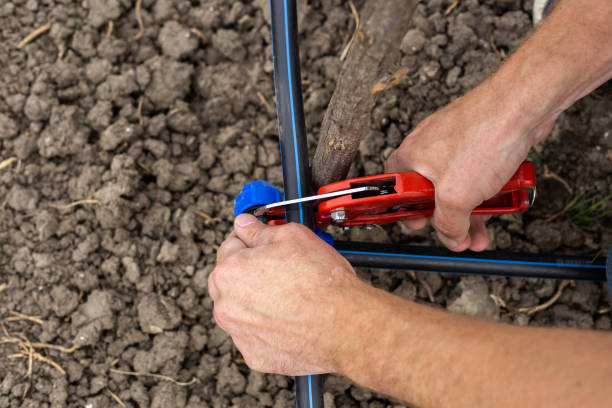
Los accesorios de HDPE (polietileno de alta densidad) azul se han convertido en un pilar fundamental de los sistemas de tuberías modernos, en particular para la distribución de agua potable. Su resistencia, flexibilidad, resistencia a la corrosión y bajo impacto ambiental los han convertido en la opción preferida en infraestructuras civiles, agricultura e industria. A medida que aumentan las demandas de infraestructura y la sostenibilidad se convierte en una prioridad, el sector de los accesorios de HDPE azul... accesorios de HDPE azules sector is undergoing significant evolution.
This article explores the major trends shaping the future of blue HDPE fittings, from technological innovation and material enhancements to market dynamics and global demand.
Increased Demand for Sustainable Infrastructure
Sustainability now drives decision-making in pipeline design and construction. Governments and industries aim to reduce environmental impact, extend system lifespans, and minimize maintenance.
Blue HDPE fittings support these goals through their recyclability, long service life, and resistance to corrosion. As green construction standards and certifications grow more popular, HDPE fittings will likely see increasing adoption in municipal and commercial projects.
Smart Infrastructure Integration
The future of infrastructure lies in digitization. Blue HDPE fittings are increasingly incorporated into smart pipeline systems that monitor flow rate, detect leaks, and analyze performance data in real time.
Developers are working on integrating sensors into fittings or near joint locations. These sensors gather data on pressure fluctuations, joint integrity, and flow behavior. By integrating HDPE fittings with smart monitoring systems, cities can reduce water loss and improve network efficiency.
Innovation in Jointing Technology
Traditional fusion techniques such as butt fusion and electrofusion have provided leak-free and durable connections for years. However, the industry is witnessing innovations aimed at:
- Reducing installation time
- Enhancing field joint strength
- Supporting automation in jointing
One trend is the development of automated fusion machines that precisely control temperature, pressure, and duration. This reduces installer error and improves joint reliability. Also, new mechanical joint systems are emerging for temporary and mobile systems, increasing the versatility of HDPE fittings.
Enhanced Material Performance
Materials science is advancing rapidly, and HDPE compounds are becoming more sophisticated. Manufacturers are experimenting with:
- PE100-RC (resistance to crack)
- Antioxidant-stabilized HDPE
- UV-stabilized resins
- Nano-additives to improve toughness
These new blends improve resistance to slow crack growth, chemical attack, and environmental stress. As a result, the next generation of blue HDPE fittings will offer longer service life, even in aggressive conditions.
Expansion in High-Pressure Applications
Historically, HDPE fittings served low- to medium-pressure applications. Recent developments in reinforced HDPE y multi-layered fitting design have enabled use in high-pressure networks, including:
- Sistemas de extinción de incendios
- Industrial cooling systems
- Pressurized irrigation networks
- Long-distance water supply lines
These advances are pushing blue HDPE fittings into roles once dominated by metal or PVC alternatives.
Broader Global Market Adoption
Emerging markets across Asia, Africa, and Latin America are investing heavily in water infrastructure. These regions face rising urban populations, aging infrastructure, and limited budgets.
Blue HDPE fittings offer a cost-effective, long-lasting solution that’s easy to install and maintain. As a result, demand in these regions is accelerating. Manufacturers are responding by expanding production facilities and distribution channels to meet local needs.
Modular and Prefabricated Solutions
Another trend is the rise of modular, pre-assembled HDPE systems. Instead of transporting and assembling hundreds of fittings on-site, manufacturers are offering prefabricated sections that simplify installation.
These modules often include:
- Multiple fittings
- Integrated valves and meters
- Sensor-ready junctions
- Anchoring components
Modularization reduces labor costs, shortens installation timelines, and improves system consistency. This trend aligns with the wider move toward industrialized construction methods.
Regulatory Support for Plastic Piping
Government policies and construction standards increasingly favor plastic piping systems over traditional materials like cast iron or concrete. Many municipalities are updating their building codes to include HDPE as an approved material for water and drainage systems.
This regulatory acceptance accelerates adoption and opens new markets for HDPE fittings. Over time, this shift will contribute to the displacement of older materials and further entrench HDPE’s position as the standard.
Lightweight Fittings for Complex Installations
Weight reduction plays a key role in modern construction. Blue HDPE fittings weigh significantly less than metal alternatives, simplifying transport and handling. New design refinements are further reducing weight while preserving strength.
This shift supports:
- Trenchless installations
- Rooftop or elevated piping systems
- Floating pipeline applications
- Emergency repair systems in remote areas
The ability to quickly and safely install fittings in challenging environments enhances their utility and value.
Trends in Manufacturing Technology
Manufacturers of blue HDPE fittings are embracing smart production technologies to improve quality, consistency, and scalability. Key trends include:
- Automated molding and extrusion
- Digital quality control systems
- 3D modeling for custom fittings
- Data analytics for production optimization
These advances enable better material control, faster prototyping, and improved performance testing, all of which support the development of more reliable and innovative fittings.
Focus on Water Loss Reduction
Water loss from leaking pipes and joints is a global concern. Blue HDPE fittings, with their fusion-bonded joints, offer excellent sealing capability. As pressure mounts to reduce non-revenue water in municipal networks, utilities are turning to HDPE solutions.
Several cities have reported water loss reductions of 20% or more after switching to HDPE. Future fittings will feature even more robust seals and performance monitoring tools to further reduce losses.
Greater Compatibility with Other Materials
One key innovation trend is the development of transition fittings that seamlessly connect HDPE pipes to other materials, such as:
- CLORURO DE POLIVINILO
- Hierro dúctil
- Cobre
- Acero
These multi-material fittings use specialized inserts, locking mechanisms, or hybrid materials to ensure leak-free operation. As mixed-material systems remain common in retrofits, compatibility will be critical to project success.
Growth in Trenchless Technology Applications
Trenchless installation methods such as horizontal directional drilling and pipe bursting are gaining popularity for minimizing surface disruption. Blue HDPE fittings are ideal for these methods due to their flexibility and high tensile strength.
Manufacturers are now designing fittings and couplings specifically for trenchless applications, with features like:
- High axial load capacity
- Reinforced ends
- Compact profiles for pull-through installations
This niche is expected to grow as cities look to upgrade underground infrastructure without disturbing roads or buildings.
Greater Emphasis on Training and Certification
The performance of blue HDPE fittings depends on proper installation. To ensure long-term reliability, training programs for contractors and installers are expanding globally.
These programs focus on:
- Fusion procedures
- Material handling
- Joint testing
- Installation under various conditions
As digital certification systems improve, project owners will have greater confidence in the skills of the installation crew, thereby increasing system reliability.
Circular Economy and Recyclability
Environmental concerns and new legislation are pushing manufacturers toward closed-loop production models. Blue HDPE fittings can be recycled and reprocessed into new piping products.
Manufacturers are investing in:
- Clean recycling facilities
- Post-consumer resin development
- Certification systems for recycled content
This supports a circular economy and meets the expectations of environmentally conscious clients and regulators.
Market Trends and Forecast
Market research shows that the global HDPE fittings market is expected to grow steadily over the next decade. Drivers include:
- Urbanization
- Climate resilience projects
- Water reuse and desalination infrastructure
- Agricultural modernization
- Industrial expansion in developing nations
Regions leading this growth include Southeast Asia, Sub-Saharan Africa, and parts of Latin America. Local production hubs and strategic alliances will play a role in reducing costs and improving availability.
Digital Design and Simulation
Engineering teams are using 3D simulation tools to model pipeline performance before installation. These tools evaluate pressure loss, thermal expansion, vibration resistance, and joint stress.
Blue HDPE fittings are now modeled with high accuracy in CAD and BIM systems, allowing planners to simulate their behavior in complex networks. This reduces field problems and improves overall system efficiency.
Custom Fitting Solutions
As piping systems become more specialized, the demand for custom fittings is growing. Manufacturers are investing in rapid prototyping and short-run production methods to offer tailor-made solutions for:
- Unique pipe diameters
- Irregular joint angles
- High-pressure transitions
- Special chemical resistance
Customization enhances flexibility and allows blue HDPE fittings to serve more diverse applications.
Challenges and Opportunities
Despite their advantages, blue HDPE fittings face challenges such as:
- Misconceptions about plastic durability
- Need for more installer training
- Resistance from traditional material providers
- Upfront cost concerns in budget-restricted projects
However, the opportunities outweigh the challenges. As education spreads and global infrastructure demands increase, blue HDPE fittings will continue to expand their market share and technical capabilities.
Conclusión
The future of blue HDPE fittings is marked by growth, innovation, and adaptability. As sustainability, smart infrastructure, and reliability take center stage in global development, HDPE fittings are poised to play an even greater role.
From smart sensors to crack-resistant materials, from trenchless designs to modular systems, these fittings are evolving to meet the changing needs of modern infrastructure. As more cities, industries, and farms turn to HDPE technology, the development trends outlined above will shape the next generation of high-performance, efficient, and durable pipeline systems.
Norma internacional IFAN
Los accesorios y tuberías de compresión de HDPE de IFAN cumplen con una amplia gama de normas internacionales, lo que garantiza un alto rendimiento y compatibilidad global. Entre ellas, se incluyen las normas ASTM D3035 y ASTM D3350 de Estados Unidos, las series ISO 4427 y EN 12201 de Europa, DIN 8074/8075 de Alemania, GB/T 13663 de China, AS/NZS 4130 de Australia y Nueva Zelanda, JIS K6760 de Japón, BS 6572 del Reino Unido y CSA B137.1 de Canadá. El cumplimiento de estas normas garantiza excelentes propiedades mecánicas, resistencia química y durabilidad a largo plazo en diversas aplicaciones industriales y de suministro de agua.
Contacto
IFAN es un fabricante profesional con 30 años de experiencia, dedicado a la producción de tuberías, accesorios y válvulas de plástico de alta calidad. Nuestros productos incluyen válvulas de latón, válvulas PPR, así como diversos tubos y accesorios para satisfacer las diferentes necesidades de nuestros clientes. Ya sea que necesite tuberías de plomería y drenaje o válvulas, IFAN le ofrece una amplia gama de productos de alta calidad y económicos para apoyar sus proyectos. A continuación, encontrará nuestra información de contacto.
Responderemos su correo electrónico o fax dentro de las 24 horas.
Puede llamarnos en cualquier momento si tiene alguna pregunta sobre nuestra producción.
Para obtener más información, visite nuestro sitio web. https://www.ifanplus.com/
Por favor envíelo a: [email protected]
WhatsApp: +86 19857948982























