


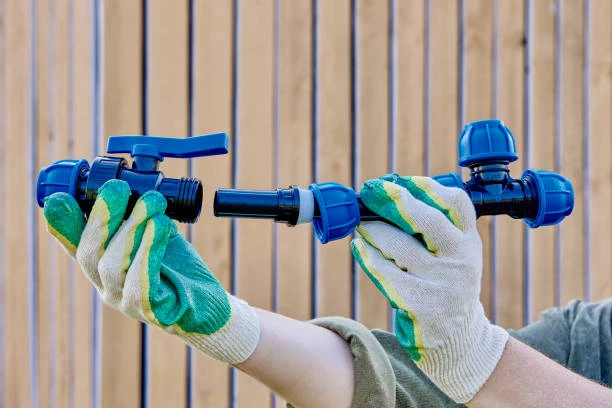
Accesorios de HDPE azules play a vital role in modern fluid transportation systems. These fittings are made from high-density polyethylene and are often used in potable water networks. While the blue outer layer indicates safe use in drinking water applications, the true performance lies within their internal structure. This article explores the inner design and engineering of blue HDPE fittings and how these elements enhance durability, efficiency, and system safety.
Overview of Blue HDPE Fittings
Blue HDPE fittings are commonly found in water supply systems, agricultural irrigation, industrial pipelines, and residential plumbing. They include various shapes like elbows, tees, reducers, end caps, and couplings. Despite the range of designs, the internal structure of each fitting follows core principles that ensure leak-free performance, strength, and long-term usability.
Material Composition and Molecular Design
The internal structure begins with the material. HDPE consists of tightly packed polymer chains, giving it exceptional density and strength. This structure allows the fittings to handle internal pressure and resist cracking. During manufacturing, additives like UV stabilizers and antioxidants are included to increase the life of the fittings. These additives do not change the internal shape but protect it from degradation.
Smooth Internal Walls for Efficient Flow
One of the most important internal features is the smooth wall surface. These inner walls reduce friction, allowing water to move with minimal resistance. Lower friction improves energy efficiency by reducing the workload on pumps. Smooth walls also prevent debris buildup and bacterial growth, which is critical for clean water systems.
Seamless Construction Enhances Integrity
Many blue HDPE fittings are manufactured using techniques that result in seamless interiors. Whether through injection molding or butt fusion, the absence of internal welds or joints improves strength. Seamless fittings avoid weak points that could become leakage sources. They also support better flow characteristics, especially in curved or directional fittings.
Wall Thickness and Pressure Handling
Internal wall thickness plays a direct role in pressure performance. Blue HDPE fittings are often classified by SDR (Standard Dimension Ratio). A lower SDR means a thicker wall and higher pressure capacity. Internally, this extra thickness supports stronger resistance to bursting and deformation. For high-pressure systems, fittings may include reinforced walls that provide extra structural stability.
Flow Geometry and Directional Control
The internal geometry of fittings—especially elbows, tees, and reducers—affects how fluids move through the system. Smooth internal curves reduce turbulence and maintain pressure. Reducers are shaped to transition water between different pipe sizes gradually, minimizing energy loss. Most fittings maintain full-bore design, ensuring the internal diameter matches the pipe for uninterrupted flow.
Fusion Compatibility Zones for Secure Joints
Many fittings are designed for fusion joining methods like butt fusion or electrofusion. Inside these fittings, the fusion zones are precisely engineered for strength and compatibility. The joint areas have consistent geometry and surface texture to allow even heat distribution during welding. Once fused, the joint becomes a part of the system with the same strength as the pipe itself.
Embedded Electrofusion Elements
Electrofusion fittings contain built-in heating elements just beneath the inner surface. These elements are evenly spaced and carefully placed to ensure consistent heating when electrical current is applied. As the HDPE melts around the pipe, it forms a strong, seamless bond. Though not visible from the outside, these embedded features are key to creating durable, leak-proof joints.
Internal Stop Rings and Guides
Inside many couplers and adapters, you will find stop rings or depth guides. These features help installers push pipes to the correct depth. They prevent over-insertion, which can affect joint strength and flow performance. They also provide visual and physical alignment for precision during installation. These guides support consistent performance across all fittings.
Stress Distribution and Resistance
The internal shape of blue HDPE fittings helps manage the stress caused by internal pressure and temperature changes. Uniform curves and cylindrical sections distribute force evenly throughout the structure. This avoids stress concentrations that can cause cracking or deformation. HDPE’s natural elasticity allows it to absorb pressure spikes, such as those caused by water hammer.
Internal Abrasion Resistance
In systems transporting water with sand or grit, abrasion becomes a concern. HDPE is naturally resistant to wear, but the smooth internal design enhances this resistance. Particles are less likely to damage the fitting because the flow remains laminar. Over time, the fitting retains its shape and diameter, preserving the original performance of the system.
Resistance to Biofilm and Scaling
HDPE does not react chemically with water or minerals. Its smooth, non-porous internal surface prevents biofilm from forming. In areas with hard water, the fittings also resist scale buildup. This contributes to cleaner, more hygienic systems and reduces the need for maintenance. The fittings continue to provide clean water flow without obstruction for decades.
Inspection-Friendly Interior
Even though HDPE systems are low maintenance, occasional inspections help confirm proper operation. The consistent internal shape and full-bore diameter make it easy for inspection cameras to pass through. Technicians can verify that joints are secure and surfaces remain clean. This transparency makes HDPE systems easy to monitor.
Advanced Internal Design Technologies
Modern HDPE fittings benefit from computer-aided design tools such as computational fluid dynamics. These tools help engineers optimize the internal shape of fittings. Internal ridges, flow control zones, and even smart sensor placements are being added to fittings. These design elements improve flow control, pressure regulation, and real-time system monitoring.
Long-Term Structural Stability
Blue HDPE fittings are engineered to last more than under normal conditions. Their internal structure supports long-term dimensional stability. Unlike metal, HDPE expands and contracts without fatigue. The fittings remain internally sound, resisting deformation, corrosion, or internal damage even in extreme environments.
Compatibility with Pipes and Systems
Each fitting is made to match pipe systems in diameter, SDR rating, and connection type. Internally, the fittings align perfectly with the corresponding pipe interior. This ensures a smooth transition and prevents leaks or blockages. Standardized internal features help ensure cross-brand compatibility and simplify system design.
Thermal Expansion and Movement
HDPE’s flexibility allows it to handle changes in temperature without stress. Internally, fittings expand and contract uniformly with the pipes. This reduces the chance of internal cracks or leaks from thermal stress. Some designs include built-in expansion zones that cushion sudden changes in volume or temperature.
Leak Prevention Design
The internal seal areas of blue HDPE fittings are engineered for tight, consistent contact with pipes. In both fusion and mechanical fittings, the internal surfaces play a critical role in leak resistance. Compression fittings include sealing lips and grooves inside the body, while fusion fittings rely on precise melting zones.
Mechanical Reinforcement Features
In some high-demand fittings, internal ribs or structural rings provide reinforcement. These features strengthen the fitting without disrupting flow. They also prevent deformation under vacuum or heavy load. Internal bracing adds reliability in underground or high-pressure applications where external forces are high.
Consistency in Manufacturing
Each blue HDPE fitting undergoes quality control to ensure its internal structure matches design standards. Internal surfaces are inspected for smoothness, wall thickness is measured, and fusion zones are tested. This manufacturing consistency guarantees that every fitting performs the same way in the field.
Conclusión
The internal structure of blue HDPE fittings reflects careful engineering and high material standards. From smooth walls and seamless construction to fusion-ready zones and pressure resistance, every aspect serves a functional purpose. These internal features ensure efficient flow, reliable connections, and long service life. When selecting components for water supply or industrial systems, understanding the internal makeup of HDPE fittings helps ensure performance, safety, and long-term value.
Norma internacional IFAN
Los accesorios y tuberías de compresión de HDPE de IFAN cumplen con una amplia gama de normas internacionales, lo que garantiza un alto rendimiento y compatibilidad global. Entre ellas, se incluyen las normas ASTM D3035 y ASTM D3350 de Estados Unidos, las series ISO 4427 y EN 12201 de Europa, DIN 8074/8075 de Alemania, GB/T 13663 de China, AS/NZS 4130 de Australia y Nueva Zelanda, JIS K6760 de Japón, BS 6572 del Reino Unido y CSA B137.1 de Canadá. El cumplimiento de estas normas garantiza excelentes propiedades mecánicas, resistencia química y durabilidad a largo plazo en diversas aplicaciones industriales y de suministro de agua.
Contacto
IFAN es un fabricante profesional con 30 años de experiencia, dedicado a la producción de tuberías, accesorios y válvulas de plástico de alta calidad. Nuestros productos incluyen válvulas de latón, válvulas PPR, así como diversos tubos y accesorios para satisfacer las diferentes necesidades de nuestros clientes. Ya sea que necesite tuberías de plomería y drenaje o válvulas, IFAN le ofrece una amplia gama de productos de alta calidad y económicos para apoyar sus proyectos. A continuación, encontrará nuestra información de contacto.
Responderemos su correo electrónico o fax dentro de las 24 horas.
Puede llamarnos en cualquier momento si tiene alguna pregunta sobre nuestra producción.
Para obtener más información, visite nuestro sitio web. https://www.ifanplus.com/
Por favor envíelo a: [email protected]
WhatsApp: +86 19857948982























