


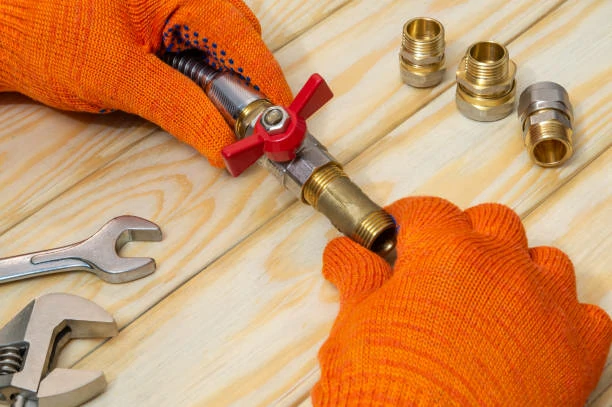
válvulas angulares de latón provide reliable control of fluid flow in plumbing systems. Their mechanical strength ensures durability under various pressure conditions. The composition of brass, the design of the valve, and the precision of manufacturing all contribute to the mechanical strength of these components.
Composition of Brass and Its Impact on Strength
Brass consists mainly of copper and zinc. The ratio of these elements influences the mechanical properties of the alloy. A higher copper content increases corrosion resistance, while a balanced zinc addition enhances strength and hardness. Some brass formulations include small amounts of lead to improve machinability. However, lead-free brass variants maintain strength while complying with health and environmental regulations.
The grain structure of brass plays a critical role in mechanical performance. A fine and uniform grain structure enhances the material’s tensile strength and impact resistance. Heat treatment and controlled cooling processes optimize the internal structure, reducing the risk of material failure under stress.
Design Factors That Enhance Mechanical Strength
Brass angle valves feature robust designs that withstand high pressure and frequent operation. The body thickness influences strength, with thicker walls offering greater resistance to mechanical stress. Manufacturers calculate wall thickness based on pressure ratings to ensure reliability in various applications.
The valve stem, a crucial component, endures rotational and axial forces during operation. A well-machined stem with a precise fit reduces wear and maintains a secure seal. Threaded connections require strong engagement to prevent leaks and withstand external forces. Properly designed threads distribute stress evenly, minimizing the risk of breakage.
Sealing mechanisms also contribute to the overall durability of brass angle valves. Rubber gaskets or PTFE seals maintain their integrity under repeated use. The design of the sealing surfaces ensures uniform pressure distribution, preventing localized stress points that could lead to failure.
Manufacturing Precision and Its Role in Strength
High-quality brass angle valves result from precise manufacturing processes. Casting, forging, and machining techniques determine the final strength of the valve. Forged brass valves exhibit superior density and structural integrity, making them more resistant to pressure fluctuations and mechanical impact.
CNC machining ensures accurate dimensions and smooth surfaces, reducing friction and wear. Polishing and deburring eliminate microscopic defects that could weaken the structure over time. Quality control measures, including pressure testing and dimensional inspections, verify that each valve meets strength requirements.
Performance Under High-Pressure Conditions
Brass angle valves operate efficiently in high-pressure environments. Their mechanical strength allows them to maintain structural integrity even when subjected to sudden pressure surges. Engineers design these valves to handle specific pressure ratings, ensuring safe operation in plumbing, heating, and industrial applications.
Thermal expansion and contraction affect material properties. Brass exhibits excellent dimensional stability, preventing deformation under temperature fluctuations. Properly designed valves accommodate thermal stresses without compromising strength or functionality.
Impact resistance plays a key role in mechanical strength. Brass angle valves installed in exposed locations must withstand accidental impacts without cracking or deforming. The ductility of brass enables it to absorb shock loads while maintaining performance.
Corrosion Resistance and Long-Term Strength
Mechanical strength depends on the ability to resist corrosion. Brass naturally resists oxidation and dezincification, common causes of material degradation. Protective coatings, such as nickel or chrome plating, enhance corrosion resistance and extend the valve’s service life.
Water quality influences corrosion rates. Hard water with high mineral content can accelerate wear, while aggressive chemicals may weaken the material. Proper selection of brass alloys prevents premature failure in demanding environments.
Testing Methods for Mechanical Strength
Manufacturers subject brass angle valves to rigorous testing. Pressure tests evaluate the valve’s ability to withstand operational forces without leakage. Tensile tests measure the material’s resistance to stretching and breaking. Impact tests determine the ability to absorb sudden shocks without damage.
Fatigue testing simulates real-world conditions, assessing performance over extended cycles of use. Valves that pass these tests demonstrate superior mechanical strength and reliability.
Conclusión
Brass angle valves offer excellent mechanical strength due to their material composition, design, and manufacturing precision. Their ability to withstand pressure, impact, and corrosion ensures long-lasting performance in various applications. Quality testing verifies strength and reliability, making brass angle valves a dependable choice for fluid control systems.
Norma internacional IFAN
Los productos de HDPE de IFAN cumplen con diversas normas internacionales, lo que garantiza su calidad, durabilidad y fiabilidad. Estas normas incluyen la ASTM D3035 y la ASTM D3350, que definen las especificaciones para tuberías y materiales de polietileno (PE). Las series ISO 4427 y EN 12201 establecen estándares globales para las tuberías de PE utilizadas en sistemas de suministro de agua. Además, las normas DIN 8074/8075 y GB/T 13663 establecen los requisitos de rendimiento y dimensiones para las tuberías de HDPE en los mercados europeo y chino. Otras normas reconocidas, como la AS/NZS 4130 (Australia/Nueva Zelanda), la JIS K6760 (Japón), la BS 6572 (Reino Unido) y la CSA B137.1 (Canadá), demuestran aún más el compromiso de IFAN con el cumplimiento de las normativas del sector a nivel mundial.
Contacto
IFAN es un fabricante profesional con 30 años de experiencia, dedicado a la producción de tuberías, accesorios y válvulas de plástico de alta calidad. Nuestros productos incluyen válvulas de latón, válvulas PPR, así como diversos tubos y accesorios para satisfacer las diferentes necesidades de nuestros clientes. Ya sea que necesite tuberías de plomería y drenaje o válvulas, IFAN le ofrece una amplia gama de productos de alta calidad y económicos para apoyar sus proyectos. A continuación, encontrará nuestra información de contacto.
Responderemos su correo electrónico o fax dentro de las 24 horas.
Puede llamarnos en cualquier momento si tiene alguna pregunta sobre nuestra producción.
Para obtener más información, visite nuestro sitio web. https://www.ifanplus.com/
Por favor envíelo a: [email protected]
WhatsApp: +86 19857948982























