


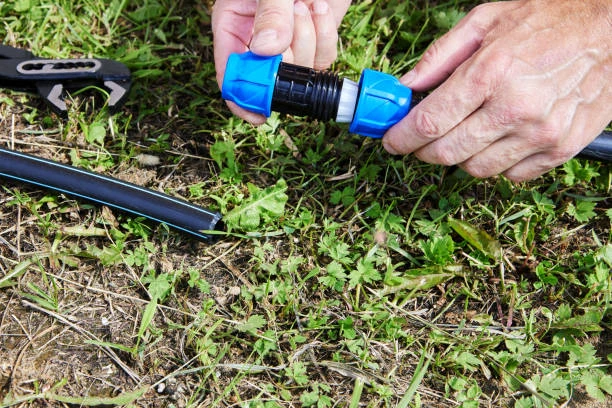
Tuberías de HDPE Las tuberías de HDPE son conocidas por su excelente sellado, que garantiza un flujo de agua eficiente y previene fugas. Su capacidad para mantener un sellado hermético es una de las principales razones de su popularidad en los sistemas de distribución de agua. Diversos factores contribuyen al sellado, lo que las convierte en una opción confiable tanto para uso residencial como industrial.
Fusion Welding for Seamless Connections
HDPE pipes use fusion welding to create leak-proof connections. This method heats the pipe ends and joins them together. Fusion welding eliminates the need for mechanical joints or gaskets, which often wear out over time. The seamless connections formed during welding provide strong, long-lasting seals that resist leaks. Both butt fusion and electrofusion are common fusion techniques used in HDPE pipe installations. Butt fusion involves heating the ends of the pipes and pressing them together. Electrofusion uses an electric current to melt the pipe ends and create a secure connection.
The fusion-welded joints create continuous connections, eliminating weak points where leaks might occur. These welded joints maintain their integrity over time, even under pressure. Because HDPE pipes have no threaded connections or gaskets, there is less risk of leakage. Fusion welding also makes the pipes more resistant to environmental stresses, such as ground movement.
No Mechanical Joints or Gaskets
Unlike traditional materials, HDPE pipes do not require mechanical joints or gaskets. These components can degrade over time and cause leaks. HDPE pipes form solid, permanent bonds between sections, ensuring a smooth, continuous seal. Mechanical joints often need maintenance and tightening, which increases the chance of leaks. Gaskets are prone to wear and chemical degradation, but HDPE pipes eliminate these risks. The pipe sections connect directly, forming a tight and durable seal that requires no further maintenance. This improves the overall sealing performance and longevity of the system.
Mechanical joints often result in weak points in the pipeline, making leaks more likely. Without these joints, HDPE pipes have fewer potential failure points. HDPE pipes provide a simple, cost-effective solution with superior sealing performance. This lack of mechanical joints enhances the reliability of water systems.
Corrosion Resistance for Long-Term Sealing
HDPE pipes resist corrosion, which is a major cause of leaks in other types of piping. Many materials, like metal, rust over time, weakening the pipe and its connections. HDPE pipes, however, remain unaffected by corrosion, ensuring that the seal remains intact. They resist both internal and external corrosion, which prevents leaks in the system. The smooth inner surface of HDPE pipes also reduces the buildup of minerals and other debris, which could otherwise cause blockages. As a result, the pipes maintain efficient water flow and a strong seal for many years.
The ability of HDPE pipes to withstand corrosion is crucial for maintaining a reliable seal. They also perform well in harsh environments, where corrosion would typically cause leaks in other materials. This makes HDPE pipes ideal for both municipal and industrial applications. Over time, corrosion can compromise the sealing ability of pipes, but HDPE pipes offer a long-lasting solution.
Flexibilidad y resistencia al impacto
HDPE pipes are flexible and impact-resistant, which enhances their sealing performance. They can bend without breaking, making them ideal for installation in areas with shifting soil or seismic activity. This flexibility helps maintain a tight seal even in areas prone to ground movement. HDPE pipes can absorb impact without cracking, which is crucial during installation and handling. Their resilience means that the pipes maintain their integrity, preventing leaks caused by physical damage. This flexibility also allows the pipes to adapt to pressure changes and external forces, ensuring a leak-proof system.
The ability of HDPE pipes to bend without cracking makes them a reliable choice in challenging conditions. In contrast, rigid pipes may crack or break under stress, leading to leaks. The flexibility of HDPE pipes enhances the long-term sealing performance and durability of the system. Impact resistance further ensures that the pipes maintain their strength and sealing capability.
Quality Fittings and Accessories
The sealing performance of HDPE water pipes depends on the quality of the fittings and accessories used during installation. HDPE fittings are designed to create a seamless connection that complements the pipe’s sealing properties. When installed properly, HDPE fittings maintain the integrity of the pipe’s seal. These fittings are made from the same material as the pipe, ensuring compatibility and consistency. Fusion welding is also applied to the fittings, ensuring leak-proof joints. High-quality fittings ensure that the connections are tight, preventing leaks at transition points.
Using quality fittings and accessories improves the overall sealing performance of the system. Poorly fitted joints or low-quality materials can compromise the integrity of the seal. HDPE fittings are specifically designed to provide a secure and durable connection that complements the pipe’s sealing capabilities. This ensures that the system remains leak-free for years.
Sealing Performance Across Applications
The sealing performance of HDPE pipes makes them suitable for various applications. In municipal water systems, HDPE pipes provide a reliable, leak-proof solution for water distribution. The pipes ensure safe and clean water without the risk of contamination from leaks. In industrial settings, HDPE pipes are used to transport chemicals and other liquids, where maintaining a secure seal is essential. Their resistance to corrosion and environmental factors ensures that leaks are minimized, even in harsh conditions.
HDPE pipes are also used in residential water supply systems, where their sealing performance ensures that water remains uncontaminated. The pipes are durable and require minimal maintenance, making them an ideal choice for homeowners. Their ability to maintain a tight seal prevents the need for frequent repairs or replacements.
Costos de mantenimiento más bajos
HDPE pipes require less maintenance compared to traditional piping systems, thanks to their superior sealing performance. The elimination of mechanical joints and gaskets reduces the risk of leaks, which means fewer repairs are needed. The fusion-welded joints remain intact for many years, providing a long-lasting seal that doesn’t degrade over time. HDPE pipes’ resistance to corrosion and impact further minimizes the need for maintenance. By reducing leaks, HDPE pipes also lower the costs associated with water loss and system repairs.
Long-term maintenance costs are lower because HDPE pipes do not require constant inspections or replacements. The reliable sealing performance means that the system runs efficiently without the need for ongoing repairs. This makes HDPE pipes a cost-effective solution for both residential and industrial water systems.
Conclusión
The sealing performance of HDPE water pipes is one of their most significant advantages. Fusion welding creates seamless, leak-proof connections, while the pipes’ resistance to corrosion, impact, and environmental factors ensures long-term reliability. HDPE pipes do not require mechanical joints or gaskets, which eliminates the risks of degradation and leakage. Their flexibility and impact resistance further enhance their sealing ability, making them ideal for challenging environments.
With high-quality fittings and accessories, HDPE pipes provide a secure, leak-free solution for various applications. Whether used in municipal, industrial, or residential systems, HDPE pipes ensure that water remains safe and uncontaminated. Their low maintenance requirements and long-lasting performance make them a smart choice for water distribution systems worldwide.
Norma internacional IFAN
Los productos de HDPE de IFAN cumplen con diversas normas internacionales, lo que garantiza su calidad, durabilidad y fiabilidad. Estas normas incluyen la ASTM D3035 y la ASTM D3350, que definen las especificaciones para tuberías y materiales de polietileno (PE). Las series ISO 4427 y EN 12201 establecen estándares globales para las tuberías de PE utilizadas en sistemas de suministro de agua. Además, las normas DIN 8074/8075 y GB/T 13663 establecen los requisitos de rendimiento y dimensiones para las tuberías de HDPE en los mercados europeo y chino. Otras normas reconocidas, como la AS/NZS 4130 (Australia/Nueva Zelanda), la JIS K6760 (Japón), la BS 6572 (Reino Unido) y la CSA B137.1 (Canadá), demuestran aún más el compromiso de IFAN con el cumplimiento de las normativas del sector a nivel mundial.
Contacto
IFAN es un fabricante profesional con 30 años de experiencia, dedicado a la producción de tuberías, accesorios y válvulas de plástico de alta calidad. Nuestros productos incluyen válvulas de latón, válvulas PPR, así como diversos tubos y accesorios para satisfacer las diferentes necesidades de nuestros clientes. Ya sea que necesite tuberías de plomería y drenaje o válvulas, IFAN le ofrece una amplia gama de productos de alta calidad y económicos para apoyar sus proyectos. A continuación, encontrará nuestra información de contacto.
Responderemos su correo electrónico o fax dentro de las 24 horas.
Puede llamarnos en cualquier momento si tiene alguna pregunta sobre nuestra producción.
Para obtener más información, visite nuestro sitio web. https://www.ifanplus.com/
Por favor envíelo a: [email protected]
WhatsApp: +86 19857948982























