


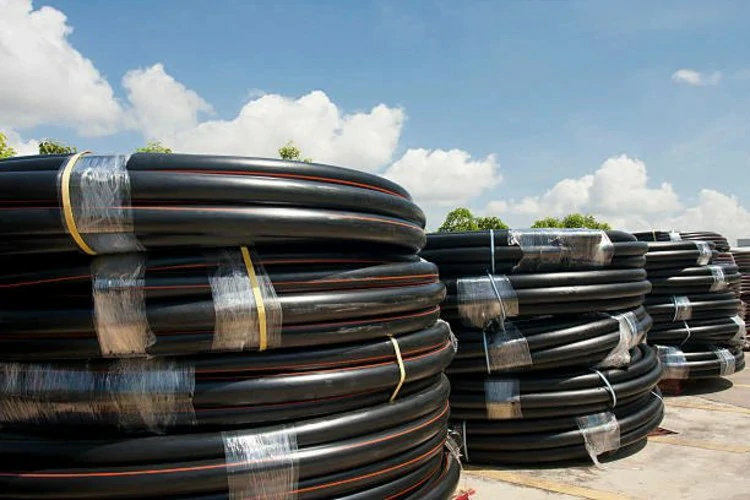
Applications of HDPE Plumbing in Underground Engineering
1. Water Supply Systems: Ensuring Reliable Water Distribution Networks
To begin with, HDPE plumbing serves as the backbone of water supply systems, conveying potable water from treatment plants to distribution networks. Their resistance to corrosion, abrasion, and chemical degradation ensures reliable water quality and uninterrupted flow throughout underground pipelines.
علاوة على ذلك, in urban environments, HDPE pipes are commonly used for subsurface installations, navigating beneath roads, buildings, and utilities with ease. Their flexibility and toughness allow for efficient installation in confined spaces and congested corridors, minimizing disruptions to surface activities.
2. Sewer and Drainage Systems: Facilitating Efficient Wastewater Management
In addition to water distribution, HDPE plumbing is ideal for gravity sewer applications, transporting wastewater from residential, commercial, and industrial areas to treatment facilities. Their smooth interior surface minimizes friction losses and prevents sediment buildup, ensuring efficient wastewater conveyance and reduced maintenance requirements.
بالإضافة إلى, in stormwater drainage, HDPE pipes reliably convey rainwater and runoff, reducing flooding and erosion risk. Their corrosion resistance and structural integrity make them ideal for buried installations in harsh environments, protecting infrastructure from water damage.
3. Gas Distribution Networks: Safeguarding Underground Gas Infrastructure
Beyond liquid systems, HDPE plumbing plays a vital role in gas distribution networks, delivering natural gas to residential, commercial, and industrial consumers. Their leak-free joints and resistance to corrosion ensure the integrity and safety of underground gas infrastructure, minimizing the risk of methane emissions and environmental hazards.
بالإضافة إلى ذلك, HDPE pipes are also used for gas service lines, connecting individual properties to the main distribution network. Their flexibility and adaptability facilitate easy installation in varying soil conditions, reducing excavation requirements and construction costs for gas utilities and contractors.
4. Electrical and Communication Conduits: Protecting Underground Cabling Systems
علاوة على ذلك, HDPE plumbing plays a significant role in housing and protecting underground electrical and telecommunication cables. These conduits shield critical infrastructure from moisture, chemical exposure, and mechanical damage. HDPE’s non-conductive nature and high impact resistance make it an ideal choice for burying power and data cables beneath roads, sidewalks, and landscaped areas.
على سبيل المثال, in smart city development, HDPE ducts facilitate the safe deployment of fiber optic networks, ensuring reliable communication systems. The flexibility of HDPE allows easy navigation through tight bends and existing infrastructure, reducing installation time and cost. Additionally, color-coded HDPE conduits simplify cable identification and maintenance, supporting long-term efficiency and system integrity.
5. Geothermal Heating Systems: Enhancing Sustainable Underground Energy Solutions
In the context of energy efficiency, HDPE plumbing is widely used in geothermal heating and cooling systems. These systems rely on buried loops of HDPE pipes that circulate fluid to exchange heat with the stable temperatures underground. HDPE’s thermal conductivity and long lifespan make it the preferred material for closed-loop and open-loop geothermal applications.
Specifically, in residential and commercial buildings, HDPE geothermal loops are installed vertically or horizontally beneath the surface, depending on land availability. Their resistance to thermal cycling and chemical exposure ensures consistent performance over decades. As the demand for renewable energy grows, HDPE pipes provide a reliable, eco-friendly solution that reduces greenhouse gas emissions and lowers energy bills.
خاتمة:
In conclusion, HDPE plumbing stands as a cornerstone of modern underground engineering, offering unmatched versatility, durability, and performance. HDPE pipes are vital in water supply, sewerage, stormwater management, and gas distribution, creating resilient underground infrastructure. Engineers, contractors, and utility providers utilize HDPE’s unique properties to meet challenges in underground construction, ensuring longevity and reliability of essential infrastructure.
معيار IFAN الدولي
تتوافق تجهيزات وأنابيب الضغط HDPE من IFAN مع مجموعة واسعة من المعايير الدولية، مما يضمن أداءً عاليًا وتوافقًا عالميًا. تشمل هذه المعايير ASTM D3035 وASTM D3350 من الولايات المتحدة، وسلسلة ISO 4427 وسلسلة EN 12201 من أوروبا، وDIN 8074/8075 من ألمانيا، وسلسلة GB/T 13663 من الصين، وAS/NZS 4130 من أستراليا ونيوزيلندا، وJIS K6760 من اليابان، وBS 6572 من المملكة المتحدة، وCSA B137.1 من كندا. يضمن الالتزام بهذه المعايير خصائص ميكانيكية ممتازة، ومقاومة كيميائية، ومتانة طويلة الأمد في مختلف تطبيقات إمدادات المياه والتطبيقات الصناعية.
اتصال
إيفان بلس هي سلسلة منتجات متخصصة أطلقتها شركة IFAN، تغطي بشكل رئيسي الأنابيب البلاستيكية والوصلات وأنواعًا مختلفة من الصمامات. نقدم أنابيب PPR وPVC وفقًا للمعايير الألمانية والأمريكية، مما يضمن جودة وموثوقية منتجاتنا العالية. تشمل منتجات صمامات IFANPLUS مجموعة متنوعة من الصمامات، من صمامات PPR إلى صمامات نحاسية متنوعة، لتلبية احتياجاتكم الخاصة. مهما كان المنتج الذي تحتاجونه، ستكون IFANPLUS شريككم الموثوق. إليكم معلومات الاتصال بنا.
سوف نقوم بالرد على بريدك الإلكتروني أو الفاكس الخاص بك خلال 24 ساعة.
يمكنك الاتصال بنا في أي وقت إذا كان هناك أي سؤال حول إنتاجنا.
لمزيد من المعلومات، يرجى زيارة موقعنا على شبكة الإنترنت https://www.ifanplus.com/
يرجى إرسال بريد إلى: [email protected]























