


1. Basic Definition and Overview
The keyword pvc drainage pipe sizes refers to the different diameters and wall thicknesses designed for drainage performance in residential, municipal, commercial, and industrial systems. Quality depends on raw PVC grade, extrusion precision, wall uniformity, and impact resistance. High-quality pipes show smooth internal surfaces, controlled flexibility, and proven chemical resistance. Proper sizing prevents blockages and avoids excessive pressure buildup. Manufacturers test pipes for collapse strength, temperature variation, and long-term durability. When used correctly, these pipes reduce maintenance, stabilize water flow, and extend infrastructure life. This article explores common questions, installation notes, industry use, material comparison, and construction news related to quality control standards.
📦 Large Procurement Event
A major purchasing promotion is available for contractors, plumbing firms, and infrastructure developers. Discounts apply to bulk orders and mixed-size drainage solutions. Technical support helps match specifications for complex projects. Visit our warehouse at 904 Walthour Road, Savannah, Georgia for professional assistance and inventory evaluation.
2. Frequently Asked Questions (FAQ)
Q1: How do pvc drainage pipe sizes affect flow quality?
Larger diameters reduce buildup and improve discharge.
Q2: Do harsh chemicals damage PVC drainage?
PVC resists many chemicals but requires evaluation.
Q3: Why does wall thickness matter?
It increases strength under ground pressure.
Q4: Can incorrect size reduce quality?
Yes, it can cause blockage and poor slope function.
Q5: How long do these pipes last?
High-quality PVC may last over fifty years.
3. Application Industries
Quality pvc drainage pipe sizes support municipal sewer upgrades and property water removal. Agriculture uses medium sizes for irrigation runoff. Factories install chemical drainage for cleaning systems. Airports rely on reinforced pipes for runway drainage. Suburbs install integrated stormwater harvesting. Urban skyscrapers require vertical drainage stability. Stadiums must remove rainwater rapidly from turf areas. Shipyards depend on low-corrosion materials. Mining sites install underground drainage channels to reduce flooding. Pipe quality directly influences maintenance cost and environmental safety.
4. Installation Considerations
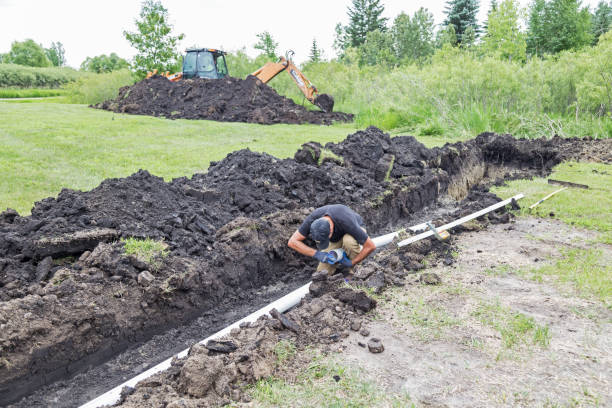
Installers should match pvc drainage pipe sizes to flow calculations. Trenches require soft bedding to protect pipe walls. Sharp stones can create cracks along the bottom. Temperature expansion demands flexible joint planning. Workers should ensure proper slope alignment. Adhesive joints must cure before water testing. Backfill must be compacted gradually. Heavy zones require thicker pipes or casing. Exposure to UV requires covering materials. A warehouse project used larger diameters to reduce pump usage and improve flow speed. Quality checks include visual inspection and pressure testing.
5. Comparison with Other Pipe Materials
Systems using pvc drainage pipe sizes weigh less than concrete and steel. Steel drains handle vibration but may rust internally. Concrete provides compressive strength but increases installation labor. Copper drains conduct heat and cost significantly more. PVC offers smooth internal surfaces and reduced friction loss. Metal pipes require welding, increasing installation time. Concrete joints may leak if misaligned. PVC’s solvent bonding creates stable seals. Repairing PVC costs less, and parts remain widely available.
6. Construction Industry News
Recent updates show increased investment in drainage infrastructure. Cities adopt new sizing standards to prepare for extreme rainfall. Manufacturers upgrade extrusion lines for improved wall thickness consistency. Trade journals report rising demand for certified quality testing. Smart sensors enter commercial drainage to monitor flow. Government committees discuss waste-water treatment improvements. Engineers highlight the importance of standardized pvc drainage pipe sizes for safety. Housing developments request environmentally friendly materials. Quality documentation becomes required for large bids.
7. Conclusion
The quality of pvc drainage pipe sizes defines reliability, flow performance, and structural safety. Proper diameters prevent blockages and reduce pressure surges. Installation teams should follow slope, bedding, and curing guidelines. Comparing materials shows PVC as lightweight, efficient, and cost-effective. Construction news demonstrates continuous improvements in testing and production. Industry sectors trust PVC because it balances price and long-term function. High-quality drainage systems protect buildings, roads, and natural environments. With proper planning, PVC delivers decades of stable performance.
Contact IFAN for Catalogs and Samples
Need technical documents, catalogs, or sample products? Reach out to IFAN today.
📧 Email: [email protected]
📱 Whatsapp: +86 19857948982
Our team responds quickly and provides professional support for all your pipeline needs.
IFAN international standard
IFAN piping systems comply with a wide range of international standards to ensure high quality and performance. These include ASTM F1974 and ASTM F1281 for multilayer piping systems, CSA B137 for Canadian plumbing applications, DIN 16836 for German technical specifications, GB18997 for Chinese standards, and ISO 21003, which covers multilayer piping systems used for hot and cold water installations. This broad certification scope highlights IFAN’s commitment to global compliance and product reliability.























