


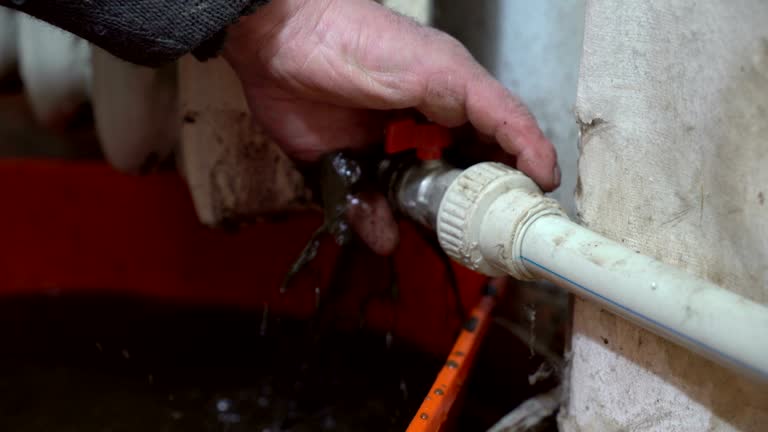
PVC plumbing pipes represent a global standard in modern water infrastructure, yet their successful application hinges on a critical factor: localization. Understanding how regional climate, building codes, and specific industrial needs influence the selection and use of PVC pipes is essential for engineers, contractors, and homeowners. This article explores the concept of localization in relation to PVC plumbing pipes, examining their core characteristics through a regional lens. We will delve into how local regulations and environmental conditions dictate their common uses across different industries. Additionally, a dedicated FAQ section will address prevalent regional concerns. This guide aims to provide a nuanced perspective on why PVC pipes are not a one-size-fits-all solution but a versatile material that must be chosen with local specifics in mind.
Basic Definition and Characteristics from a Local Perspective
Polyvinyl Chloride (PVC) pipes are synthetic plastic conduits renowned for their durability and cost-effectiveness. However, their fundamental characteristics interact uniquely with local environments. For instance, their renowned corrosion resistance makes them an ideal long-term solution in coastal regions where salty air rapidly degrades metal pipes. This same property proves invaluable in areas with acidic soil or aggressive water chemistry, preventing pipe failure and protecting water quality.
Furthermore, the smooth interior wall of PVC pipes ensures efficient water flow. This characteristic is particularly beneficial in regions grappling with water scarcity, as it minimizes pressure loss and maximizes delivery efficiency. The lightweight nature of PVC simplifies logistics and installation, a significant advantage in remote or difficult-to-access locations where transporting heavy metal pipes would be prohibitively expensive and complex.
Moreover, the material’s high durability and excellent tensile strength allow it to perform well in various local conditions. In colder climates, proper burial below the frost line prevents freezing, while their non-conductive nature offers an added safety benefit in areas prone to lightning strikes. Ultimately, the intrinsic properties of PVC make it a strong candidate for a wide array of localized applications, but always within the framework of regional building standards and environmental factors.
Common Uses and Application Industries in a Regional Context
The application of PVC plumbing pipes varies significantly from one region to another, shaped largely by local needs and regulations. In residential and commercial construction across most temperate and arid zones, builders widely use PVC for cold water supply, wastewater drainage, and vent systems. Local building codes strictly govern these applications to ensure safety and compatibility with municipal infrastructure.
Within agricultural sectors, especially in sunbelt regions and developing countries, PVC pipes form the backbone of irrigation systems. Their affordability and resistance to soil chemicals make them a preferred choice for channeling water over long distances, directly supporting local food production. In many industrial zones, factories rely on PVC networks for process water, chemical drainage, and ventilation, with specific resin formulations chosen to handle localized waste streams.
Municipalities worldwide select PVC for main water supply and sewer lines, a decision often driven by local cost factors and the material’s longevity which reduces community maintenance burdens. In earthquake-prone areas, engineers sometimes specify PVC for its slight flexibility, which can better withstand seismic shifting compared to rigid alternatives. Conversely, in regions with very high ambient temperatures, the use of standard PVC for hot water lines is restricted, giving way to CPVC or other materials as per local guidelines.
Frequently Asked Questions (FAQ)
1. Are PVC pipes suitable for use in cold climate regions?
Yes, PVC pipes can perform well in cold climates when installers follow local building codes. The key requirement is burying the pipes below the region’s specific frost line to prevent freezing. Additionally, people should handle and install them carefully in cold weather because the material becomes more brittle and susceptible to impact damage at low temperatures.
2. Do local building codes always allow for PVC plumbing?
Most, but not all, regional building codes approve PVC for specific applications like drain-waste-vent (DWV) and cold water supply. However, some local municipalities may have amendments or restrictions. It is always crucial to consult the local authority having jurisdiction (AHJ) before specifying or installing PVC pipes to ensure full compliance with all regional regulations.
3. How does local water chemistry affect PVC pipes?
PVC pipes boast excellent resistance to a wide range of chemicals found in water and soil. This makes them suitable for areas with acidic or aggressive water conditions that would corrode metal pipes. Their non-reactive nature ensures they do not leach rust or metals into the water supply, helping to maintain potable water quality as per local standards.
4. Can I use standard PVC for hot water lines if I live in a warm area?
No, the ambient outdoor temperature does not determine the suitability of standard PVC for hot water. The critical factor is the temperature of the water inside the pipe. Standard PVC is not rated for continuous hot water service regardless of geographic location. For hot water applications, local codes typically require materials like CPVC or PEX that can handle higher temperatures.
5. What local factors should I consider before choosing PVC pipes?
Several localized factors should guide your decision. First, always check regional building codes for approved uses. Second, consider the local climate, especially the depth of the frost line and average temperature ranges. Third, understand the soil conditions and water chemistry in your area. Finally, consider local availability of pipes, fittings, and qualified installers to ensure a smooth project workflow.
Conclusion
In conclusion, the story of PVC plumbing pipes is not a global monologue but a series of localized dialogues. Their inherent strengths—corrosion resistance, smooth flow, and light weight—make them a universally attractive option. However, their true value and appropriateness are determined by a complex interplay of regional factors. Local building codes, climate patterns, soil chemistry, and industrial demands ultimately dictate where and how these pipes become an integral part of the infrastructure.
The principle of localization reminds us that no single material is perfect for every situation. While PVC offers tremendous benefits for water distribution in one region, another might require alternative solutions for specific challenges. Therefore, a successful project requires more than just selecting a quality product; it demands a thorough understanding of the local context. By carefully considering these regional specifics, engineers, plumbers, and homeowners can leverage the full potential of PVC plumbing pipes, ensuring efficient, durable, and code-compliant systems that are perfectly tailored to their unique environment.
Contact IFAN for Catalogs and Samples
Need technical documents, catalogs, or sample products? Reach out to IFAN today.
📧 Email: [email protected]
📱 Whatsapp: +86 19857948982
Our team responds quickly and provides professional support for all your pipeline needs.
IFAN international standard
IFAN piping systems comply with a wide range of international standards to ensure high quality and performance. These include ASTM F1974 and ASTM F1281 for multilayer piping systems, CSA B137 for Canadian plumbing applications, DIN 16836 for German technical specifications, GB18997 for Chinese standards, and ISO 21003, which covers multilayer piping systems used for hot and cold water installations. This broad certification scope highlights IFAN’s commitment to global compliance and product reliability.























