


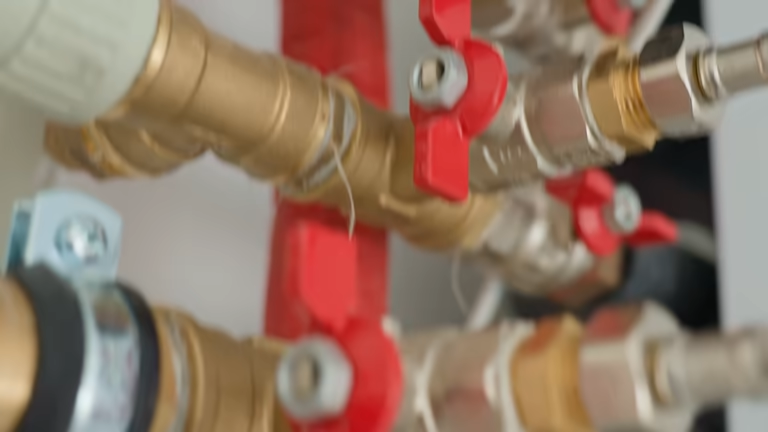
Brass shut off valves have become a go-to solution for professionals across various industries. From plumbing and HVAC systems to irrigation and industrial applications, these valves consistently deliver performance, durability, and ease of use. Because of their robust construction and long-lasting reliability, professionals rely on them to ensure smooth operation and efficient fluid control. In this article, we will explore why brass shut off valves are trusted, their key characteristics, practical uses, and how they compare to other types of valves.
Frequently Asked Questions (FAQ)
1. What is a brass shut off valve used for?
Primarily, it is used to control or completely stop the flow of fluids, such as water or gas, within a piping system.
2. Can brass shut off valves be used for drinking water?
Yes. As long as the valve is certified lead-free, it is completely safe for potable water systems.
3. How durable are brass shut off valves?
On average, these valves last more than 20 years, especially when installed and maintained properly.
4. Are brass valves suitable for outdoor use?
Absolutely. Brass is naturally resistant to corrosion and weather exposure, making it a great option for outdoor environments.
5. How do I choose the right valve size?
Generally, match the valve size with your existing pipe size—commonly 1/2 inch or 3/4 inch for household use.
Definition and Key Features of Brass Shut Off Valves
To begin with, a brass shut off valve is a manually operated device that stops or regulates the flow of liquid or gas through a pipeline. Constructed from a durable copper-zinc alloy, it offers strength, flexibility, and compatibility with various piping systems.
Moreover, brass shut off valves feature:
- High corrosion resistance, which ensures long service life even in hard water or outdoor environments.
- Excellent pressure and temperature tolerance, making them ideal for both hot and cold water systems.
- Smooth operation, often through quarter-turn ball or multi-turn gate mechanisms.
- Multiple configurations, including straight, angle, and compression types.
- Easy integration with copper, PEX, CPVC, and other common plumbing materials.
Thus, these characteristics make brass valves not only functional but also highly dependable across diverse applications.
Common Uses and Industries
Over time, brass shut off valves have proven themselves indispensable in many settings. Not only are they widely used, but they also outperform other materials in both reliability and lifespan.
In residential plumbing, they are found beneath sinks, near water heaters, and behind toilets. Homeowners benefit from the simple shutoff function during maintenance or emergencies.
In commercial properties, such as hotels, schools, and office buildings, brass valves manage flow in kitchens, washrooms, and HVAC systems.
When it comes to industrial use, these valves are installed in fluid processing lines, compressed air systems, and cooling networks. Their durability under heavy usage is unmatched.
For irrigation and landscaping, professionals prefer brass valves for outdoor water lines due to their resistance to rust and weather damage.
Even in marine and RV applications, compact brass shut off valves are used where space and vibration resistance are critical.
Clearly, regardless of the field, professionals choose brass shut off valves for their reliability in demanding environments.
Buying Guide: How to Select the Right Brass Shut Off Valve
Before making a purchase, it’s important to understand what factors influence valve performance. Therefore, here is what to consider when choosing a brass shut off valve:
Material quality should be your first concern. Always select solid brass, not brass-plated or zinc alloy, especially if long-term performance is important.
Valve type also plays a role:
- Ball valves offer quick shutoff with a simple quarter turn.
- Gate valves provide more gradual control.
- Angle valves are great for tight, wall-mounted spaces.
- Straight valves are ideal for inline installations.
Connection method is another key detail:
- Compression fittings are best for copper piping.
- Threaded connections work well with metal pipes.
- Push-fit styles suit PEX and DIY plumbing systems.
Certifications matter too. If the valve will be used for drinking water, make sure it complies with NSF, ANSI, or CSA standards.
Size and handle design should be based on space and accessibility. Lever handles are easier to operate, while twist handles are better for compact areas.
By evaluating these points, you can confidently select a valve that fits your system requirements and provides long-term value.
Reliability: Why Brass Valves Outperform Alternatives
It’s no coincidence that professionals consistently choose brass shut off valves. Their reliability stems from several performance advantages:
- First of all, they maintain their shape and strength under both high pressure and fluctuating temperatures.
- Secondly, they resist mineral buildup, reducing the risk of blockage or internal damage.
- Furthermore, they require minimal maintenance, unlike plastic or zinc alternatives that degrade over time.
- Lastly, they operate smoothly for decades, ensuring dependable performance without frequent replacements.
In the long run, these benefits translate into fewer failures, lower costs, and better overall system efficiency.
Brass Shut Off Valves vs Other Materials
Below is a direct comparison of brass shut off valves and other common materials, highlighting their differences in performance and value:
| Feature | Brass Shut Off Valve | Plastic Valve | Zinc Alloy Valve | Stainless Steel Valve |
|---|---|---|---|---|
| Durability | High | Low | Moderate | Very High |
| Corrosion Resistance | Excellent | Moderate | Low | Excellent |
| Temperature Tolerance | High | Low | Moderate | Very High |
| Lifespan | 20+ years | 5–10 years | 10–15 years | 25+ years |
| Cost | Moderate | Low | Low | High |
| Installation Ease | Easy | Very Easy | Easy | Moderate |
| Common Applications | Universal | Indoor/light use only | Temporary systems | Industrial/critical systems |
As shown above, brass strikes the perfect balance between cost, performance, and ease of use—making it the preferred option for most plumbing professionals.
Conclusion
In summary, the brass shut off valve remains one of the most trusted components in plumbing and fluid control systems. Thanks to its durability, reliability, and versatility, it has earned its place in residential, commercial, and industrial settings. Not only does it perform under pressure, but it also stands the test of time.
For professionals who value efficiency, safety, and long-term system integrity, the brass shut off valve offers unmatched peace of mind. When chosen and installed correctly, it becomes a dependable tool that reduces maintenance, prevents leaks, and supports smooth operation for decades.
Ultimately, it’s no surprise why professionals trust brass shut off valves—because they work when it matters most.
Contact IFAN for Catalogs and Samples
Need technical documents, catalogs, or sample products? Reach out to IFAN today.
📧 Email: [email protected]
📱 Whatsapp: +86 19857948982
Our team responds quickly and provides professional support for all your pipeline needs.
IFAN international standard
IFAN piping systems comply with a wide range of international standards to ensure high quality and performance. These include ASTM F1974 and ASTM F1281 for multilayer piping systems, CSA B137 for Canadian plumbing applications, DIN 16836 for German technical specifications, GB18997 for Chinese standards, and ISO 21003, which covers multilayer piping systems used for hot and cold water installations. This broad certification scope highlights IFAN’s commitment to global compliance and product reliability.























