


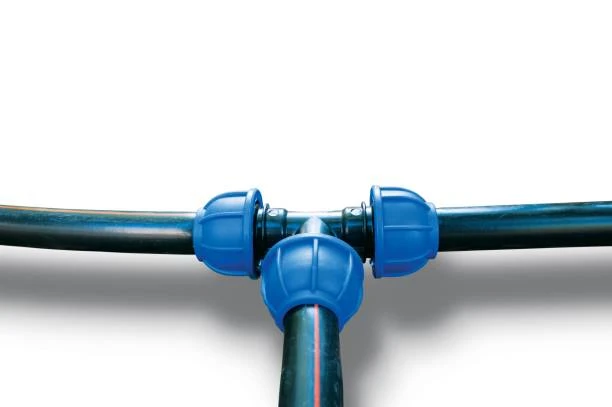
In today’s evolving infrastructure landscape, the reliability of piping systems plays a crucial role in both public and industrial applications. Among the various materials used, polyethylene (PE) has earned widespread attention. More specifically, PE pipe fittings are increasingly favored for their adaptability, durability, and above all, their impressive temperature resistance. This article explores the thermal performance of PE pipe fittings in detail, highlighting why temperature resistance is vital and how PE fittings excel across a broad range of conditions.
Introduction to PE Pipe Fittings
First and foremost, it is essential to understand what PE pipe fittings are. Made from high-density polyethylene or medium-density polyethylene, these fittings serve as connectors in piping systems. They link PE pipes together, allow directional changes, control fluid flow, or serve as branching points. Due to their chemical stability, flexibility, and long life span, they are used extensively in water supply, natural gas networks, irrigation systems, sewage treatment, and industrial fluid conveyance.
While there are several reasons for their popularity, one often overlooked but crucial advantage is their temperature resistance. This characteristic becomes especially important in environments with fluctuating temperatures or extreme climate conditions.
The Concept of Temperature Resistance
Before delving deeper, let us define temperature resistance. It refers to the ability of a material to maintain its structural integrity and performance despite exposure to varying thermal conditions. In piping systems, temperature fluctuations can cause expansion, contraction, softening, or even brittleness. Consequently, materials that can handle these changes without degrading are highly desirable.
Unlike metals, which can corrode or become brittle, PE pipe fittings offer a stable performance under both hot and cold conditions. But how does this happen? The secret lies in the unique molecular structure of polyethylene.
How Polyethylene Reacts to Temperature
Polyethylene exhibits thermoplastic behavior, which means it softens when heated and hardens when cooled. However, this softening and hardening happen within a controlled range, allowing the material to be processed and installed safely. More importantly, once installed, PE maintains adequate stiffness and elasticity across typical working temperatures.
Furthermore, modern PE pipe fittings are manufactured from variants like PE80 and PE100, which offer improved thermal and mechanical properties. As a result, these fittings can typically handle operating temperatures from -40°C up to 60°C under pressure. In non-pressurized or intermittent applications, the temperature range may extend even further.
Performance in Cold Climates
One of the greatest concerns for piping systems in cold climates is brittleness. Traditional materials like PVC or cast iron tend to crack or fracture when temperatures drop below freezing. On the other hand, PE fittings retain their flexibility and strength even at sub-zero temperatures.
This is particularly beneficial in regions where frost penetration is deep. When water freezes, it expands. In rigid pipes, this expansion can cause cracks or joint failures. However, PE fittings expand slightly to accommodate the pressure and return to their original form after thawing. This resilience makes them ideal for applications in polar or mountainous regions.
Behavior Under High Temperatures
In warmer environments, piping materials are exposed to elevated temperatures, either due to ambient heat or the temperature of the fluid inside. High temperatures can cause plastic deformation, joint loosening, or pipe sagging in some materials.
Fortunately, PE pipe fittings maintain excellent dimensional stability up to 60°C in continuous pressure applications. For short-term exposure, such as cleaning cycles or solar heating effects, PE fittings can handle even higher temperatures without permanent deformation.
However, it is important to note that as the temperature increases, the pressure rating of PE fittings decreases. Therefore, systems operating near the upper temperature limit must be designed with derating factors in mind.
Thermal Expansion and Contraction
All materials expand and contract with temperature changes, and PE is no exception. Nevertheless, the controlled and predictable expansion rate of PE makes it easier for engineers to accommodate this behavior in system designs. Proper anchoring, expansion loops, or flexible joints allow the system to breathe without causing stress on the fittings.
Moreover, the elasticity of PE fittings ensures that any temporary deformation due to thermal cycling is not permanent. The fittings return to their original shape once the temperature stabilizes, preventing long-term warping or distortion.
Impact of Temperature on Joint Integrity
Another major advantage of PE pipe fittings is their joint performance under thermal stress. Traditional mechanical joints, especially those made with rigid materials, are prone to loosening or leakage as the temperature fluctuates. In contrast, PE fittings are commonly joined using heat fusion or electrofusion.
These techniques create a homogenous bond between pipe and fitting, eliminating joints as weak points. Even when temperatures rise or fall significantly, the fused joint expands and contracts uniformly with the rest of the system. As a result, the likelihood of leaks or separation is minimized.
Compatibility with Hot Water Systems
Although PE pipe fittings are typically used for cold or ambient temperature systems, some advanced formulations are suitable for warm water applications. For instance, cross-linked polyethylene (PEX), a close relative of PE, can withstand temperatures up to 90°C continuously and is widely used in domestic hot water systems.
In industrial settings where slightly elevated temperatures are required, reinforced PE fittings or composite solutions are also available. These materials combine the benefits of PE’s flexibility and chemical resistance with enhanced thermal stability.
Chemical Resistance at Various Temperatures
The temperature resistance of PE fittings also supports their chemical resistance. Many industrial and agricultural systems transport fluids that are chemically aggressive, such as acids, bases, or solvents. As temperature increases, so does the reactivity of chemicals.
Fortunately, PE maintains its chemical resistance across its operational temperature range. This makes it a safe choice for transporting aggressive fluids even when they are warm. However, each application should be evaluated based on the chemical’s specific compatibility at the intended temperature.
Lifespan and Aging under Temperature Stress
Another noteworthy point is the long-term performance of PE pipe fittings under temperature cycling. Materials that undergo repeated heating and cooling can age quickly, leading to stress fractures or fatigue. PE, however, has excellent fatigue resistance. Laboratory and field data confirm that PE systems can function reliably for or more when used within the recommended temperature and pressure limits.
Furthermore, PE is resistant to UV radiation when stabilized with carbon black or UV inhibitors. This helps maintain temperature stability in outdoor installations where sunlight could otherwise heat the pipe’s surface significantly.
Fire Resistance and Thermal Degradation
While PE fittings are not fire-resistant by nature, they have predictable thermal degradation points. This predictability helps engineers design systems with safety protocols for fire risk areas. In environments with fire hazards, PE systems are usually used underground or encased in protective materials.
Also, some PE variants are available with flame-retardant additives for use in specific industrial sectors. Nevertheless, PE should not be used in environments requiring constant exposure to open flames or extremely high temperatures.
Standards and Certification
To ensure the thermal reliability of PE pipe fittings, numerous international standards exist. These include ISO 4427, ASTM D3035, and EN 12201, among others. These standards specify allowable pressure ratings, temperature limits, and installation guidelines. By adhering to certified fittings and pipes, engineers can guarantee thermal performance in real-world conditions.
Additionally, third-party certifications help confirm the suitability of PE fittings for potable water, gas distribution, and industrial usage, including temperature resistance benchmarks.
Real-World Applications Requiring Temperature Resistance
There are numerous real-world scenarios where temperature-resistant PE fittings are critical:
- In geothermal systems, PE fittings must handle both sub-surface cold and moderate thermal exchange temperatures.
- In snowmelt systems, the fittings are buried in pavement and exposed to freeze-thaw cycles.
- In mining operations, PE pipes carry slurry and warm water through deep tunnels with varying temperatures.
- In agriculture, irrigation systems operate under the sun, experiencing both heat and nighttime cooling.
In all these cases, the material’s thermal resilience is vital to ensuring smooth and uninterrupted operation.
Environmental and Economic Impact
Using temperature-resistant PE pipe fittings has both environmental and economic benefits. Since these systems can withstand a wide temperature range, fewer replacements are needed over time. This results in less waste and reduced carbon emissions related to manufacturing and transportation.
Economically, the ability to use a single piping solution across various temperature zones simplifies logistics and reduces inventory complexity. Maintenance costs are also minimized, especially in harsh environments where failures would otherwise be frequent.
Conclusion
In conclusion, the temperature resistance of PE pipe fittings is a critical factor that enhances their value in diverse applications. From freezing winters to warm industrial processes, these fittings continue to deliver performance, safety, and longevity. Their ability to endure thermal stress, maintain joint integrity, and resist chemical reactions at varying temperatures makes them a superior choice for modern infrastructure.
As global infrastructure faces more extreme climate events and wider operational demands, the reliability of piping systems becomes even more important. Thanks to their thermal stability, PE pipe fittings offer peace of mind to engineers, contractors, and end users alike. Whether you are installing water pipelines in the Arctic or running fluid systems under desert sun, PE fittings are a smart and sustainable choice.
IFAN international standard
IFAN’s poly pipe products comply with a wide range of international standards to ensure quality, safety, and compatibility across global markets. These include ASTM D3035, ASTM D3350, the ISO 4427 series, EN 12201 series, DIN 8074/8075, GB/T 13663 series, AS/NZS 4130, JIS K6760, BS 6572, and CSA B137.1, among others. This comprehensive compliance reflects IFAN’s commitment to delivering reliable piping solutions that meet the diverse technical requirements of water supply, gas distribution, and industrial applications worldwide.
Contact
IFAN is a professional manufacturer with of experience, dedicated to producing high-quality plastic pipes, fittings, and valves. Our products include brass valves, PPR valves, as well as various pipes and fittings to meet different customer needs. Whether you need plumbing and drainage pipes or valve products, IFAN can provide a diverse range of high-quality, cost-effective products to support your projects. Below is our contact information.
We will reply your email or fax within 24 hours.
You can call us at any time if there is any question on our production.
For more information,pls visit our webside https://www.ifanplus.com/
Pls Mailto: [email protected]
Whatsapp: + 86 19857948982























