


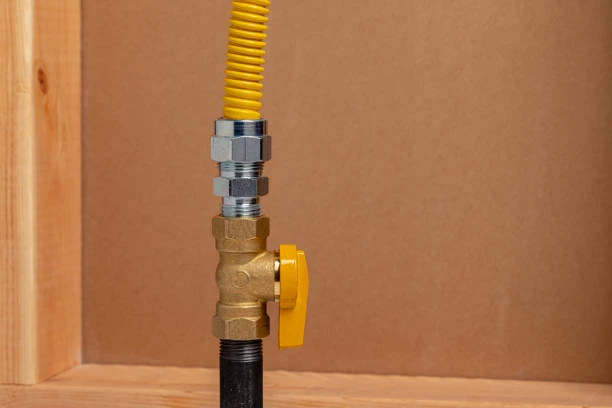
Understanding the Basics of Ball Valves
Before diving into size comparisons, let’s first understand what a ball valve does. A ball valve controls water or gas flow through a pipe using a rotating ball with a hole. When you turn the valve handle, the ball rotates. If the hole aligns with the pipe, fluid flows freely. If not, the valve blocks the flow completely.
This simple design makes ball valves reliable and easy to operate. They work well in residential plumbing, industrial pipelines, irrigation systems, and heating networks. But when choosing between 1-inch and 1/2-inch ball valves, you need to consider more than just the numbers.
Why Size Matters in Plumbing Projects
Choosing the right valve size affects how your system performs. A valve that’s too small might restrict water flow, causing pressure issues. On the other hand, a valve that’s too large might waste space and cost more than necessary.
Therefore, understanding your system’s flow needs helps you select the correct size. A 1-inch valve allows more water to pass through than a 1/2-inch valve. That doesn’t mean bigger is always better—it depends on your pipe size, pressure needs, and usage goals.
Let’s explore the differences between the two sizes to help you make a smart decision.
1/2 Inch Ball Valves: Compact and Cost-Effective
A 1/2-inch ball valve is one of the most common sizes in home plumbing. It fits standard 1/2-inch pipes and provides moderate water flow. You’ll often find it under sinks, in toilet lines, and in garden hose connections.
Because of its smaller diameter, a 1/2-inch valve limits the volume of water it can pass. That’s not a bad thing if your project involves low-flow fixtures or compact spaces. These valves also cost less and take up less room, making them a favorite for residential applications.
In addition, 1/2-inch valves are easy to find and simple to install. If you’re working on a tight budget or doing a small DIY project, this size may be the best fit.
1 Inch Ball Valves: Built for Bigger Flow
On the other hand, 1-inch ball valves handle larger volumes of water. They match with 1-inch pipes, which you might see in irrigation systems, water tanks, or main lines of a building.
Larger flow capacity means they deliver more water quickly. This makes them ideal for projects that need strong water pressure or fast filling. If you’re running long pipes or multiple fixtures from one line, a 1-inch valve keeps the system efficient.
Additionally, these valves are more durable for heavy-duty use. They often have thicker bodies and stronger internal components, so they hold up well in demanding environments.
Comparing Flow Rate and Water Pressure
One of the main differences between these two sizes is flow rate. A 1-inch valve can deliver almost four times the volume of water compared to a 1/2-inch valve, depending on pipe length and pressure.
For example, a 1/2-inch valve may deliver around 4–8 gallons per minute (GPM), while a 1-inch valve can handle 20–30 GPM under the same conditions. That’s a big difference if you need to fill a large tank or run sprinklers across a big yard.
However, high flow isn’t always necessary. If you only need to supply one bathroom sink, a 1/2-inch valve works perfectly. For a home water main, you’ll likely need something closer to 1 inch.
Installation Space and Compatibility
When choosing a valve size, consider how much space you have. A 1-inch valve is bulkier than a 1/2-inch version. If your setup is tight—behind a wall or under a sink—the smaller valve fits more easily.
Also, check your pipe fittings. You don’t want to install a valve that doesn’t match your existing pipe size. Adapters can solve the issue, but they add complexity and cost.
So, if your system uses 1/2-inch pipes, stick with 1/2-inch valves. If your pipes are 1 inch wide, then a 1-inch valve is the logical choice. Always measure before you buy.
Price Differences: Budget vs. Performance
As expected, 1-inch ball valves usually cost more than 1/2-inch versions. The price reflects the larger body, added material, and stronger internal components.
That said, price should not be your only factor. Consider long-term performance and water efficiency. A slightly more expensive valve that lasts longer and performs better could save you more over time.
In general, go with a 1/2-inch valve for simple home tasks. If you’re handling larger flow systems or want fewer restrictions, spend a little more on a 1-inch model.
Which Size Fits Your Specific Project?
Let’s walk through a few scenarios to help you decide:
- Fixing a Leaky Sink? Go with a 1/2-inch valve. It’s small, efficient, and fits standard plumbing.
- Installing Garden Irrigation? If you need strong pressure and multiple zones, a 1-inch valve works better.
- Replacing a Toilet Shutoff? Use a 1/2-inch valve. You don’t need more flow than that.
- Controlling Flow to a Water Tank? A 1-inch valve allows faster filling and draining.
- Upgrading a Main Supply Line? Choose a 1-inch valve for higher flow capacity and reliability.
As you can see, the right size depends on your system’s needs—not just the valve itself.
Conclusion: Choose Based on Need, Not Just Size
Both 1/2-inch and 1-inch ball valves serve important roles. The key is matching the valve to the job. A 1/2-inch valve is perfect for smaller tasks like faucets, toilets, or small appliances. It’s compact, affordable, and easy to install.
Meanwhile, a 1-inch valve suits larger systems, such as irrigation lines, main shutoffs, or tanks. It delivers more water, handles more pressure, and adds long-term reliability.
Before buying, think about your pipe size, space, pressure needs, and future maintenance. If you’re unsure, ask a plumber or check your existing system.
Choosing the right size today saves you time, money, and frustration tomorrow. Make the smart choice—and your plumbing project will run smoothly.
IFAN Product Standards Overview
IFAN manufactures products in full compliance with international and regional standards to meet diverse market requirements. Our product range adheres to specifications such as ISO 15874, EN 15874, ASTM F2389, DIN 8077/8078, GB/T 18742, and NBR 15884 for PPR systems. We also follow ISO 15494, EN ISO 15494, GB/T 19472, and NBR 15494 for industrial piping applications. Standards like ASTM D1785 SCH40/SCH80, DIN 8061/8062, ISO 1452, AS/NZS 1477, and NSF/ANSI 14 apply to our PVC systems. For HDPE and gas pipes, we comply with ISO 4437, EN 12201, ASTM D2513, ASTM D3035, and GB/T 13663. Stainless steel and composite piping products meet ASTM A312, ISO 10380, ASTM F1974, and ISO 21003. Other supported standards include CSA B137, BS 7291, JIS K6741, and TIS 17-2532/1131-2535. IFAN ensures reliable quality and compatibility by meeting these globally recognized specifications.
Contact
IFAN is a professional manufacturer with of experience, dedicated to producing high-quality plastic pipes, fittings, and valves. Our products include brass valves, PPR valves, as well as various pipes and fittings to meet different customer needs. Whether you need plumbing and drainage pipes or valve products, IFAN can provide a diverse range of high-quality, cost-effective products to support your projects. Below is our contact information.
We will reply your email or fax within 24 hours.
You can call us at any time if there is any question on our production.
For more information,pls visit our webside https://www.ifanplus.com/
Pls Mailto: [email protected]
Whatsapp: + 86 19857948982























