


Introduction
In modern construction, versatility and compatibility are vital characteristics of any component, especially in fluid transport and infrastructure systems. As a result, PVC accessories have become one of the most widely adopted solutions across residential, commercial, and industrial sectors. These fittings and connectors are not only functional and reliable but also remarkably compatible with a wide range of systems.
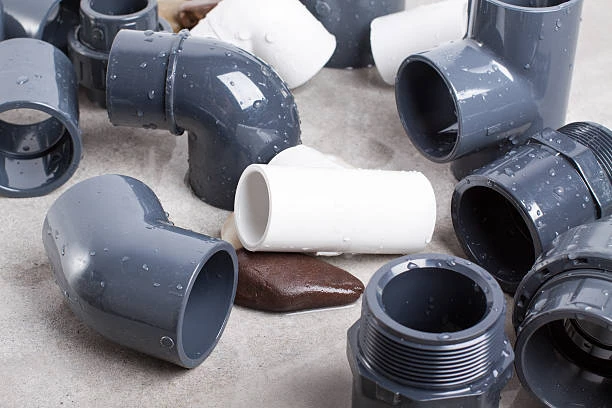
PVC accessories—such as elbows, tees, couplings, valves, and reducers—are designed to integrate seamlessly with various pipe materials, sizes, and application types. This high degree of compatibility ensures simplified installation, reduced labor costs, and increased project flexibility. Furthermore, their chemical and physical properties allow them to be used in environments where other materials might fail.
This article will explore the many ways PVC accessories exhibit compatibility, from pipe material adaptability to joint type interchangeability and from fluid system flexibility to environmental resistance. It will also examine how PVC accessories support evolving technologies and infrastructure designs without compromising performance or safety.
Compatible with a Wide Range of Pipe Materials
One of the most compelling advantages of PVC accessories is their ability to interface with different pipe materials. While they are primarily used with PVC piping, they can also be adapted to other systems.
For instance, when transitioning from metal to plastic piping, PVC accessories with threaded or hybrid connections can bridge the two. Moreover, special adapters allow the joining of PVC components to materials such as:
- CPVC (chlorinated polyvinyl chloride)
- ABS (acrylonitrile butadiene styrene)
- PEX (cross-linked polyethylene)
- PE (polyethylene)
- Copper
- Galvanized steel
This adaptability is critical in retrofit applications where the existing infrastructure includes diverse materials. Instead of replacing entire pipelines, contractors can integrate PVC accessories to modernize systems incrementally.
Furthermore, many manufacturers offer universal transition fittings that make cross-material integration more reliable and leak-proof. This reduces the need for costly custom parts or complex workarounds.
Available in Multiple Sizes and Standards
PVC accessories are available in an extensive range of diameters, from small domestic plumbing sizes to large-scale industrial pipeline sizes. Common diameters include ½ inch, ¾ inch, 1 inch, and up to 24 inches or more for specialized applications.
Additionally, these accessories conform to international standards, such as:
- ASTM (American Society for Testing and Materials)
- ISO (International Organization for Standardization)
- DIN (German Institute for Standardization)
- BS (British Standards)
- JIS (Japanese Industrial Standards)
Thanks to these standardized dimensions, installers can use PVC accessories confidently across global markets. Moreover, systems built with different manufacturers’ components often remain compatible, making inventory and procurement much more manageable.
Compatible with Different Jointing Methods
Another area where PVC accessories shine is their compatibility with various jointing methods. Depending on the application, installers can choose from several joining techniques, including:
Solvent Cementing
The most common method involves solvent welding, which chemically fuses the accessory and pipe together. This creates a permanent, leak-free bond suitable for water supply and drain systems.
Threaded Connections
For removable joints, PVC accessories are available with male or female threads. These are especially useful in systems requiring occasional disassembly or where metal pipe transitions are involved.
Gasketed and Push-Fit Joints
In larger-scale systems or underground installations, gasketed PVC fittings simplify assembly. Push-fit models allow quick insertion without cement or threading, speeding up installation time.
Flanged Connections
For high-pressure or industrial environments, flanged PVC accessories enable secure bolted joints. These are commonly used in chemical plants or water treatment facilities.
This flexibility in jointing options ensures that PVC accessories remain compatible with both permanent and temporary systems.
Suitable for a Wide Range of Fluids
Compatibility isn’t only about materials—it also includes the types of fluids that the system carries. PVC accessories are inherently non-reactive, making them suitable for transporting various fluids, including:
- Cold and hot potable water
- Non-potable water
- Wastewater and sewage
- Irrigation fluids
- Saltwater
- Chemical solutions
- Acidic or alkaline fluids (depending on concentration)
Furthermore, their smooth inner surfaces reduce friction and scaling, ensuring consistent flow rates over time. Because PVC accessories are resistant to corrosion, rust, and buildup, they outperform many metal alternatives in aggressive fluid systems.
Additionally, their compatibility with multiple fluid types makes them ideal for mixed-use buildings, municipal installations, and agricultural environments.
Integration with Valves and Control Systems
PVC accessories are not limited to passive components like elbows and couplings. They also include active fittings such as:
- Ball valves
- Check valves
- Butterfly valves
- Gate valves
- Air release valves
These components integrate seamlessly with pipes and other accessories, ensuring full system compatibility. Moreover, many of these valves come with actuator mounts, allowing for integration with automated control systems.
As building automation and smart irrigation become more common, this compatibility allows contractors to design PVC systems that support real-time control and monitoring.
Compatible with Electrical and Communication Conduits
Although PVC accessories are best known for fluid transport, they are also widely used in electrical conduit systems. PVC electrical fittings—including junction boxes, conduit bends, and adapters—are fully compatible with standard conduit pipes.
These accessories meet national electrical code (NEC) standards and are suitable for both indoor and outdoor use. Furthermore, they are compatible with low-voltage and high-voltage applications, as well as communication cabling.
This dual-use compatibility makes PVC accessories an efficient choice for mixed utility corridors in residential and commercial projects.
Environmental Compatibility
PVC accessories are also highly compatible with a wide range of environmental conditions. They perform well in:
- Underground installations
- Submerged environments
- High-humidity zones
- Areas with chemical exposure
- High UV exposure (when UV-resistant variants are selected)
Moreover, PVC does not rust, degrade from soil acidity, or attract biological growth. This environmental resilience makes PVC accessories suitable for challenging locations such as coastal regions, farms, basements, and industrial zones.
As environmental regulations become more stringent, materials like PVC that maintain compatibility without requiring additional coatings or treatments become increasingly valuable.
Reusability and Modular Compatibility
PVC accessories support modular system design. Because they can be cut, joined, and reassembled easily, they are perfect for projects requiring future expansion or reconfiguration.
Additionally, certain accessories like unions, threaded fittings, and compression joints can be disassembled and reused. This characteristic is particularly useful in laboratory settings, temporary installations, or mobile systems.
The ability to reconfigure or upgrade PVC systems without scrapping entire assemblies adds long-term value and supports sustainability goals.
Third-Party Component Integration
Another often-overlooked benefit of PVC accessory compatibility is the ease of integration with third-party products. For example:
- Pressure gauges
- Flow meters
- Sensors
- Filters
- Strainers
All of these components can be inserted into a PVC system using standard accessory interfaces. Moreover, adapters exist to connect non-PVC devices, such as brass or stainless steel equipment, into the PVC network.
This interoperability allows engineers and designers to mix materials and technologies while maintaining overall system integrity.
Compatibility with Modern Construction Methods
Modern construction embraces methods like prefabrication, modular installation, and offsite assembly. PVC accessories support all of these approaches.
Because they are lightweight, uniform, and easy to bond, they are ideal for factory-built systems that can be shipped and installed onsite with minimal adjustments. Additionally, 3D modeling software (such as BIM) often includes full PVC accessory libraries, ensuring compatibility from design to execution.
In addition, their predictability and availability from global suppliers make PVC accessories compatible with fast-track and lean construction practices.
Regulatory and Health Compatibility
Lastly, compatibility also refers to compliance with health and safety regulations. PVC accessories used in potable water or food-grade applications must meet strict standards, including:
- NSF/ANSI 61 (safe for drinking water)
- RoHS (restriction of hazardous substances)
- FDA regulations (for food contact)
- REACH compliance (chemical safety)
These certifications ensure that PVC accessories are compatible not only physically and chemically, but also legally and ethically with the intended use.
In applications such as medical piping, aquarium systems, and food processing plants, this level of certified compatibility is non-negotiable. Fortunately, many manufacturers offer accessory lines that are fully certified for such uses.
Conclusion
PVC accessories provide unmatched compatibility across every dimension of construction and system integration. Whether connecting different pipe materials, handling diverse fluids, or adapting to various environmental conditions, PVC components demonstrate extraordinary flexibility.
Their standardized dimensions, wide availability, and support for multiple joining methods ensure they fit into nearly any project. Moreover, their performance in mechanical, electrical, chemical, and environmental systems confirms their place as one of the most adaptable construction components available.
As the construction industry continues to evolve toward faster, smarter, and more sustainable practices, PVC accessories will remain at the forefront—delivering compatibility, reliability, and simplicity.
IFAN international standard
IFAN adheres to a comprehensive range of standards to ensure quality and performance across various applications. These include BS 3505 and BS 4346, along with ASTM standards such as D1785 SCH40, D1785 SCH80, D2665, D2241, D2729, and F441/F441M. The portfolio is further strengthened by international standards from DIN, GB, and DWV, as well as the ISO 1452 Series and its equivalent EN ISO 1452. Additionally, specific standards such as DIN 8061/8062, GB/T 10002 Series, AS/NZS 1477, JIS K6741, CSA B137.3, NSF/ANSI 14, and TIS 17-2532/1131-2535 are incorporated. Collectively, these standards ensure that IFAN’s products and processes adhere to rigorous performance criteria and quality benchmarks, thereby promoting safety, reliability, and interoperability on a global scale.
Contact
IFAN is a professional manufacturer with of experience, dedicated to producing high-quality plastic pipes, fittings, and valves. Our products include brass valves, PPR valves, as well as various pipes and fittings to meet different customer needs. Whether you need plumbing and drainage pipes or valve products, IFAN can provide a diverse range of high-quality, cost-effective products to support your projects. Below is our contact information.
We will reply your email or fax within 24 hours.
You can call us at any time if there is any question on our production.
For more information,pls visit our webside https://www.ifanplus.com/
Pls Mailto: [email protected]
Whatsapp: + 86 19857948982























