


Introduction
In today’s demanding construction and industrial environments, material selection plays a critical role in ensuring long-term performance. Among various factors, corrosion resistance is one of the most important. It not only affects the durability of infrastructure but also determines the safety, maintenance costs, and overall reliability of a system.PVC accessories, widely used in piping and conduit systems, have gained immense popularity for their exceptional corrosion resistance. Unlike metal fittings, which are prone to rust and chemical degradation, PVC (polyvinyl chloride) offers a solution that stands the test of time and harsh conditions. As a result, engineers, contractors, and municipal planners continue to rely on PVC fittings in a wide variety of applications.
This article provides a comprehensive look at the corrosion resistance of PVC accessories. It discusses their behavior in different environments, advantages over traditional materials, industry applications, and overall cost-effectiveness.
What Are PVC Accessories?
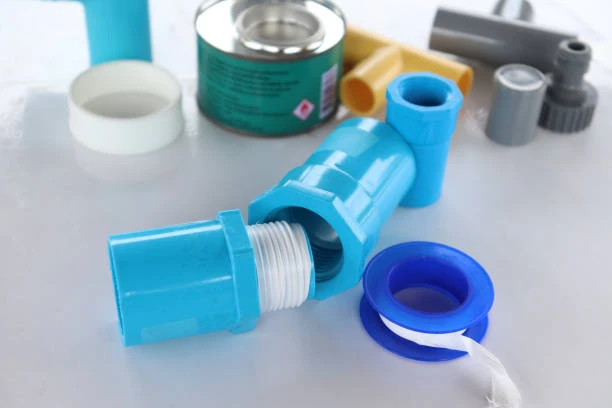
PVC accessories include a range of pipe fittings such as elbows, tees, couplings, end caps, valves, and adapters. These components are used in both pressurized and non-pressurized systems for plumbing, drainage, irrigation, ventilation, and chemical transport.
Manufactured using rigid PVC resins, these accessories are engineered to resist not only physical stress but also chemical attack. Their molecular structure provides inherent resistance to a wide variety of corrosive agents, making them a preferred choice in aggressive environments.
Understanding Corrosion in Piping Systems
Corrosion is a natural process that involves the deterioration of materials, especially metals, due to chemical reactions with their surroundings. For instance, exposure to moisture, oxygen, salts, acids, or industrial chemicals can lead to rust or pitting in metallic systems.
Over time, this deterioration can weaken the structural integrity of pipes and fittings, leading to leaks, bursts, contamination, and system failures. In contrast, PVC is a synthetic polymer that is not vulnerable to oxidation, electrochemical reactions, or most corrosive agents.
Therefore, using PVC accessories is a proactive approach to preventing corrosion-related problems from the outset.
Chemical Resistance of PVC
One of the primary reasons for PVC’s outstanding corrosion resistance is its chemical inertness. PVC does not react with a wide range of acids, bases, salts, and organic solvents. Consequently, it performs exceptionally well in both industrial and municipal applications.
For example, PVC fittings are frequently used in:
- Acid drainage systems
- Chemical process plants
- Wastewater treatment facilities
- Agricultural fertilizer systems
- Coastal and saline environments
Furthermore, PVC accessories are immune to galvanic corrosion, which occurs when dissimilar metals come into contact in a conductive environment. Since PVC is a non-metallic material, it remains unaffected by this common type of corrosion.
Performance in Aggressive Soil and Water Conditions
Underground installations often expose piping materials to aggressive soils containing sulfates, chlorides, or high moisture content. Metallic pipes and fittings are vulnerable in these conditions unless expensive coatings or cathodic protection systems are used.
PVC accessories, however, require no such treatments. Their corrosion resistance in soil and water makes them ideal for buried systems. In addition, PVC does not degrade due to contact with naturally occurring minerals or biological activity in soil.
In coastal areas, where salt-laden air and water accelerate metal corrosion, PVC continues to perform without deterioration. Therefore, its use in marine and waterfront infrastructure is widespread.
Resistance to Biological Corrosion
Another notable advantage of PVC accessories is their resistance to microbiologically influenced corrosion (MIC). MIC occurs when microorganisms—such as bacteria or fungi—produce corrosive byproducts like hydrogen sulfide or organic acids.
These byproducts can cause serious damage to steel or iron components. In contrast, PVC’s smooth, non-porous surfaces discourage microbial growth and prevent the accumulation of organic matter.
Moreover, since PVC does not contain nutrients that support bacterial metabolism, it is naturally resistant to such biological degradation. As a result, PVC fittings are especially suitable for sewage systems, bioreactors, and agricultural applications.
Long-Term Durability
PVC accessories demonstrate long-term resistance to both internal and external corrosion. Numerous field studies and laboratory tests confirm that properly installed PVC systems can last or more with minimal maintenance.
For instance, many municipal water and sewer systems installed in the 1970s using PVC are still fully functional today. In contrast, metal components often require replacement or repair within 10 to 20 years due to corrosion damage.
This long service life translates into fewer system failures, less downtime, and lower replacement costs—making PVC a logical choice for sustainable infrastructure.
Advantages Over Metal Fittings
When comparing PVC accessories to metal alternatives such as galvanized steel, copper, or cast iron, the benefits become even more apparent.
- No rust formation: Unlike steel or iron, PVC does not oxidize.
- No pitting or scaling: Copper and aluminum can develop surface flaws, while PVC maintains its smooth structure.
- No coating needed: Metals require protective linings; PVC does not.
- Lightweight yet durable: Easier to transport and install, with lower labor costs.
- Lower total cost of ownership: Reduced maintenance and longer life reduce overall expenses.
Moreover, PVC accessories maintain consistent hydraulic performance over time, as their inner surfaces do not accumulate deposits or corrosion byproducts that restrict flow.
Applications Where Corrosion Resistance Is Critical
PVC accessories are ideal for a wide range of applications where corrosion could pose a serious risk. These include:
- Industrial piping: Chemical manufacturing, metal finishing, pulp and paper mills.
- Water treatment: Chlorination systems, effluent handling, and sludge transport.
- Agriculture: Fertilizer injection systems, irrigation lines, and drainage.
- Marine and coastal: Dockside water supply, saltwater handling.
- Mining: Acid mine drainage, slurry pipelines, and dewatering systems.
In each of these environments, metal fittings would either require expensive protection systems or suffer from rapid degradation. PVC, in contrast, provides peace of mind through natural resistance to chemical and environmental attack.
Resistance in Cold and Hot Conditions
Another key factor in PVC’s corrosion resistance is its stable performance across a broad range of temperatures. While extreme heat can affect the strength of thermoplastics, PVC fittings used within their design limits (typically up to 60°C for pressure applications) continue to resist corrosion effectively.
In cold conditions, where condensation or frost might accelerate corrosion in metal systems, PVC maintains its integrity. Moreover, PVC does not suffer from thermal expansion-related cracking, which can create entry points for corrosive agents in other materials.
Therefore, whether installed indoors or outdoors, in arid regions or freezing climates, PVC accessories provide lasting corrosion protection.
Maintenance and Inspection Benefits
PVC’s corrosion resistance also simplifies maintenance routines. Unlike metal fittings that require regular inspections for rust, scaling, or leaks, PVC components maintain their performance without such concerns.
Furthermore, PVC does not require recoating, painting, or cathodic protection. Maintenance personnel can focus on other critical systems, saving time and resources.
Additionally, the predictable aging of PVC materials allows for planned maintenance rather than emergency repairs caused by corrosion-induced failures.
Environmental Advantages
Corrosion-related failures can lead to environmental contamination, especially in chemical transport or wastewater systems. By resisting corrosion, PVC accessories help prevent leaks, spills, and groundwater pollution.
Moreover, since PVC does not corrode into the surrounding environment, it reduces the risk of heavy metal release—a common issue with degrading galvanized or lead-based systems.
PVC’s long lifespan also minimizes the need for replacement, thereby reducing the consumption of raw materials and energy associated with manufacturing new components.
Compliance With International Standards
PVC accessories are subject to numerous international standards that ensure their resistance to corrosion and chemical degradation. These include:
- ASTM D1784 (Standard Specification for Rigid PVC Compounds)
- ISO 1452 (Plastic piping systems for water supply and drainage)
- DIN 8061/8062 (PVC pipe and fitting standards in Europe)
- NSF/ANSI 14 & 61 (Standards for drinking water systems)
Manufacturers test their products in various corrosive environments to guarantee compliance with these standards. Therefore, buyers can select certified PVC accessories with confidence, knowing they are backed by industry-proven performance.
Conclusion
PVC accessories offer superior corrosion resistance, making them an ideal choice for modern infrastructure projects across multiple industries. From chemical processing to agriculture, from coastal installations to buried sewer systems, these components deliver consistent, long-lasting performance.
Their immunity to chemical attack, resistance to microbial degradation, and non-reactive properties give them a significant advantage over metal fittings. Furthermore, their long service life, ease of maintenance, and environmental benefits contribute to their widespread acceptance.
As engineers and decision-makers prioritize sustainability, safety, and cost-efficiency, PVC accessories continue to prove their value. Choosing PVC means choosing reliability—free from rust, scaling, and costly replacements—today and well into the future.
IFAN international standard
IFAN adheres to a comprehensive range of standards to ensure quality and performance across various applications. These include BS 3505 and BS 4346, along with ASTM standards such as D1785 SCH40, D1785 SCH80, D2665, D2241, D2729, and F441/F441M. The portfolio is further strengthened by international standards from DIN, GB, and DWV, as well as the ISO 1452 Series and its equivalent EN ISO 1452. Additionally, specific standards such as DIN 8061/8062, GB/T 10002 Series, AS/NZS 1477, JIS K6741, CSA B137.3, NSF/ANSI 14, and TIS 17-2532/1131-2535 are incorporated. Collectively, these standards ensure that IFAN’s products and processes adhere to rigorous performance criteria and quality benchmarks, thereby promoting safety, reliability, and interoperability on a global scale.
Contact
IFAN is a professional manufacturer with of experience, dedicated to producing high-quality plastic pipes, fittings, and valves. Our products include brass valves, PPR valves, as well as various pipes and fittings to meet different customer needs. Whether you need plumbing and drainage pipes or valve products, IFAN can provide a diverse range of high-quality, cost-effective products to support your projects. Below is our contact information.
We will reply your email or fax within 24 hours.
You can call us at any time if there is any question on our production.
For more information,pls visit our webside https://www.ifanplus.com/
Pls Mailto: [email protected]
Whatsapp: + 86 19857948982























