


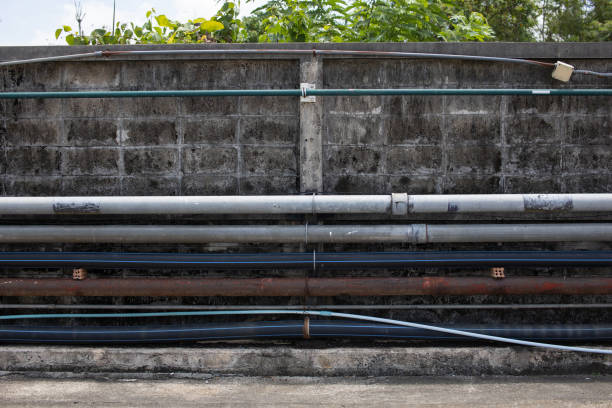
CPVC tubing offers exceptional toughness in a wide range of applications. This material resists cracking, absorbs impact, and maintains structural performance under stress. Engineers and installers choose CPVC tubing for its ability to perform in environments where physical forces, temperature changes, and long-term use challenge weaker materials.
Understanding Toughness in Piping Materials
Toughness describes a material’s ability to absorb energy and deform without breaking. It combines strength and flexibility. A tough material can bend, compress, or stretch slightly under stress without cracking or failing.
CPVC tubing shows remarkable toughness. It handles physical impacts, sudden pressure spikes, and temperature fluctuations with ease. This quality helps prevent failures during installation, operation, or long-term use.
Molecular Structure Enhances Toughness
Manufacturers produce CPVC (Chlorinated Polyvinyl Chloride) by modifying standard PVC. The chlorination process strengthens the polymer chain and improves performance. The added chlorine increases the material’s density and rigidity while maintaining some flexibility.
This balance between strength and flexibility results in excellent toughness. CPVC absorbs energy and resists cracking under load. Its structure allows small deformations without causing permanent damage.
Resistance to Impact Damage
CPVC tubing handles mechanical impacts better than many other plastic materials. Workers often drop tools, bump pipes, or transport materials through tight spaces. CPVC does not shatter or splinter during these events.
Installers move CPVC tubing across rough surfaces, around corners, and through walls. The tubing tolerates these movements without breaking. This quality helps reduce waste and repair costs during installation.
Flexibility Supports Energy Absorption
While CPVC tubing appears rigid, it still provides enough flexibility to absorb energy from shocks or vibration. This combination allows the pipe to bend slightly when struck or compressed. Instead of breaking, the tubing absorbs the force and returns to its original shape.
Engineers use this feature to protect piping systems in dynamic environments. Factories, mechanical rooms, and high-traffic areas all benefit from CPVC’s ability to endure stress without damage.
Thermal Stability and Toughness
Temperature changes affect piping materials. Expansion and contraction can create internal stress. CPVC tubing maintains toughness across a wide temperature range. It resists brittleness in cold conditions and softening in heat.
At low temperatures, some plastics become fragile. CPVC maintains impact resistance and flexibility. In hot conditions, it does not sag or weaken easily. This thermal toughness ensures safe operation in diverse climates and industrial settings.
Pressure Spikes and Water Hammer Resistance
Water systems sometimes experience sudden pressure changes. Valve closures, pump startups, or flow interruptions can cause pressure spikes or water hammer. These events generate sharp internal forces.
CPVC tubing handles these pressure surges without cracking. Its toughness absorbs the shock and distributes stress across the pipe walls. This resistance reduces the risk of burst pipes and joint failure.
Seismic and Structural Movement Tolerance
Buildings shift slightly over time. Earthquakes, settling, or wind loads create small movements in walls, floors, and ceilings. Piping systems must adapt to these shifts without leaking or breaking.
CPVC tubing allows for controlled movement. It flexes with the structure and maintains joint integrity. Designers use offsets, loops, and flexible connections to increase movement tolerance. The tubing’s toughness ensures system safety during and after structural movement.
Handling and Transportation Advantages
Contractors transport CPVC tubing to job sites in large bundles or coils. Workers stack, load, and move the pipes repeatedly. CPVC handles this handling process better than brittle materials. It resists cracks from drops or rough movement.
Workers also cut and fit CPVC tubing during installation. Sharp tools and forceful cutting do not compromise the tubing’s integrity. The material’s toughness makes it easy to handle without damaging the pipe body.
Joint Strength Supports System Toughness
Strong pipe walls alone cannot guarantee a tough system. Joints play a major role in withstanding stress. CPVC tubing uses solvent welding, which creates fused connections between pipes and fittings.
These joints share the same toughness as the pipe itself. The solvent chemically softens the surface of the tubing and allows the two parts to fuse together. Once cured, the joint becomes a single solid structure with excellent energy-absorbing capability.
Resistance to Long-Term Fatigue
Over time, piping systems experience repeated loading cycles. Temperature shifts, pressure pulses, and mechanical vibrations test the durability of the material. CPVC tubing withstands these conditions without developing fatigue cracks.
Repeated stress often weakens weaker materials. CPVC retains its toughness across years of use. This feature makes it a preferred choice for systems that operate around the clock, such as manufacturing lines and water distribution networks.
Chemical Exposure and Toughness
CPVC tubing often transports aggressive chemicals. Acids, bases, salts, and cleaning agents can weaken other plastics. CPVC resists chemical attack while maintaining toughness.
Chemical resistance ensures that the tubing does not degrade internally or externally. This property keeps the pipe walls strong and flexible enough to handle both internal pressure and environmental stress.
Comparison with Other Pipe Materials
PVC
PVC shares a similar base with CPVC but lacks the same toughness. It becomes brittle at lower temperatures and cracks more easily under impact. CPVC’s extra chlorine content strengthens its resistance to external force and stress.
PEX
PEX offers excellent flexibility but lacks CPVC’s rigidity and structural toughness. While PEX handles bending, it may deform under heavy loads. CPVC holds its shape better and resists crushing or kinking.
Copper
Copper provides strength but can dent, kink, or crack with enough force. It also requires careful handling to prevent work hardening. CPVC offers similar strength with less susceptibility to damage during installation.
Stainless Steel
Stainless steel provides high strength but lacks impact absorption. CPVC tubing absorbs energy better, especially in applications with vibration or movement. CPVC also offers lighter weight and easier handling.
Applications That Rely on CPVC’s Toughness
Residential Plumbing
Homes use CPVC tubing in hot and cold water systems. Its toughness protects against rough handling during construction. It resists damage from water hammer and long-term flow cycles.
Commercial Buildings
Office buildings, hospitals, and schools use CPVC in pressurized systems. Toughness ensures consistent performance even in large-scale systems with variable loads.
Industrial Facilities
Factories depend on CPVC for chemical transport, cooling systems, and waste lines. Its toughness handles pressure spikes, temperature changes, and vibration.
Fire Protection Systems
Sprinkler systems require piping that remains intact under high pressure and extreme conditions. CPVC’s toughness prevents cracking or failure when activated.
Outdoor and Underground Systems
Exterior piping faces mechanical pressure from soil movement, roots, or impact. CPVC’s toughness protects the pipe from these external threats. It also handles freeze-thaw cycles without cracking.
Design Considerations for Tough Installations
Engineers design piping systems with movement and impact in mind. They use support brackets, expansion loops, and anchor points to manage stress. CPVC tubing fits these systems perfectly because of its tough and stable performance.
Designers consider expected pressures, temperature ranges, and installation environments. They rely on CPVC to maintain form and function through seasonal changes and system wear.
Installation Techniques That Support Toughness
Proper installation preserves the toughness of CPVC tubing. Installers must follow cutting, joining, and support guidelines. Clean cuts and full solvent weld coverage ensure strong joints. Support brackets spaced according to pipe diameter prevent sagging or unnecessary bending.
Technicians should protect exposed tubing from direct sunlight using insulation or paint. While CPVC resists UV degradation, protection extends its working life in outdoor systems.
Maintenance and Long-Term Durability
Once installed, CPVC tubing requires minimal maintenance. Its toughness reduces the risk of breakage, leaks, or fatigue. Routine inspections focus on visual checks, joint integrity, and potential chemical exposure.
System operators trust CPVC in mission-critical areas. Its toughness ensures reliability across decades of use. Replacements and repairs rarely involve broken tubing—CPVC simply holds up under pressure.
Environmental and Lifecycle Benefits
Tough piping systems last longer. CPVC tubing’s durability reduces waste and the need for replacement. Fewer leaks also save water, chemicals, and energy.
Sustainability planners choose CPVC because it delivers long-term value. It performs well without heavy maintenance or early failure. Strong, tough materials contribute to efficient, low-impact buildings and systems.
Conclusion
CPVC tubing shows impressive toughness in every application. It absorbs force, resists cracking, and adapts to challenging conditions. Engineers count on CPVC for plumbing, fire protection, industrial systems, and more.
The combination of strength and flexibility defines its performance. CPVC tubing delivers long-term durability, cost savings, and confidence. Its toughness supports safe, efficient, and resilient systems from installation to decades of operation.
IFAN international standard
IFAN’s HDPE products comply with various international standards, ensuring quality, durability, and reliability. These standards include ASTM D3035 and ASTM D3350, which define specifications for polyethylene (PE) pipes and materials. The ISO 4427 and EN 12201 series set global benchmarks for PE pipes used in water supply systems. Additionally, DIN 8074/8075 and GB/T 13663 establish performance and dimension requirements for HDPE pipes in European and Chinese markets. Other recognized standards, such as AS/NZS 4130 (Australia/New Zealand), JIS K6760 (Japan), BS 6572 (UK), and CSA B137.1 (Canada), further demonstrate IFAN’s commitment to meeting industry regulations worldwide.
Contact
IFAN is a professional manufacturer with of experience, dedicated to producing high-quality plastic pipes, fittings, and valves. Our products include brass valves, PPR valves, as well as various pipes and fittings to meet different customer needs. Whether you need plumbing and drainage pipes or valve products, IFAN can provide a diverse range of high-quality, cost-effective products to support your projects. Below is our contact information.
We will reply your email or fax within 24 hours.
You can call us at any time if there is any question on our production.
For more information,pls visit our webside https://www.ifanplus.com/
Pls Mailto: [email protected]
Whatsapp: + 86 19857948982























