


Introduction
Modern piping systems demand more than just strength and durability. They require adaptability, ease of use, and resilience under changing conditions. HDPE compression fittings deliver all of these qualities. In particular, their flexibility makes them a preferred solution in water distribution, agriculture, gas transmission, and industrial systems. This flexibility applies not only to the material but also to the installation process and long-term performance.
This article explores the concept of flexibility in HDPE compression fittings. It explains how design, materials, and engineering allow these fittings to adjust to different piping conditions. Furthermore, it highlights how users benefit from this flexibility during installation, daily operation, and maintenance.
Defining Flexibility in HDPE Compression Fittings
Flexibility in HDPE compression fittings refers to their ability to adapt to pipe movement, thermal expansion, ground shifts, and alignment variations. Unlike rigid metal joints, these fittings accommodate bending, stretching, and minor angular adjustments. They handle pipe deviations without losing their sealing strength.
HDPE pipes also contribute to the system’s flexibility. They bend without breaking, resist cracking under stress, and work well with dynamic soil conditions. HDPE compression fittings complement these features by maintaining tight seals even when pipes shift slightly.
Engineers design these fittings with multiple sealing and locking elements. These internal parts work together to create a strong, yet slightly flexible joint. As a result, the fittings don’t crack under strain or temperature changes. Instead, they absorb stress and maintain flow efficiency.
Material Flexibility in HDPE Fittings
The main material in compression fittings is high-density polyethylene (HDPE) or polypropylene (PP), both of which resist deformation and chemical attack. These materials provide elasticity while preserving mechanical strength.
When compressed, the rubber sealing ring inside the fitting stretches slightly. This stretch allows it to seal against small pipe movement. Similarly, the grip ring adjusts to minor dimensional changes in the pipe surface.
Unlike metal components that may fracture or corrode over time, HDPE materials flex without fatigue. They return to shape after stress. This characteristic supports longer service life and fewer failures under dynamic loading.
Furthermore, HDPE fittings perform well under a wide temperature range. In both cold and hot conditions, the material stays stable and responsive. It does not become brittle in freezing environments or overly soft in moderate heat.
Design Features That Support Flexibility
The structural design of HDPE compression fittings supports flexibility through several built-in mechanisms.
First, the sealing ring includes enough elasticity to respond to pipe motion. It expands and contracts with slight dimensional changes, maintaining water-tightness.
Second, the grip ring allows controlled axial pipe movement. It bites into the pipe surface during tightening, yet permits slight movement without disconnection. This feature helps accommodate expansion or contraction due to temperature changes.
Third, the thrust ring spreads tightening force across the sealing ring. This distribution reduces stress concentration and allows the fitting to bend slightly without compromising the seal.
Finally, the outer nut, which users tighten by hand or wrench, creates enough pressure to compress the components together. It locks the assembly, but the materials inside continue to flex slightly to adapt to shifting forces.
These design elements combine to form a joint that remains tight under pressure while bending or flexing slightly with environmental forces.
Flexible Installation Processes
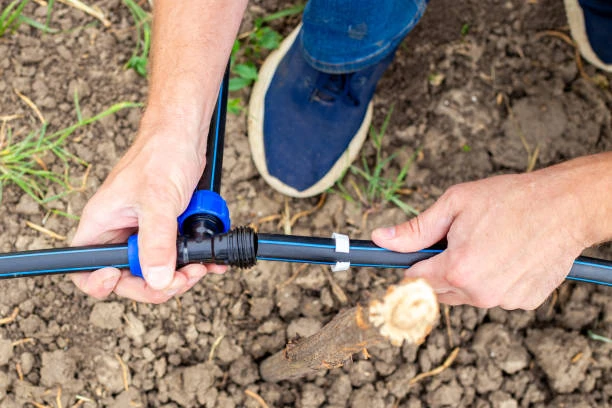
One of the greatest benefits of HDPE compression fittings lies in their simple, flexible installation. Unlike fusion or glued joints, compression fittings don’t require specialized training, electricity, or adhesives.
Installers can adjust the pipe alignment easily during fitting placement. They can also compensate for slight directional mismatches. This flexibility reduces rework and saves time.
Moreover, installers don’t need to cut pipes with extreme precision. The fitting can tolerate small variations in pipe length or insertion depth. This tolerance makes HDPE compression fittings especially useful in the field, where pipe cuts may not always be perfect.
During installation, the fitting allows for quick changes. If workers decide to reposition the joint, they can remove and reinstall it without difficulty. The components do not degrade from a single assembly, and they support repeat adjustments.
In underground installations, flexibility reduces stress from soil movement. After burial, the pipe may shift slightly due to backfill compaction or seasonal ground changes. The fitting can bend or stretch slightly without creating leaks.
Flexibility Under Pressure
Despite their flexibility, HDPE compression fittings also handle high internal pressure. Designers balance elasticity with structural integrity, ensuring that fittings flex without bursting.
When the pipe expands under internal pressure, the sealing system adjusts without losing grip. This self-adjusting mechanism reduces long-term stress on the joint. Moreover, the tightness of the grip ring ensures that the pipe does not slide out during sudden surges or water hammer events.
In irrigation systems, this ability proves especially valuable. Valves open and close frequently, causing pressure variations. HDPE compression fittings flex with these changes, maintaining seal quality and preventing joint fatigue.
In municipal water systems, underground lines may face inconsistent loads. Compression fittings absorb vibrations from passing vehicles or nearby equipment. Their flexible design resists cracking from such mechanical stresses.
Thermal Expansion and Contraction
HDPE material expands and contracts more than metal when exposed to temperature changes. Therefore, fittings must account for this behavior to prevent leaks or separation.
Compression fittings allow axial movement without stressing the joint. When heat causes the pipe to lengthen, the fitting accommodates the expansion. When the pipe contracts during cooling, the sealing and grip rings retain their hold.
In above-ground installations, such as rooftop or exposed piping networks, this feature becomes critical. Without flexible joints, thermal cycling would damage connections or create gaps over time.
The elasticity of HDPE materials allows the fitting to compress or stretch slightly along with the pipe. Engineers consider this characteristic during product development, ensuring the fitting performs well across diverse environments.
Movement in Underground Systems
Soil movement poses a serious challenge to underground pipelines. Seasonal expansion, seismic activity, or nearby construction can all shift buried pipes.
HDPE compression fittings resist damage in such conditions. They flex along with the pipe, absorbing small changes in direction or position. The sealing ring maintains contact, while the grip ring holds the pipe in place.
Additionally, because the fittings don’t rely on adhesives or thermal welding, they handle vibration better. Glue joints may crack over time, but compression fittings stay sealed due to mechanical pressure rather than chemical bonds.
In agriculture, where buried drip systems often face field machinery or irrigation cycles, this feature ensures long service without leaks.
Compatibility with Different Pipe Sizes
HDPE compression fittings also offer flexibility in their ability to connect pipes of different sizes or grades.
Adapters and reducers allow transitions between pipe types or diameters. Installers can connect old pipelines to new ones without replacing entire sections. This compatibility simplifies upgrades or repairs.
Moreover, many fittings suit both metric and imperial dimensions. Some include removable internal support rings to handle thin-walled or thick-walled pipes. As a result, users can install a single fitting model in multiple systems.
This dimensional flexibility makes compression fittings ideal for complex networks that combine various piping standards. It also reduces inventory requirements for contractors, since fewer types of fittings can meet more needs.
Flexibility in Maintenance and Repair
HDPE compression fittings also provide post-installation flexibility through easy maintenance.
Users can disassemble and reassemble fittings without damaging the components. When leaks occur, technicians can open the joint, clean the sealing ring, and reinstall it. This process avoids cutting the pipe or using heat.
Moreover, if the pipe needs replacement, users can remove the fitting and reuse it on a new pipe. This reusability adds economic value and simplifies emergency repairs.
In rural or remote areas, where equipment access may be limited, this kind of maintenance flexibility proves extremely valuable. Users solve problems with basic tools and limited materials.
Long-Term Operational Benefits
Over the life of a piping system, flexibility contributes to reliability and reduced cost. Systems that adapt to movement or change require fewer repairs. They also suffer less from fatigue or mechanical failure.
HDPE compression fittings support this long-term stability by maintaining tight seals despite stress. Their ability to adjust to temperature changes, pressure variations, and ground shifts ensures consistent performance.
Furthermore, their material flexibility resists scaling, cracking, or corrosion. Even after years of service, they maintain functional elasticity and mechanical strength.
Conclusion
HDPE compression fittings combine flexibility with strength, offering a practical and reliable solution for diverse piping systems. Their ability to adjust to pipe motion, environmental changes, and installation conditions makes them ideal for both short-term projects and long-term infrastructure.
By using high-quality materials and intelligent designs, these fittings deliver durability while preserving adaptability. Installers and engineers benefit from simpler installation, reduced risk of damage, and improved service life.
In summary, HDPE compression fittings prove that flexibility and reliability can coexist. Whether in agriculture, municipal waterworks, industrial networks, or remote applications, these fittings provide a smart choice that bends without breaking—and always keeps the flow moving.
IFAN international standard
IFAN’s HDPE compression fittings and pipes comply with a wide range of international standards, ensuring high performance and global compatibility. These include ASTM D3035 and ASTM D3350 from the United States, ISO 4427 series and EN 12201 series from Europe, DIN 8074/8075 from Germany, GB/T 13663 series from China, AS/NZS 4130 from Australia and New Zealand, JIS K6760 from Japan, BS 6572 from the United Kingdom, and CSA B137.1 from Canada. Adherence to these standards guarantees excellent mechanical properties, chemical resistance, and long-term durability across diverse water supply and industrial applications.
Contact
IFAN is a professional manufacturer with of experience, dedicated to producing high-quality plastic pipes, fittings, and valves. Our products include brass valves, PPR valves, as well as various pipes and fittings to meet different customer needs. Whether you need plumbing and drainage pipes or valve products, IFAN can provide a diverse range of high-quality, cost-effective products to support your projects. Below is our contact information.
We will reply your email or fax within 24 hours.
You can call us at any time if there is any question on our production.
For more information,pls visit our webside https://www.ifanplus.com/
Pls Mailto: [email protected]
Whatsapp: + 86 19857948982























